First posted on Instagram · @profilopolitics
Colombia's president, Abelardo de la Espriella, has opened his government's first big prison at Riohacha in La Guajira — built for 1,722 inmates in 476 cells — and used the opening to declare war on criminals who run their operations from behind bars, ordering an investigation into how cell phones reach inmates and whether prison staff help them in.
Why it matters: in Colombia, extortion calls, threats and even murders are routinely ordered from inside prison cells, and ordinary families and shopkeepers pay the price. A prison the state actually controls is the difference between a sentence that protects the public and one that changes nothing. This is the Bukele model — order first — now being tested in Colombia.
“The era in which prisons were offices of crime is over,” the president wrote as it opened. “Prisons cannot become centres of operations from which extortion is ordered, innocent citizens are threatened, murders are planned,” he said at the ceremony, ordering the prison service, INPEC, to find how phones get into cells — officials who help criminal networks, he warned, will answer to justice. “My first duty as President of Colombia is to protect the life, the liberty and the peace of Colombians.”
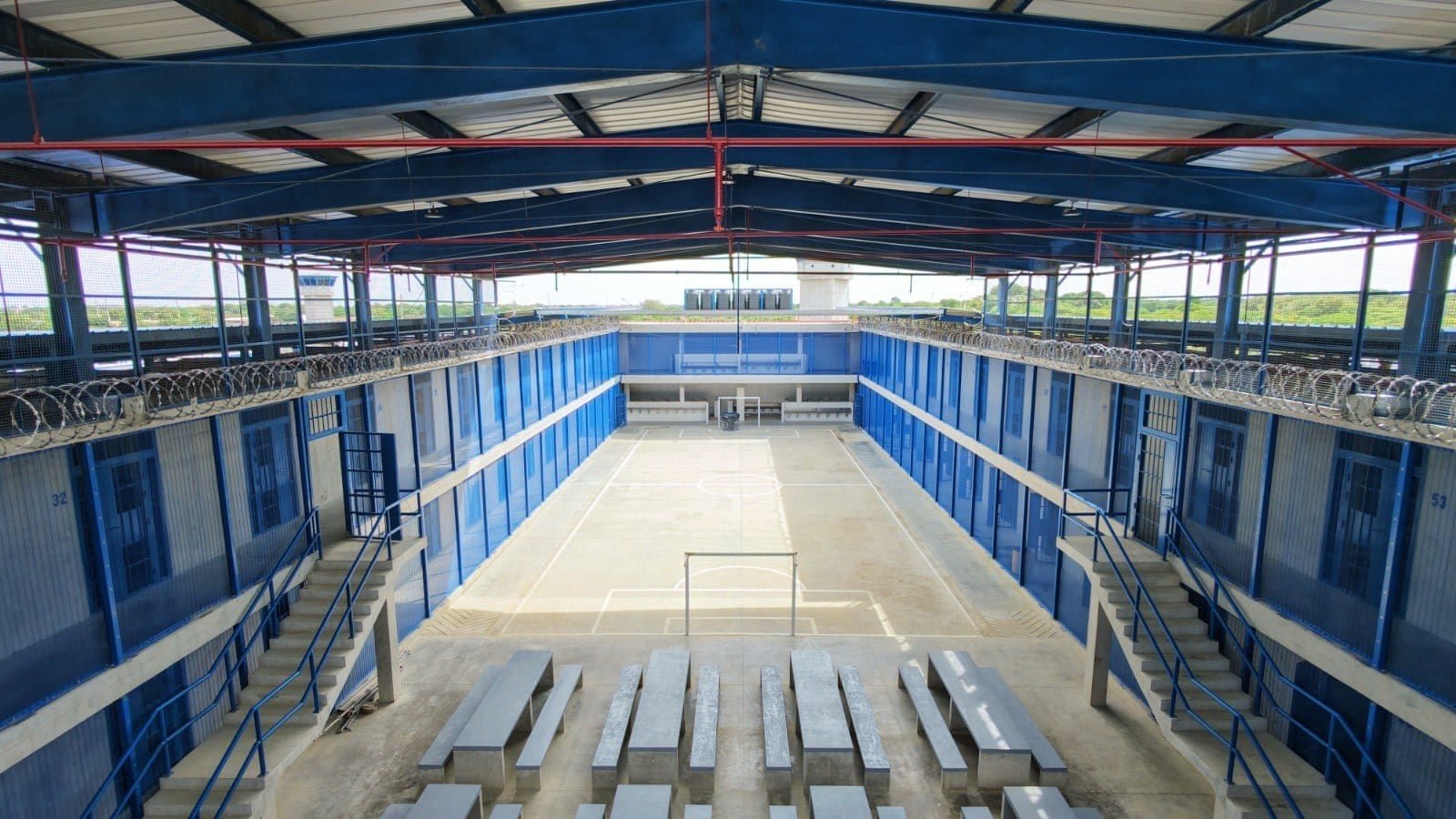
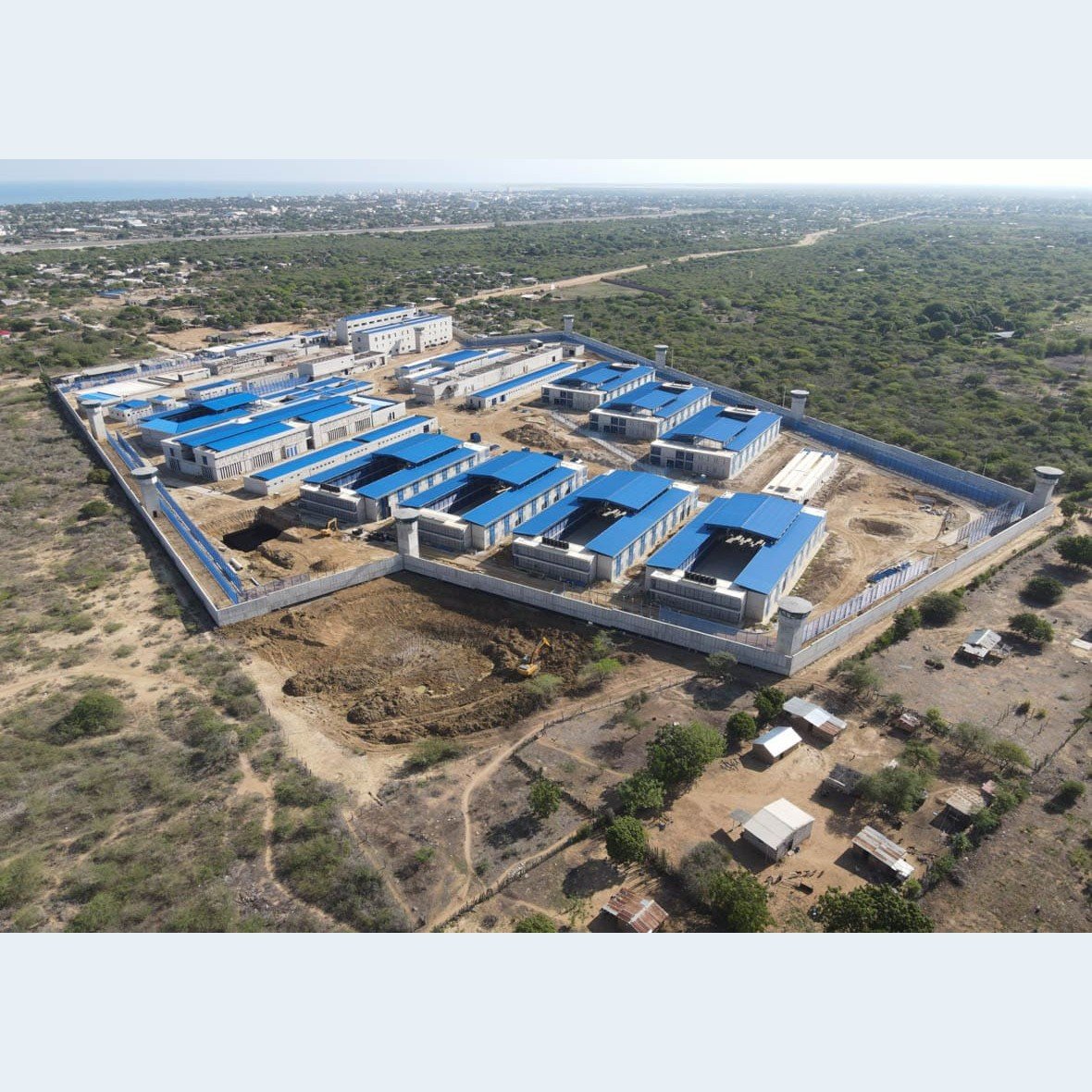
The prison covers 36,000 square metres on a ten-hectare site and cost more than 362,974 million pesos. Its eight pavilions hold 1,308 places for men, 152 for women and 218 for ethnic communities, including a Wayuu pavilion. The Justice Ministry calls it the first big prison infrastructure delivered in Colombia since 2011 — in a city whose existing jail has run at more than 260% overcrowding.
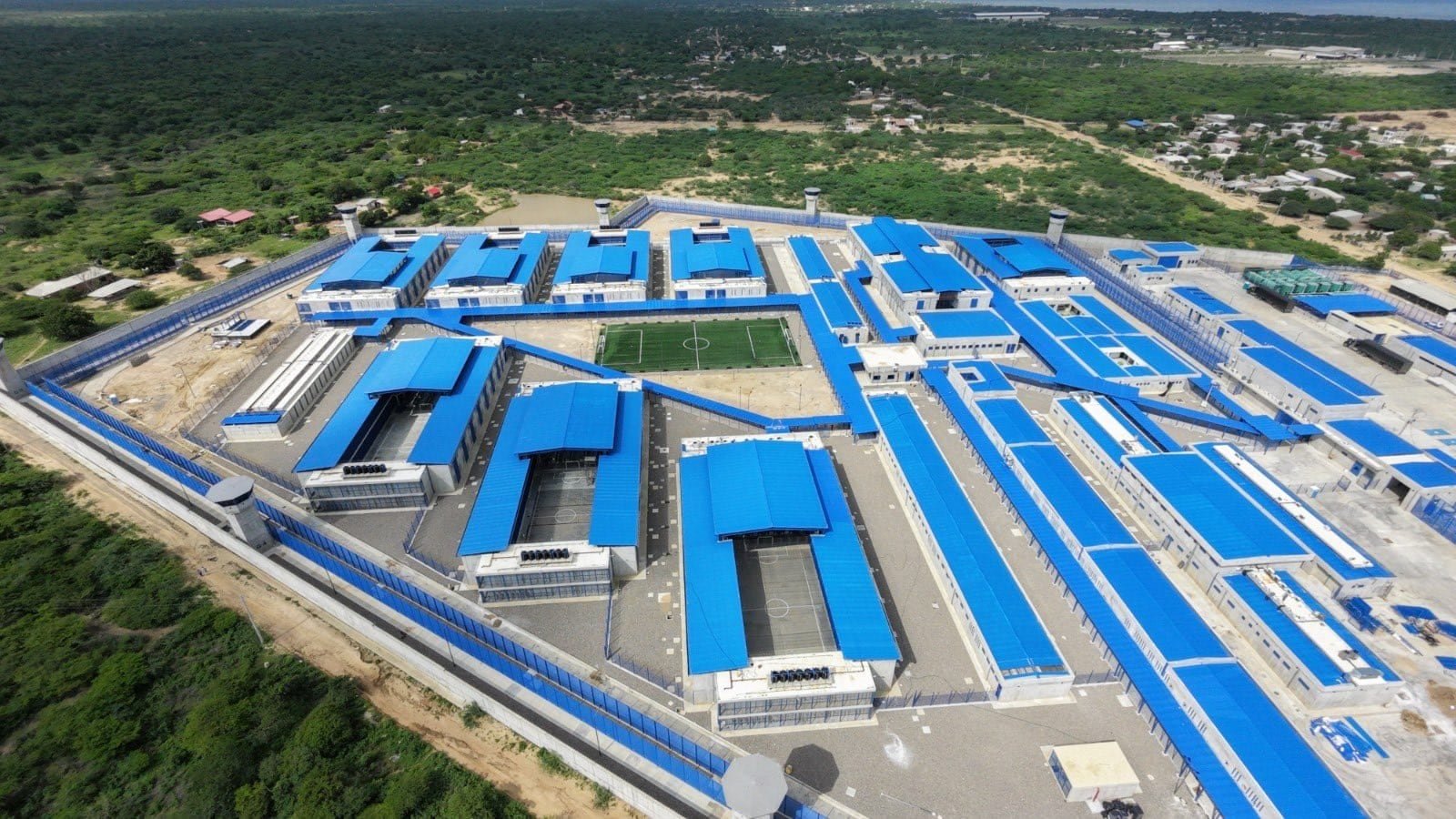
De la Espriella says construction began in 2021 and “was stalled for the last four years” until his government unblocked it. Former justice minister Jorge Iván Cuervo answers that this is not true: the record shows the work advanced under Petro and stood at 93.9% complete in August, when his government received it — a figure the Presidency itself has acknowledged. Critics also note 1,722 places is well short of the mega-prisons of 5,000-plus inmates he campaigned on.
What happens next is the real test: the prison must be staffed and filled, and the phone traffic out of Colombia's cells must actually stop. His government says maximum-security mega-prisons come next. Colombians extorted from behind bars will judge the promise on that.