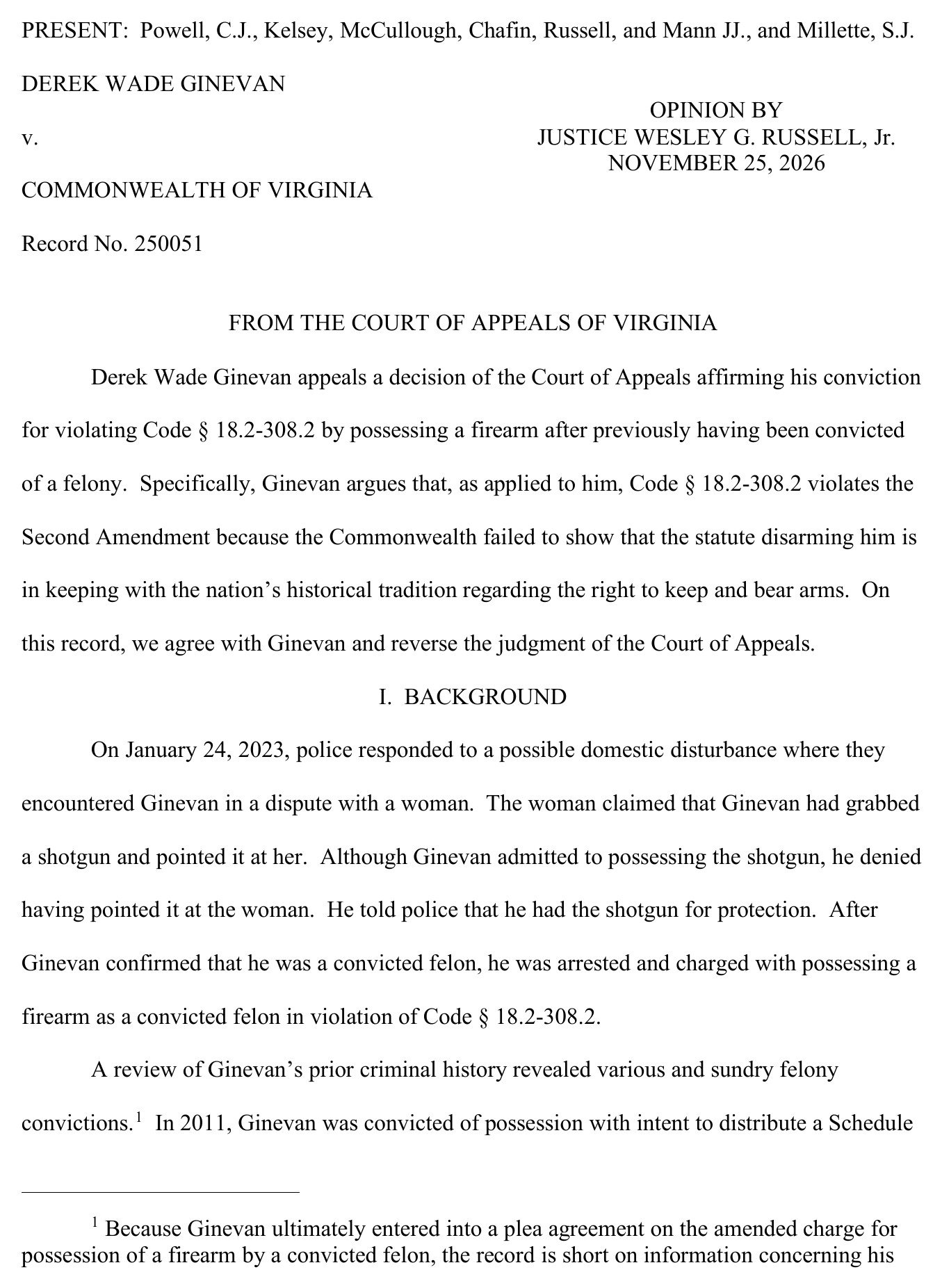
Derek Ginevan's record holds drug distribution, probation violations, false pretences, and possessing ammunition as a felon. Virginia law made that record a lifetime ban: a felon may never hold a gun again. On Wednesday, Virginia's highest court threw out his conviction for possessing an ordinary shotgun, ruling the ban, used against him, violates the Second Amendment.
Why it matters: millions of Americans carry an old felony record, many for non-violent offences, and Virginia's law treated them all the same — disarmed for life, with no hearing on whether the person is dangerous. The court has now said the record alone is not enough: the right survives a felony unless the state shows he is a real threat.
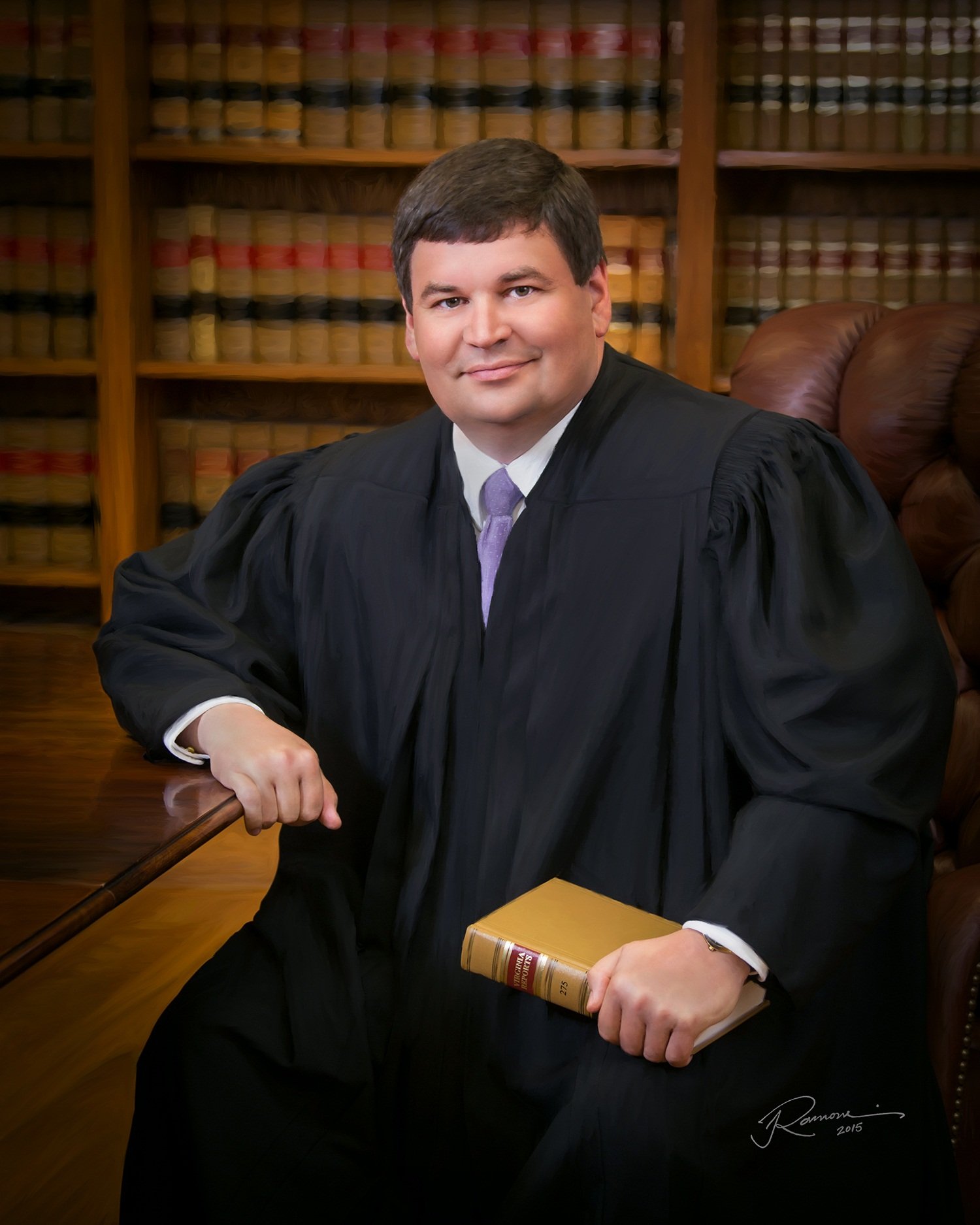
Justice Wesley G. Russell Jr. wrote it plainly: “a felony conviction alone does not remove one from ‘the people’ protected by the Second Amendment.” A felony does not remove a person from “the people” of the First and Fourth Amendments either — so, “as a matter of language and logic,” it cannot in the Second. Speech and search protections survive a felony; the right to bear arms stands on the same words.
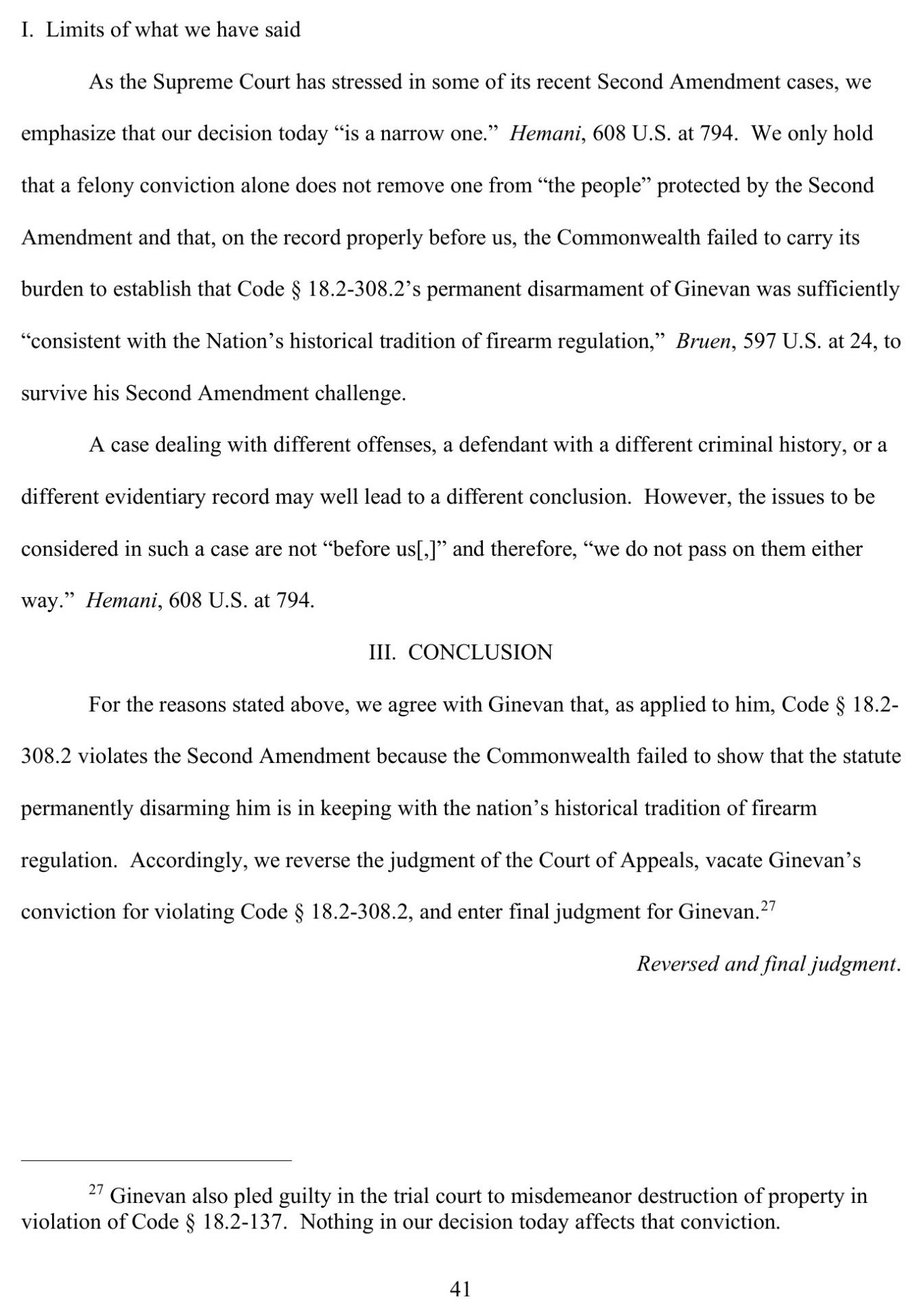
The court applied the Bruen test — in plain terms, a gun law survives only if it fits America's historical tradition of firearm regulation. That tradition allows disarming a person a court has found to be a credible threat to others — and no court ever made that finding about Ginevan. Nothing in his record showed actual violence, and the legislative label on one offence — ammunition possession is classed a “violent felony” for sentencing — is not a finding of violence. Such bans are “a creature of twentieth century legislatures.” Before Wednesday: automatic lifetime disarmament. Now the state must point to danger, not just to a record.
The ruling is narrow, and the court said so. The law was not struck off the books — it still stands, and the decision decides Ginevan's case, though its reasoning hands every similar Virginia defendant the same argument. The separate federal felon ban is untouched; whether permanent disarmament can ever pass was left open.
What happens next: the Commonwealth can ask for a rehearing or take the case to the U.S. Supreme Court; it has not yet said. Challenges built on this reasoning are now open across Virginia — and whether any lifetime ban can survive is the next case's question.