First posted on Instagram · @profilopolitics
ICE agent Gregory Morgan faces up to six years in prison on two counts of second-degree assault with a dangerous weapon over a February 5 highway encounter during Operation Metro Surge in which no one was injured — and his lawyers are fighting to keep Minnesota’s case in federal court, where a judge could throw it out. Judge Nancy Brasel has not ruled.
Why it matters: this case decides whether a local prosecutor who opposes an immigration operation can put the agents who carried it out in a state prison — and if it stays in state court, prosecutors anywhere can copy it. On Sunday, DHS’s top lawyer James Percival called such state prosecutions unconstitutional.
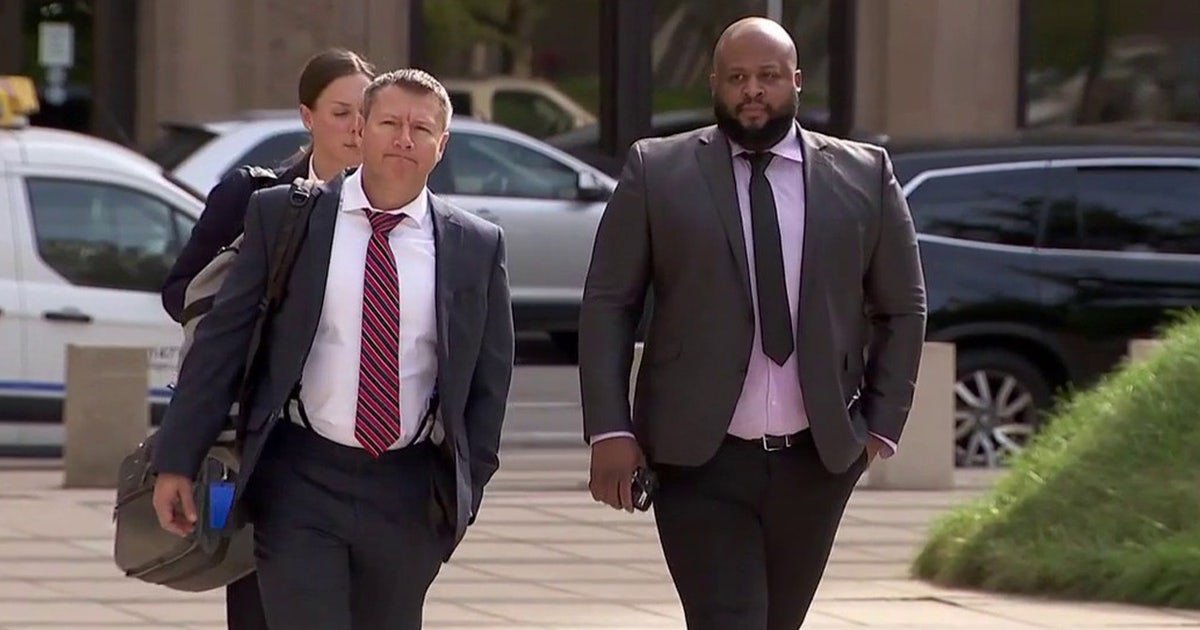
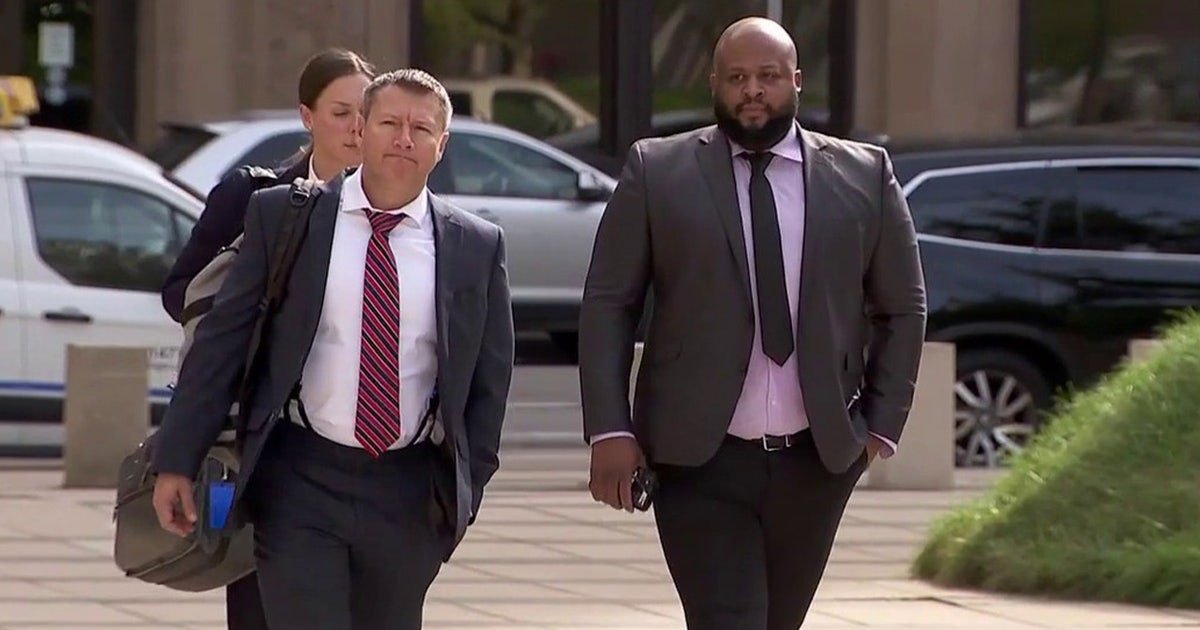
Morgan, 35, was returning to base under orders after pulling out of a hostile neighbourhood where a protester had threatened to kill him, his lawyers say. He mistakenly drove on the shoulder of Highway 62; a Cadillac swerved into his path twice and braked hard, and fearing for himself and his partner he shouted “Police, back off” and showed his gun at low-ready. “We are the tip of the spear,” his lawyer Rachel Paulose said — the War of 1812 removal law behind his defence exists “to insulate federal officers from vindictive prosecutions.”
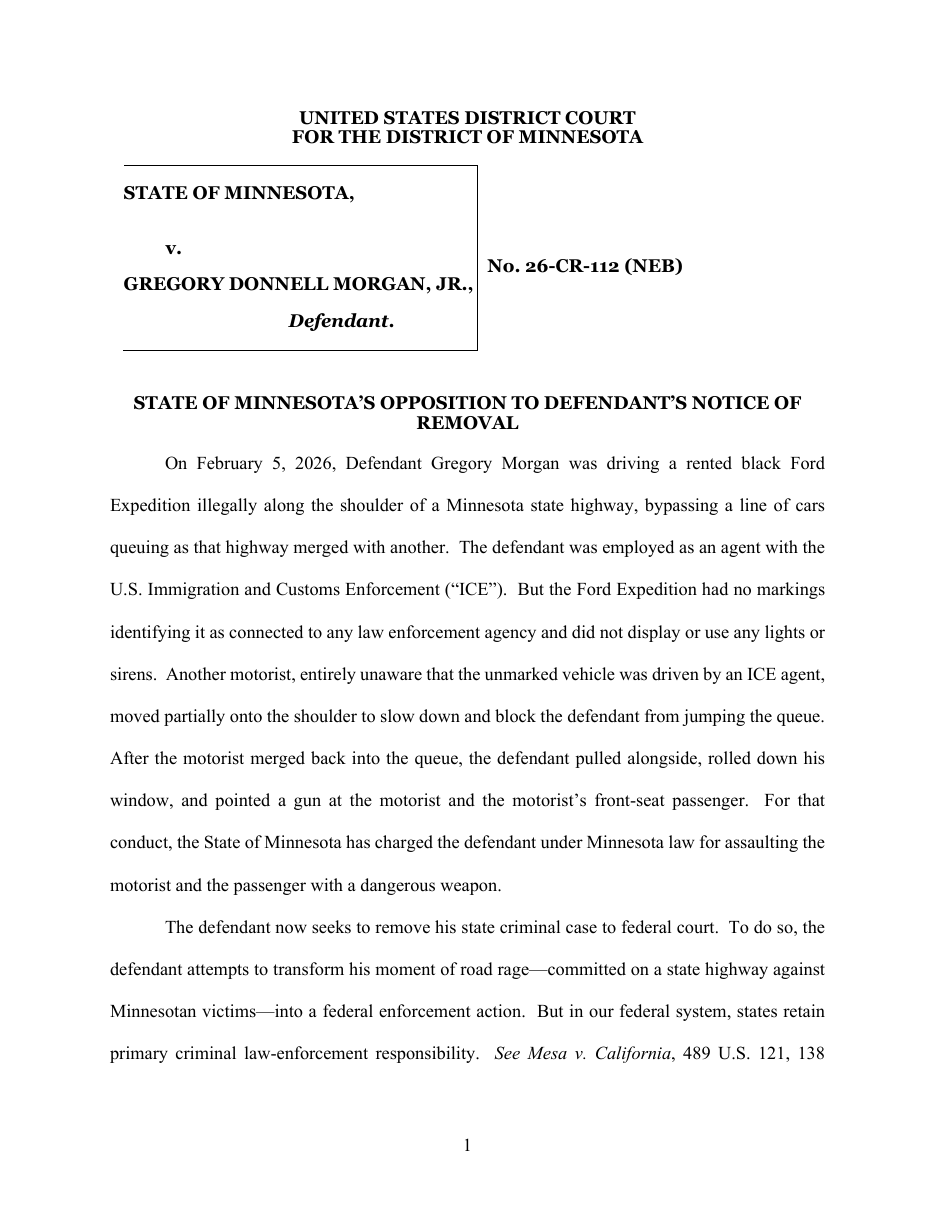
Hennepin County Attorney Mary Moriarty, who charged Morgan on April 16, tells it the other way: he used the shoulder to beat rush-hour traffic and pointed his gun at the Cadillac’s two occupants. Her office calls it an attempt to transform “his moment of road rage” into a federal enforcement action, and Moriarty has said there is “no such thing as absolute immunity for federal agents who violate the law in the state of Minnesota.” Both Cadillac occupants later invoked the Fifth Amendment and did not testify.

Washington has stood behind its agents: Attorney General Todd Blanche has warned that arresting federal agents performing their official duties is illegal and futile, and a Justice Department attorney took part in Morgan’s own hearing.
Where it stands: everything waits on Brasel. If she keeps the case, Morgan’s lawyers will ask her to dismiss it under the Constitution’s Supremacy Clause; if she sends it back to state court, they will appeal to the Eighth Circuit. Morgan, a father, has already lost tens of thousands in overtime pay since being reassigned — and a felony conviction would end his career.