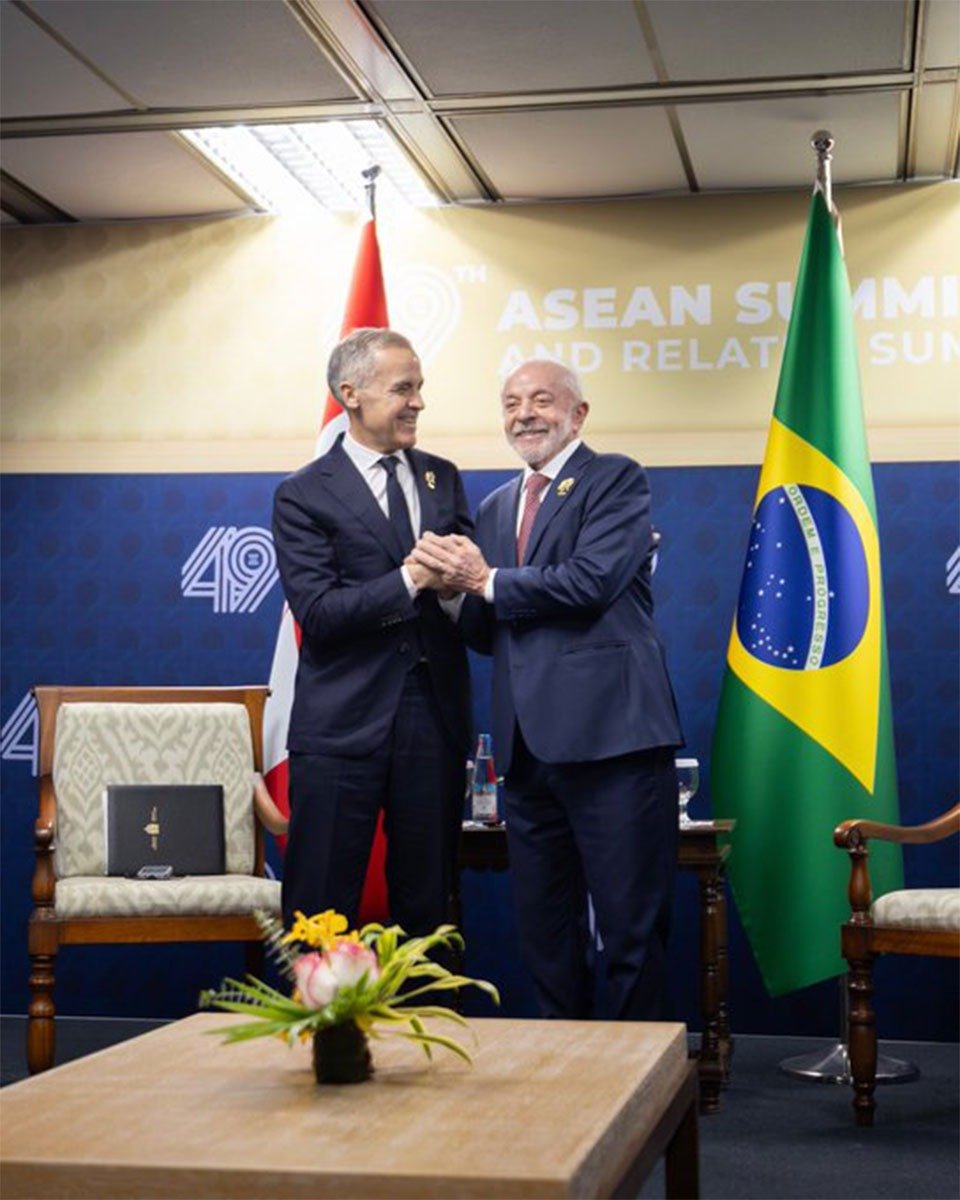
Canada is putting up to $560 million behind Brazil's rainforest fund. Prime Minister Mark Carney announced the pledge in Manila on November 15, standing with Brazilian President Luiz Inácio Lula da Silva at the ASEAN summit: an initial contribution of up to $560 million over four years to the Tropical Forest Forever Facility, the fund Brazil and Norway lead to pay countries to keep their forests standing.
The money is Canadian taxpayers' — lent, not given, and drawn from the climate budget Ottawa already has. What it buys into is a fund meant to protect more than a billion hectares of tropical forest across more than 70 countries — while at home, the agency that runs Canada's own national parks is looking at years of budget cuts.
"Canadians understand our responsibility to protect nature – both in our own backyard and around the world," Carney said. "Today, with President Lula, I announced that Canada is putting half a billion dollars behind Brazil's landmark rainforest conservation initiative." The government's own backgrounder is plain about the form: the contribution is a loan financed from Canada's existing international climate finance envelope — money already committed, not a new cheque to Brazil. At least a fifth of the fund's conservation payments are directed to Indigenous peoples and local communities.
Conservative MP Gabriel Hardy put the other side in a Parks Canada debate: "we have money to go to China, to Brazil $560 million no problem" — while Parks Canada faces forecast cuts of $24 million, then $45 million, then $75 million. Ottawa's answer is that it is spending at home too: a $3.8 billion strategy for Canada's own lands and waters, and $1.2 billion for its oceans.
The facility was launched under Lula at the COP30 summit in Belém in November 2025. Canada's pledge took total sponsor promises to $8.3 billion — still $1.7 billion short of the $10 billion the fund wants in hand by the end of the year. Norway's $3 billion loan is the biggest single piece.
The pledge is a ceiling, not a payment: nothing has been transferred, and the loan flows over four years only as the facility gets operating. What Canadians will be able to judge is whether the fund launches at all — and whether lending to protect other countries' forests was the best use of a climate budget while the parks at home tighten theirs.