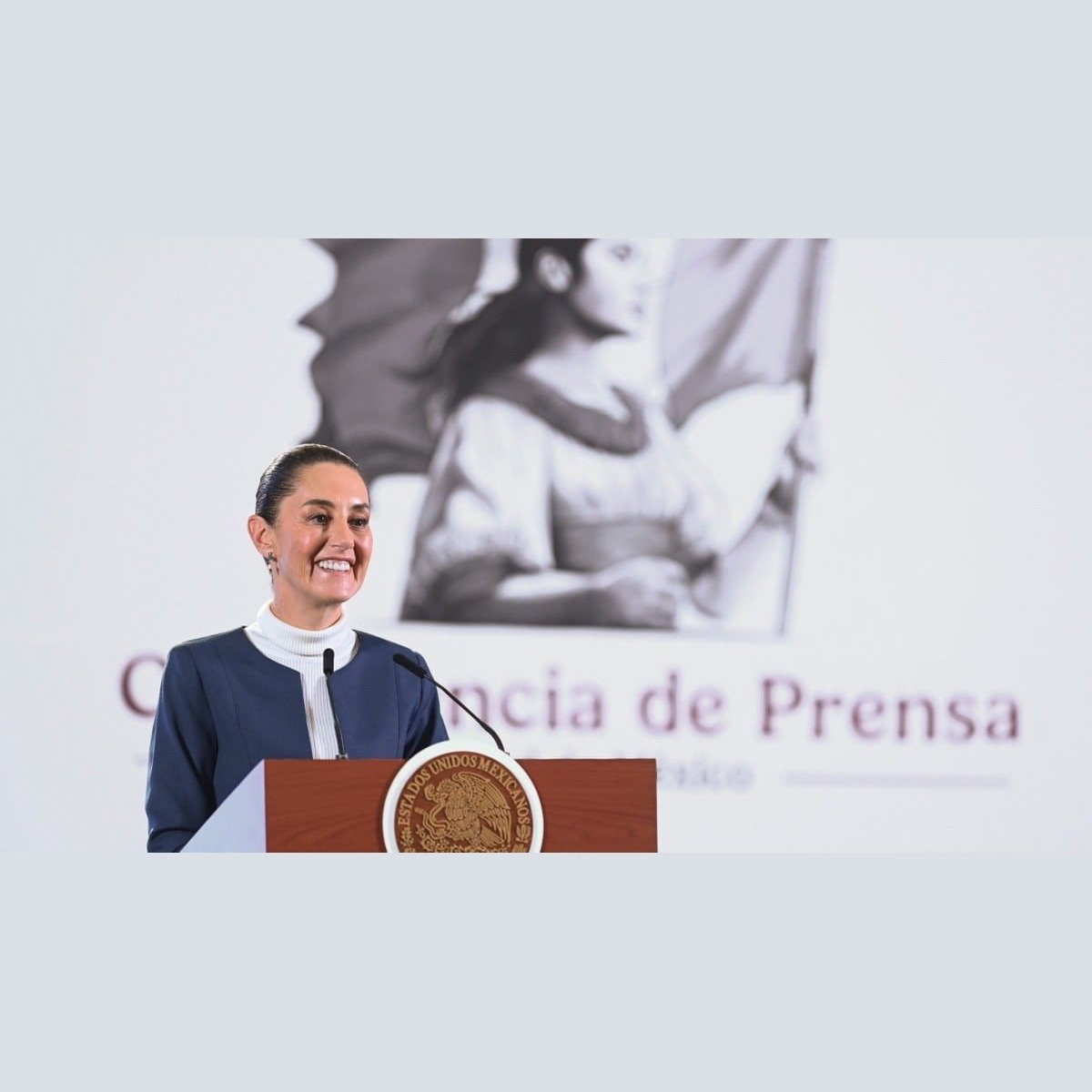
Mexican President Claudia Sheinbaum on Thursday denounced the U.S. Drug Enforcement Administration's new anonymous tip lines for reporting drug traffickers and corrupt officials, calling the initiative "clearly a matter of interference" in her country's sovereignty. At her daily press conference in Mexico City, she said the DEA should instead investigate fentanyl distribution and corruption inside the United States.
Why it matters: the two countries' anti-drug fight depends on cooperation neither side can manage alone, and this row is about who gets to investigate whom. Washington sees the tip line as intelligence-gathering against the cartels; Sheinbaum's position is that the United States must respect Mexico's sovereignty and coordinate with its government rather than operate independently.
DEA Administrator Terry Cole announced the channels on Wednesday on X, inviting people in Sinaloa to anonymously report cartel members, officials accused of helping them and money-laundering networks through WhatsApp, Signal, Threema and email. "Your information matters. Your identity and your safety matter," Cole wrote. A second set of channels, for Jalisco and the Jalisco New Generation Cartel, was to follow on Thursday.
"Imagine if the Secretariat of Security and Citizen Protection opened a WhatsApp line for reporting corruption in the United States," Sheinbaum said. "How would the U.S. government view it?" She added: "The DEA has plenty of work to do in its own country. A lot." To make the point she read from a new Associated Press investigation, published on Tuesday: the DEA let at least 1.4 million counterfeit fentanyl pills reach the streets between August 2024 and April 2025 while agents spent eight months tracking the network. She called the episode "the Fast and Furious of Fentanyl," after the 2011 gun-walking scandal.
Mexico's Security Cabinet backed her the same day, saying "Mexico does not accept unilateral actions or interference in its territory." The dispute comes days after Mexican forces captured Fausto Isidro Meza Flores, known as El Chapo Isidro, with U.S. intelligence support — and months after U.S. prosecutors indicted Sinaloa Governor Rubén Rocha Moya over alleged cartel ties. The DEA did not immediately respond to a request for comment. For now the tip lines stay open and the disagreement stays public: Sheinbaum has ruled out U.S. troops on Mexican soil while insisting cooperation will continue — on Mexico's terms.
Member News: Join ProfiloPolitics to support independent journalism and civic education.