Philippine police have arrested nearly 300 anti-Trump protesters — more than 330 by the count of organizers and rights groups — as thousands marched in Manila against President Donald Trump's visit and the U.S.-led Pax Silica AI and critical-minerals pact, clashing with police shield lines as the 49th ASEAN Summit opened in the capital.
Pax Silica is Washington's plan to lock down the supply chain behind artificial intelligence — the chips and the critical minerals they run on — with more than 20 partner nations, so America is not dependent on China. The Philippines' part of it is a proposed 4,000-acre technology hub at New Clark City in Tarlac, sold to the public as quality jobs and investment. The fight in Manila's streets is over who pays for it: the communities who say the hub will take their land, their water and their power, against a project its backers say will put Filipinos inside the industry of the future.
The arrests began on Sunday, November 15, as the summit opened. Police intercepted the Lakbayan — the people's caravan — of the Southern Tagalog delegation at Sucat in Muntinlupa City as it travelled toward Manila: police acknowledged more than 200 arrests there, organizers put the figure at 300, and the International Coalition for Human Rights in the Philippines counted more than 330 arrests across the day in total, including about 20 children among the Muntinlupa detainees. Twenty-one more people were arrested in Bulacan, and at least nine at Liwasang Bonifacio, Manila's freedom park, where a workers' march tried to push on toward the summit venue.
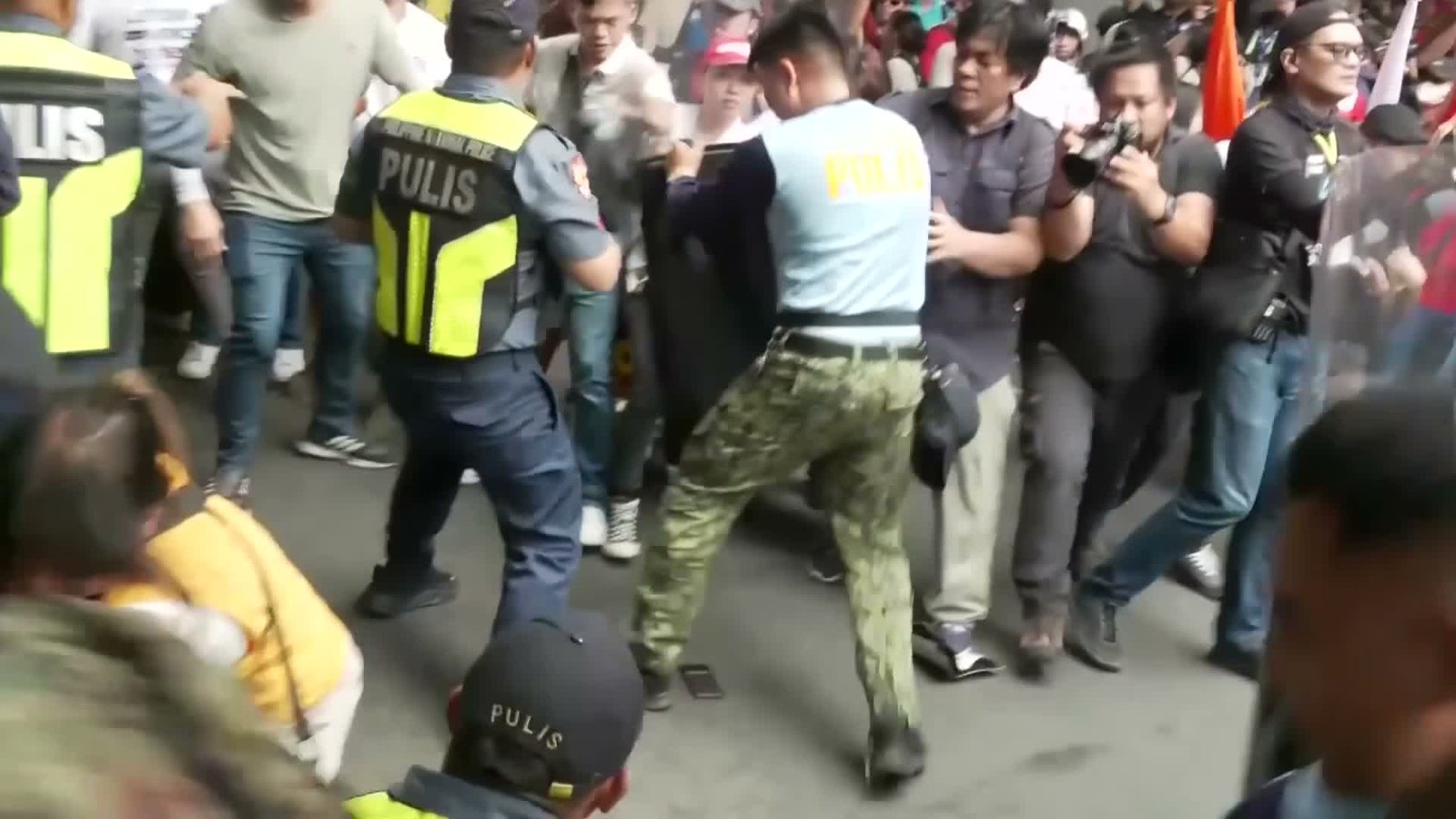
The marches kept coming on Monday. Protesters carrying “Trump Out. Philippines Not For Sale” and “Junk Pax Silica” placards — one marcher holding a Trump effigy head high above the crowd — pushed against police shield lines near the convention center while officers dragged demonstrators away. Eighteen media workers were among those arrested across the protests, the Altermidya network of independent media organizations reported. More marches are planned for Tuesday, the day of Trump's arrival.
The protesters call Pax Silica a new form of colonialism. The hub is planned near Clark, the former U.S. air base, and Indigenous Aeta communities, farmers and students say it will displace them and drain the region's water and electricity. The BAYAN alliance organized the “Trump Out” marches, and Giovanni Tapang of the NO to Pax Silica Network has been one of the campaign's public voices.
The police answer that they were keeping the peace, not silencing anyone. National police chief General Jose Melencio Nartatez Jr. said officers were there to maintain peace and protect people, not to suppress legitimate expressions of concern, and that he had instructed his personnel to exercise maximum tolerance, restraint and professionalism at all times. The police figures for the arrests also run lower than the organizers' counts.
The arrests have drawn condemnation well beyond the streets. Catholic and Protestant church leaders, through the National Council of Churches in the Philippines, condemned the mass arrests and the reported police violence and demanded the detainees' release and an independent investigation; Amnesty International has also called for those arrested to be freed at once. Trump arrives in Manila on Tuesday with the summit under way, the detained protesters still awaiting release, and further marches called for the day of his arrival.
Protesters push against police shield lines near the ASEAN summit venue in Manila.
Detained protesters held inside a caged police truck marked “PULISYA” after the Muntinlupa arrests.
 Police hold a shield line as a protester raises a “No to Pax Silica” sign.
📰 ProfiloPolitics Member News — choose your news, share it, earn credit: Join here