
First posted on Instagram · @profilopolitics
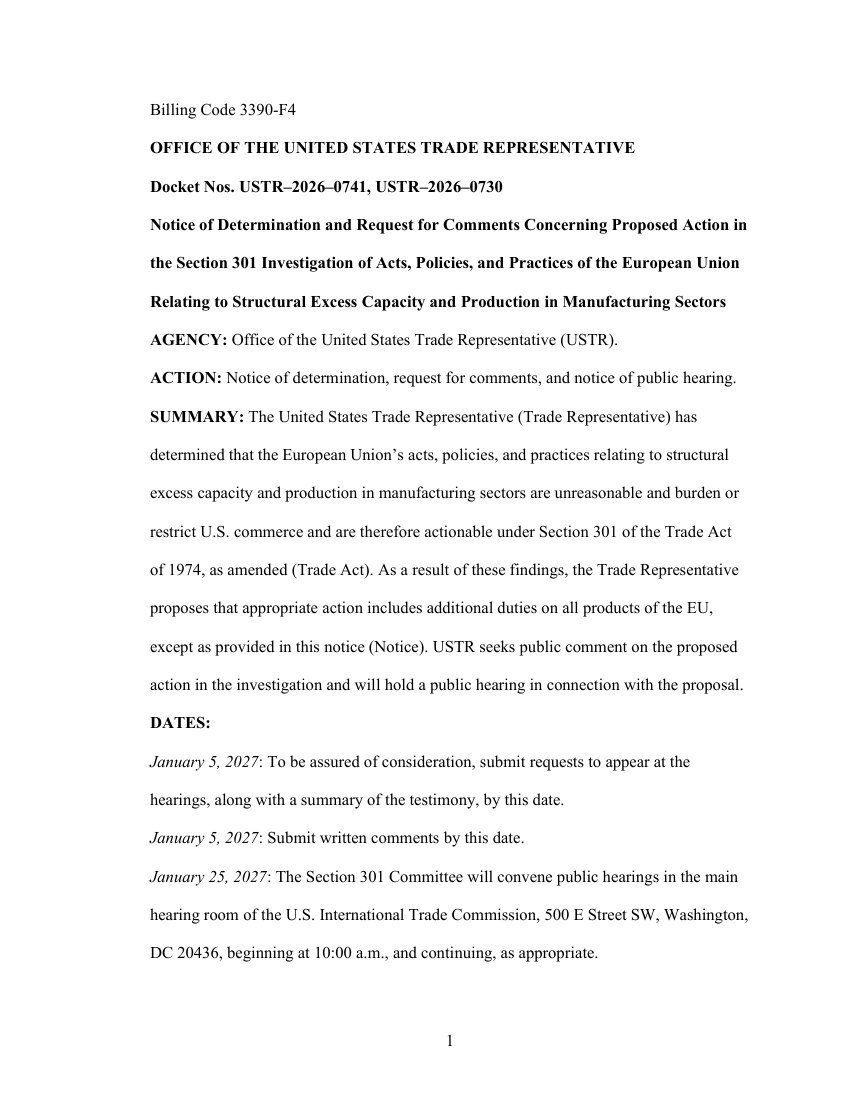
The European Union has strongly rejected Washington’s reason for a new round of tariffs, after the Trump administration on Wednesday proposed a 15 percent tariff on EU goods — the outcome of a Section 301 investigation that accused the EU, China, Japan and 11 other trading partners of building far more factory capacity than the world needs and flooding markets with goods priced too cheap for American manufacturers to match.
Why it matters: this fight lands in ordinary people’s pockets on both sides of the Atlantic. Washington says the tariffs shield American factory workers from subsidised foreign overproduction; Brussels answers that taxing Europe will not stop the flood — it will raise prices and punish an economy drowning in the same flood.
“We will study the findings,” European Commission deputy chief spokesperson Olof Gill said. “At the same time we strongly reject the premise that Europe is a source of structural overcapacity. To the contrary, Europe is among those most exposed to overcapacity.” Gill said the EU and the US share a real concern about overcapacity, much of it state-driven and concentrated in third countries — pointing at China without naming it — and that Brussels expects Washington to honour the trade deal struck in July 2025, which capped US duties on EU goods at 15 percent, in full.
US Trade Representative Jamieson Greer, who announced the proposals, argues the other way: government support abroad created excess capacity, letting foreign firms overload world markets with cheaper goods and undercut US producers. The proposed rates run from 15 percent for the EU up to 20 percent for China, and would take effect in January 2027 at the earliest, after public comment and hearings. Section 301 is Washington’s new legal path after the Supreme Court this year struck down the legal basis of the 2025 reciprocal duties.
Bernd Lange, who chairs the European Parliament’s trade committee, called the findings “absurd.” Where it stands: nothing is in force yet — the proposals go through comment and hearings, and the first test is whether the final rates respect the 15 percent ceiling Europe thought it had already bought with last year’s deal.
📰 ProfiloPolitics Member News — choose your news, share it, earn credit: Join here