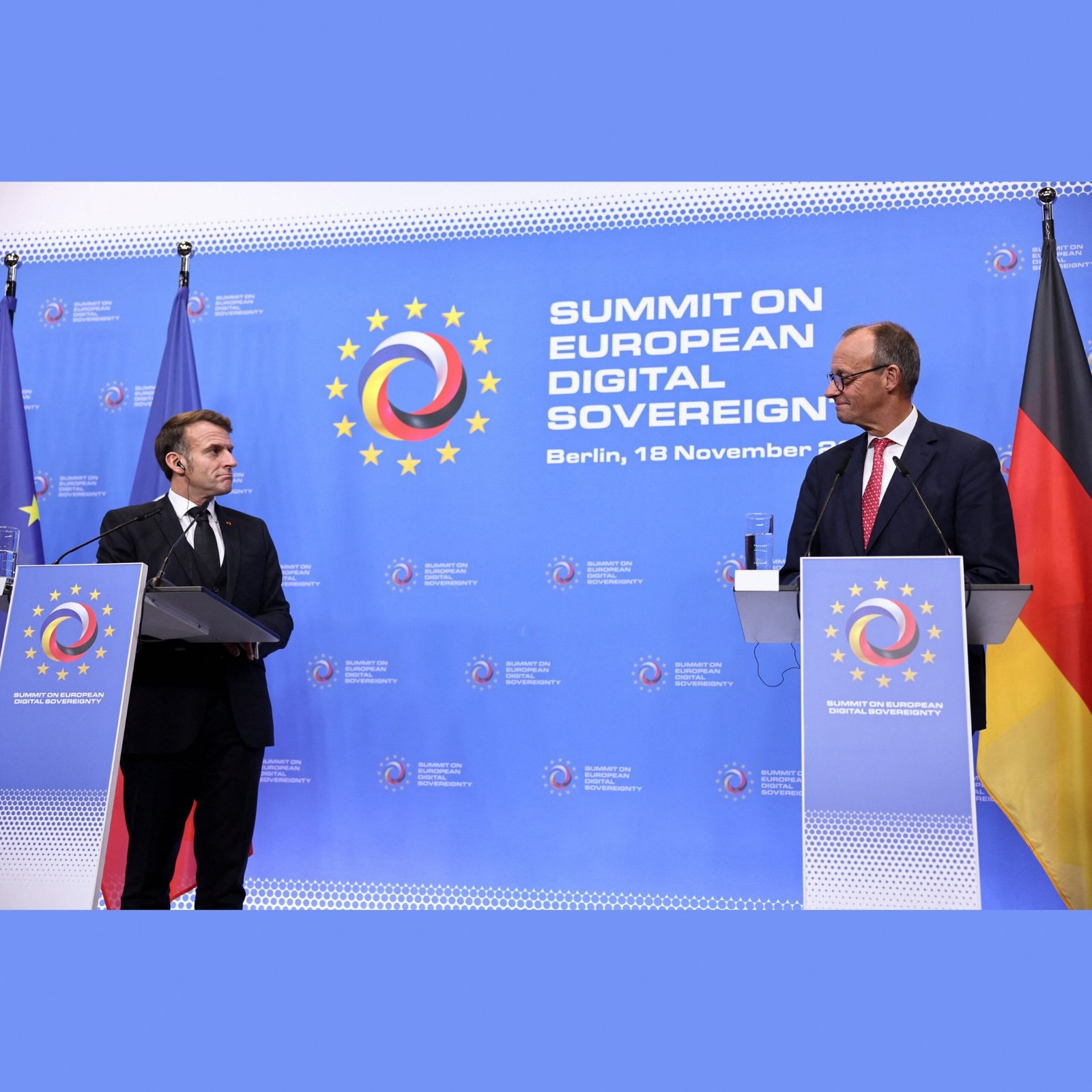
France wants billions of euros in the European Union's next seven-year budget reserved for weapons built in Europe, and Germany is leading the pushback. The clash has helped cut the bloc's proposed defense and security spending for 2028–34 from €131 billion to €92 billion, the Financial Times reported, citing four diplomats involved in the talks, as EU leaders met in Brussels on Thursday to fight over the budget.
Why it matters: the money decides whose factories build Europe's weapons — and whose workers get the jobs. France says spending the money at home builds an arms industry Europe can rely on, not American suppliers. Germany says rigid buy-European rules would slow rearmament and cost more, when European armies need equipment fast. For households, the split decides whether defense billions stay in European pay packets or flow abroad, and how quickly Europe can arm itself.
Paris argues European defense funding should strengthen its own arms industry and cut dependence on foreign suppliers, and French arms makers would be chief beneficiaries of rules favoring European suppliers. The Commission first proposed €130 billion for defense and space, and the cut to €92 billion is still more than three times the current 2021–27 allocation.
Berlin answers that national governments should keep authority over what their forces buy, citing flexibility, costs and access to foreign equipment. Germany itself buys American equipment, and the Netherlands backs its position. The 12 states opposing tighter buy-European rules — Germany, Austria, Denmark, Estonia, Finland, Italy, Latvia, the Netherlands, Portugal, Romania, Sweden and Slovenia — took 66.3% of their major arms imports from US suppliers over the last five years, against 10% from EU suppliers, Stockholm International Peace Research Institute figures show.
Where it stands: the fight sits inside a wider budget battle, with net contributors pressing to cap spending while recipients defend farm subsidies and regional funds. The current proposal would still let Ukraine, Britain, Norway and Canada tap EU defense industrial funding. EU Defense Commissioner Andrius Kubilius warned the cuts could jeopardize major joint European defense programs, and Chancellor Friedrich Merz called the spending proposals unacceptable as he arrived at Thursday's summit. Leaders aim to close budget talks by the end of the year — and the buy-European rule is one of the fights still to settle.
Member News: Join ProfiloPolitics to support independent journalism and civic education.