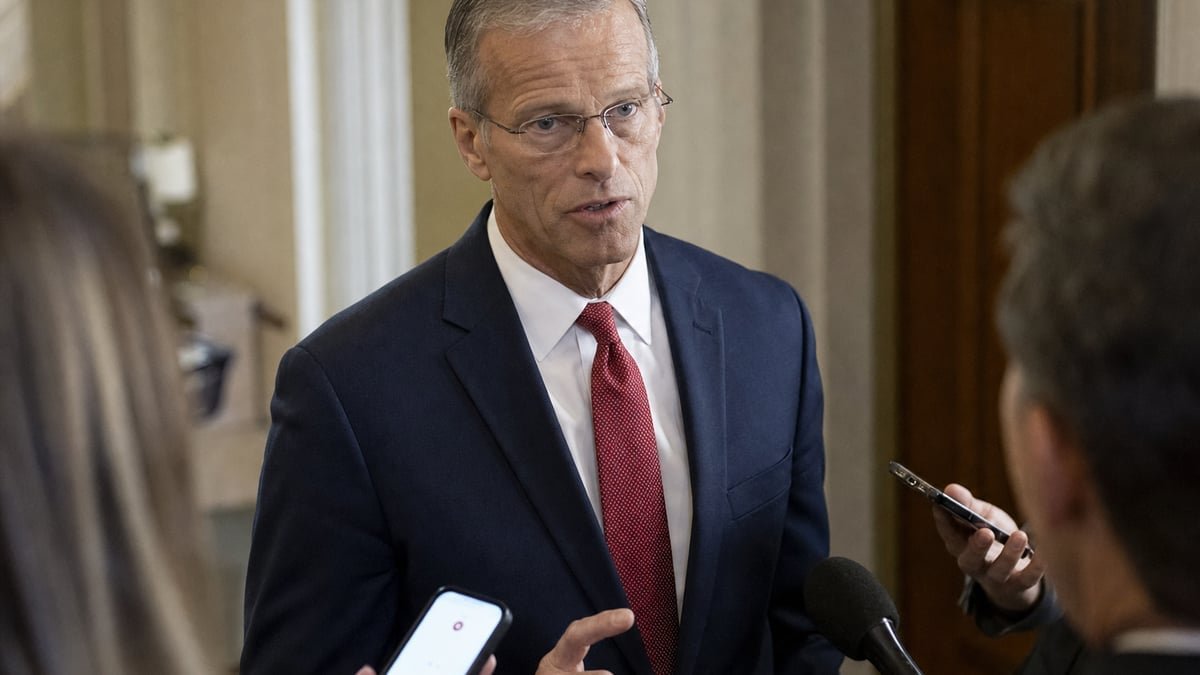
Senate Majority Leader John Thune of South Dakota is not stepping aside after the midterm defeat. A spokesperson for his office confirmed on Wednesday that Thune will run for Senate minority leader in next week's Republican leadership elections, seeking to stay on as his party's leader now that Democrats have taken control of the chamber.
Senate Republicans cast their leadership ballots on Tuesday, November 10, at 9 a.m. in the Old Senate Chamber. So far no other Republican has publicly declared a challenge to Thune, and Florida Senator Rick Scott, who ran against him for the leadership in 2024, said in September that he does not intend to seek the post again. Thune, 65, had said before the election that he expected to seek another term as Republican leader whether his party kept the Senate or lost it.
Thune made his case in a statement posted on X in the early hours after the polls closed, pointing to what Senate Republicans delivered while they held the majority: they prevented the largest tax hike in American history, secured the border, confirmed President Trump's Cabinet at the fastest pace in two decades and put conservative judges on benches across the country faster than at any time since the Reagan administration. Looking ahead, he wrote: "As we head into 2027, Senate Republicans will not stand idly by as the far-left, socialist wing of the Democrat Party attempts to unwind everything we've done."
The reaction on the right has been rough. Conservatives accuse Thune of failing to deliver President Trump's priorities, above all the SAVE America Act, the election-integrity bill that would require documentary proof of U.S. citizenship to register to vote in federal elections and photo identification to cast a ballot. The House passed the bill three times in 2026, and each time it died in the Senate, where the 60 votes needed to break a filibuster were never there. One source close to the Republican conference warned that Thune's bid could draw serious backlash, arguing the conference did not deliver on the president's agenda and that the failure may have hurt Republican turnout, and outspoken Trump allies such as Utah Senator Mike Lee are being floated as possible alternatives. Reaction from ordinary voters online has been harsher still, with many calling openly for Thune to go.
Thune took over the Republican leadership in 2024, winning a three-way contest to succeed Mitch McConnell of Kentucky, and he managed a 53-seat majority through two years of one-vote margins. Republicans entered this cycle defending those 53 seats and lost at least five of them, including races in Texas and South Carolina, states President Trump carried handily in 2024, handing the chamber to the Democrats. Senate Majority Whip John Barrasso of Wyoming is also expected to seek another term in the leadership as the party moves into the minority. Thune is signalling he will run the minority as a blocking force: using the filibuster and the Senate's rules to slow the Democratic majority, defend the tax and border laws Republicans just passed, and protect the president's remaining agenda.
For voters, the November 10 vote matters because the minority leader is the person who decides how hard Senate Republicans fight a Democratic Congress: whether the SAVE America Act gets another push, how confirmation battles over judges and officials are fought, and how much of what the Trump administration built over the last two years survives the next two. Thune is asking his colleagues to keep the leader who lost the chamber in charge of that fight.
— Friday, November 7 – Saturday, November 8, 2026 —
The push to delay the vote gathered support before Tuesday. Senator Mike Lee joined Senator Ron Johnson's effort to postpone the leadership election, arguing Republicans should judge Thune on what he delivers while they still hold the majority — confirming nominees and advancing key legislation — before deciding his future. Johnson was collecting signatures for a letter to Conference Chairman Tom Cotton calling for a conference meeting before the closed-door election, and Lee agreed in a social-media post to sign, writing: "We have no business holding Senate Republican leadership elections until: (1) we've had ample opportunity to discuss what happened on Tuesday, and (2) we know who's going to be in our conference." By Friday, November 6, Johnson had obtained the five signatures needed to request the meeting; under conference rules five written signatures require the meeting to be called. Senator John Kennedy signed on November 7, and Senator Rick Scott backed the effort. Thune was still expected to win another term and lead a minority conference.
Representative Anna Paulina Luna and activist Scott Presler then backed Johnson as the alternative to Thune for Senate minority leader, with Presler naming Rick Scott and Mike Lee as other valid options. Johnson himself never declared as a challenger.
— Tuesday, November 10, 2026: the outcome —
Senate Republicans reelected Thune as their leader on Tuesday, November 10, unopposed and by acclamation. The bid to delay the vote failed 15-31. John Barrasso was reelected whip, Tom Cotton conference chair, Shelley Moore Capito policy chair and James Lankford vice chair, and Bernie Moreno replaced Tim Scott as chairman of the National Republican Senatorial Committee. Thune becomes minority leader in the 120th Congress in January, after the midterm losses cost Republicans the majority.
Member News: Join ProfiloPolitics to support independent journalism and civic education.