Friday, November 27, 2026
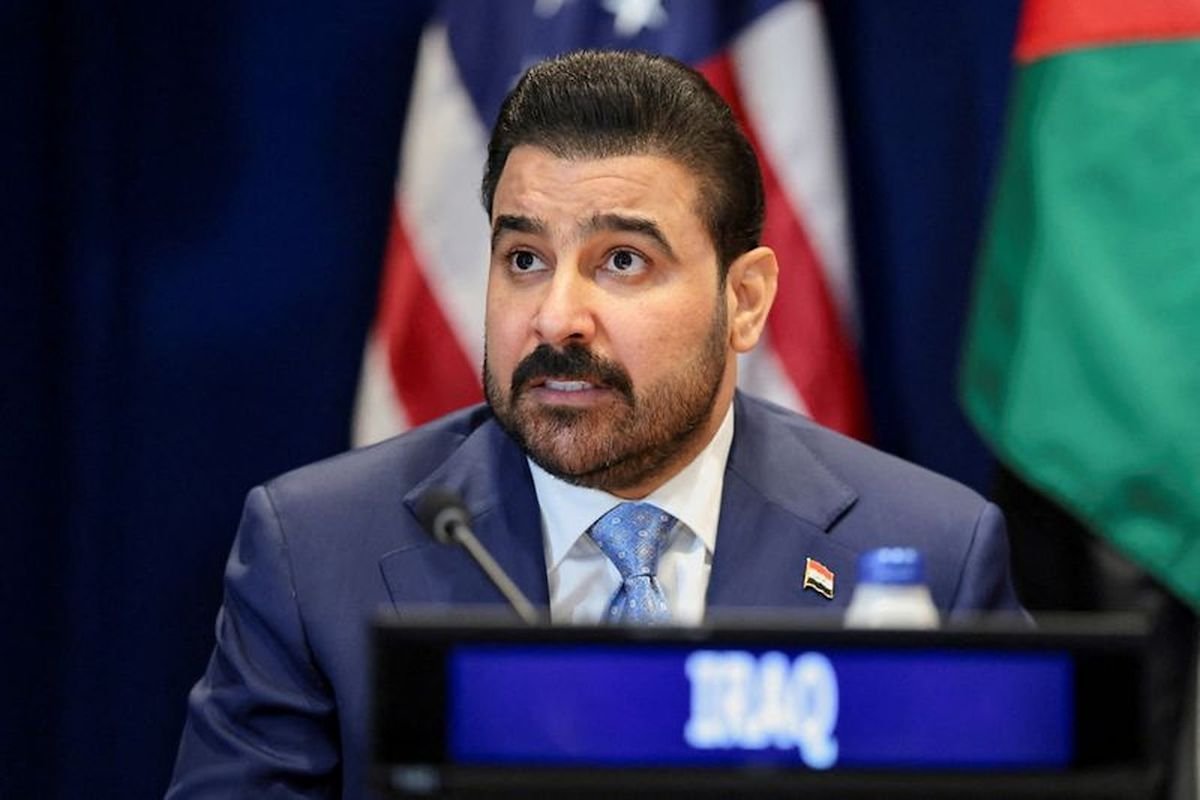
President Donald Trump on Friday backed Iraqi Prime Minister Ali al-Zaidi's drive to assert state authority, stop oil smuggling, end corruption and bring all weapons under state control. "We support Iraqi Prime Minister Ali al-Zaidi's efforts to assert state authority throughout Iraq, stop the smuggling of Iraqi oil, end corruption, and bring all weapons under the exclusive control of the state," Trump wrote on Truth Social.
The backing puts American weight behind a crackdown on the money keeping Iran-backed militias powerful, without another American war. Baghdad puts oil smuggling through the Kurdistan region at an estimated $100 billion from 2008 to 2025, spokesman Haider al-Aboudi said, adding that crude exported outside the state marketer SOMO is smuggling. Crude bypassing SOMO never reaches the treasury — money missing from schools, hospitals and salaries.
It caps a week in which Zaidi moved on two fronts at once: on Tuesday he ordered federal authorities to take over Kurdistan's border crossings and put Kurdish-run oilfields under the federal oil ministry; on Wednesday Iraq's highest court ruled Baghdad can deploy federal forces along all international borders; and on Thursday border forces closed the al-Waleed crossing with Syria and the Bashta crossing with Iran as thousands protested in Erbil. The Kurdistan government rejected the "military language and threats" in Baghdad's announcement, while saying it is working with federal authorities against corruption and to end oil smuggling.
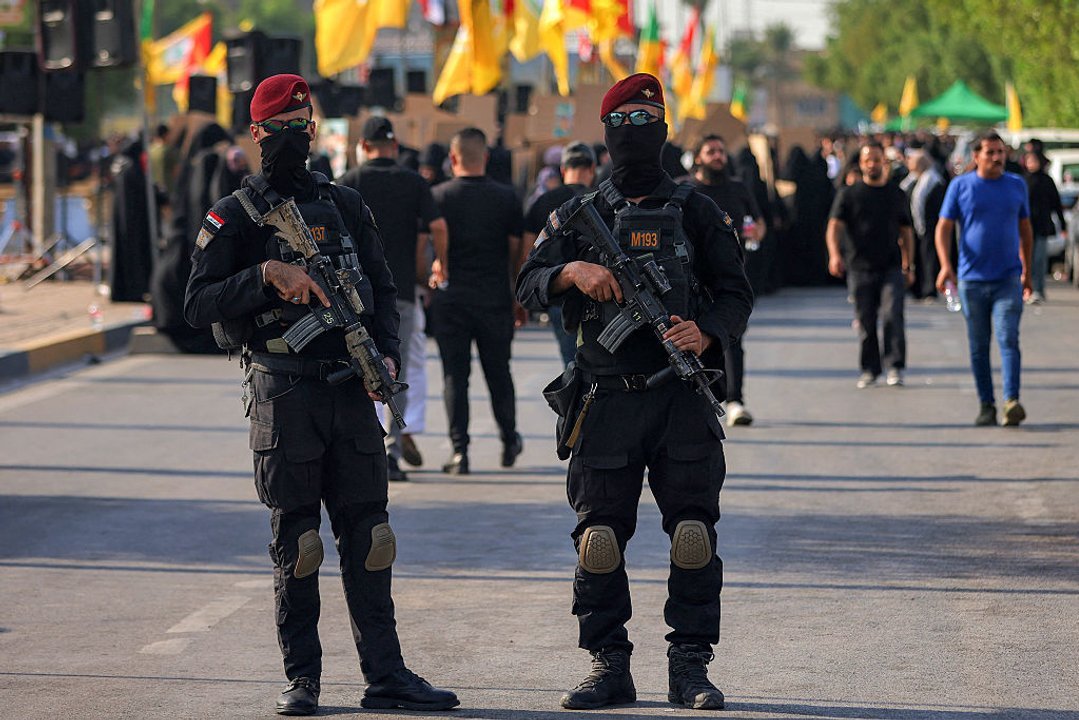
It also lands a week after al-Zaidi's showdown with Kataib Hezbollah, the Iran-backed militia controlling Jurf al-Sakhar since 2014. The prime minister ordered the army to prepare to enter the town, where the government says the militia ran an oil-smuggling operation; the group resisted, then agreed to let soldiers in under a late-Thursday compromise. A joint force of army, federal police and energy police units, alongside two Popular Mobilisation Forces brigades, is setting up a joint operations centre. Kataib Hezbollah denies the smuggling allegations and calls the probe a campaign to force disarmament.
Al-Zaidi, 41, a businessman and political novice, took office in a compromise just six months ago and has made bringing all weapons under state control his priority, under American pressure to disarm the fighters. An initial deadline of September 30, 2026 has been pushed to June 2027. The test now is whether federal forces can hold what they have taken, and whether the militias accept it or push back.
— What follows is the story as first written · the update is above —
Iraqi Prime Minister Ali al-Zaidi has ordered the army into Jurf al-Nasr, the closed stronghold of the Iran-backed militia Kataib Hezbollah, and given the group until Friday to leave the town, as troops mass around it over an investigation that found the militia stealing Iraq’s oil. Government spokesman Haidar al-Aboudi announced the order on Monday through the state-run Iraqi News Agency, and a senior Iraqi official told Al Jazeera Arabic the deadline is Friday, November 20 — the first time Baghdad has moved its own army against one of the country’s most powerful pro-Iranian armed groups.
Why it matters: Jurf al-Nasr sits about 50 kilometres south of Baghdad in Babil province, on the pipelines that carry Iraq’s oil wealth, and the investigation says hundreds of millions of dollars of crude have been stolen from the state since 2021 with the complicity of security and oil officials. Every barrel siphoned off there is money that does not reach Iraqi schools, hospitals and salaries — and if the army walks into the town on Friday and the militia does not walk out, Iraq faces the first open battle between its government and an armed faction that has semi-official status in its own security forces.
The government’s case rests on an investigation committee chaired by al-Zaidi himself, working from an intelligence agency report. Al-Aboudi said the committee confirmed oil smuggling on the basis of “intelligence documents” containing satellite images, and ordered those implicated — whom it did not name — to be referred to the judiciary. Al-Zaidi has already dismissed nine officials, including the Babil police chief, the provincial intelligence and security commanders, and the director of the state-owned pipeline company. Security agencies have also been told to stop tankers carrying oil or petroleum products from leaving the area, and the town is alleged to harbour illicit oil refineries.
Kataib Hezbollah’s answer came on Sunday, before the deployment order was announced. The group denied the allegations, said an inspection found no interference with the pipelines, and accused the prime minister’s office of “fabricating lies” as part of “the largest blackmail operation” to force it to give up its weapons. On Monday the group went further and declared it will not lay down its weapons at all. The two accounts cannot both be true: either the satellite images show a theft network, or the prime minister is inventing one to disarm a militia — and Friday is the day one of those stories collapses.
The town itself explains why the confrontation has been so long coming. Jurf al-Nasr — previously known as Jurf al-Sakhar — was recaptured from the Islamic State in 2014 and has functioned ever since as a closed Kataib Hezbollah enclave, its security controlled by the group, its displaced population never allowed to return. The crisis erupted on November 9, when the Al-Hurra media outlet published an investigation into alleged illegal oil extraction in the area; a week later the government’s committee confirmed the allegations and identified refining facilities inside the enclave.
The contrast is between a prime minister and a militia that both claim to speak for Iraq. Al-Zaidi told his military and security commanders to deploy additional forces around the town and prepare for government troops to enter, a move no Iraqi prime minister has ordered against Kataib Hezbollah before. The group, one of dozens of heavily armed pro-Iranian factions with semi-official status in Iraq, answers that it is being blackmailed into disarmament and will keep its weapons. Between them stand the leaders of the Coordination Framework, the alliance that governs the country, who have begun mediation efforts to achieve the faction’s complete withdrawal without a fight.
What happens next is Friday. If the mediation succeeds and Kataib Hezbollah leaves Jurf al-Nasr, the state regains control of the town and the pipelines that cross it for the first time in twelve years. If the militia stays and the army goes in, Iraq gets an open confrontation between Baghdad and an Iran-backed faction at the exact moment the wider U.S.-Iran war is already burning across the Gulf — and the question of who controls Iraq’s oil, its army and its sovereignty will be answered with gunfire instead of a deadline.
Member News: Join ProfiloPolitics to support independent journalism and civic education.
Join us on Telegram: t.me/profilopolitics