President Donald Trump's plan to remake East Potomac Park hit a wall on Thursday — and the wall was built by his own appointees. The Commission of Fine Arts, the federal panel that must pass on designs in the capital and whose seven members were all handpicked by Trump, heard the Interior Department's proposal to turn the whole peninsula into a single championship golf course. Four members were absent, so the panel had no quorum and could not vote — but its chairman told the administration to go back and redraw the plan so the park stays open to everybody.
Trump's reason for the overhaul is the state of the place itself: he has called the existing course dangerous and said its rebuild should begin "immediately," and his administration says the park is unsafe, its seawall is deteriorating and $43 million of maintenance has been left undone. The design Interior presented would replace East Potomac's 18-hole course and its two nine-hole courses with one 18-hole championship course running to the shoreline — and would erase the Ohio Drive loop, the historic miniature golf course and the picnic grounds at Hains Point.
The public's answer was overwhelming. The commission received nearly 700 written comments on the proposal, and only three supported it; nearly an hour of testimony at the meeting ran the same way. To the park's users — the runners and cyclists on Ohio Drive, the families at the picnic grounds, the golfers who play the public courses — the design takes a park that belongs to everyone and hands it to golfers alone, and the administration has still not said what the rebuild would cost, how it would be paid for, or what players would be charged. Commissioner Mary Anne Carter, another Trump appointee, asked whether cutting three courses to one would reduce the number of golfers who can use the property at all; the administration's own presentation cited about 88,000 rounds played there in 2016.
Chairman Rodney Mims Cook Jr. put the panel's position to Gregory Wischer, the Interior official presenting the plan: "You have some things here that matter to these folks. You have a lot of room here — going from this many fairways to this few — to accommodate some of the suggestions." Cook urged the department to "sharpen your pencil" and find a design that would "keep this peninsula available to everybody and still have a magnificent course that President Trump wants." Wischer agreed to bring back alternative renderings at the next stage; the department said it would consider changes but did not promise a new proposal.
Why it matters: the fight is over who a public park is for. The same peninsula carries a championship course in the president's plan and, in the public's, the everyday recreation of a whole city — and on Thursday the president's own design panel sided with keeping both. The proposal goes next to the National Capital Planning Commission on December 3 and returns to the arts commission on January 21. The park itself stays open in the meantime under Judge Ana Reyes's restraining order, which runs through November 28 — the court fight told in the story below.
— What follows is the story as first written —
Sunday, November 15, 2026 (5 days ago)
— The update is above —
East Potomac Park and its golf course stay open. U.S. District Judge Ana Reyes issued a temporary restraining order on Saturday that bars the federal government from closing East Potomac Park and the East Potomac Golf Course during the daily hours they were open on Saturday, November 14 — one day before the gates were to shut for a 15-month rebuild into the championship course President Donald Trump has promised. The order runs through November 28, 2026, or until the court rules again, whichever comes first.
For Washingtonians, the ruling keeps a public park public. The Park Service’s November 12 determination would have closed every part of the park south of Buckeye Drive indefinitely — Ohio Drive, the seawall promenade, the fishing areas, the Hains Point picnic grounds and playgrounds, the golf and mini-golf courses, the bathrooms and the Wharf Jitney dock — fencing off the affordable municipal course where generations of local golfers learned the game, along with the cycling and running loop, until at least 2028.
The order’s own words are narrow and plain. It “ENJOINS the government from closing East Potomac Park and the East Potomac Golf Course during the daily hours in which they were open as of November 14, 2026. It does not order the Government to undertake any active management of either.” And on what the closure would have meant, Reyes wrote: “The government proposes to close a historic park, daily enjoyed by Washingtonians of all stripes, indefinitely.”
At Friday’s five-hour hearing, Justice Department lawyer Adam Gustafson gave the court three reasons the park had to close on November 15: safety hazards including the deteriorating seawall, the end of operator National Links Trust’s contract that day, and a directive from the president to close the course. The 30-page order answers that the stated reasons were “pretextual”: the government “reverse-engineered additional justifications for the Park’s closure” while continuing to assert it would close the park to follow the president’s directive. Reyes found the plaintiffs likely to succeed on their claims under the National Environmental Policy Act and the Administrative Procedure Act — the government, she wrote, violated at least two federal laws “to meet an arbitrary deadline” — and she noted that the Interior Department has progressed “from removing the trees to removing the people.” Trump’s own posts set the date: on October 26 he wrote, “We are closing the East Potomac Golf Course Site as scheduled on November 15th in order to renovate and rebuild for Competitive (with other such projects!), Safety, Modernization, and Aesthetic reasons.”
Trump answered on Truth Social even before the order landed on Saturday, contending that Reyes “doesn’t want us to quickly and inexpensively fix up the Course which is, also, very dangerous,” and he has called the Biden-appointed judge a “lunatic.” The Justice Department said in a statement that the judge acknowledged the National Park Service can limit access to its facilities where the public is at risk of harm, and the administration remains free to keep planning the new course. For the plaintiffs, Democracy Forward’s Catherine Carroll said the group was grateful Reyes stopped “another one of the president’s vanity projects”: “The administration’s inexplicable drive to destroy East Potomac Park would have taken away a treasured park that could never be replaced.”
The order does not require the government to run the golf course or hire an operator — National Links Trust’s contract still ends today — but Reyes closed the obvious workaround: “Defendants cannot use the absence of golf operations as a reason to exclude the public from the Course.” Repairs for imminent safety dangers are allowed if the government notifies the court in writing within 24 hours, and the October preliminary injunction barring tree removal and other irreversible changes without notice stays in force. The plaintiffs must post a $1 bond by November 20.
The fight around the order is widening. The same judge has said she intends to appoint former U.S. Attorney Jessie K. Liu as a special master to examine whether government lawyers misled her about the closure timeline — no misconduct has been found — while the Justice Department accuses Reyes of overstepping her authority. And the rebuild itself is a years-long project even if it proceeds: the new seawall alone is expected to cost more than $300 million and take at least two and a half years, and the National Capital Planning Commission is set to consider the Park Service’s proposal for the Tom Fazio–designed course on December 3.
The restraining order expires on November 28 unless Reyes extends it or converts it into a longer injunction, and the lawsuit brought by the DC Preservation League and two local golfers continues either way. The next two weeks are now the fight: the administration must decide whether to appeal, wait out the order, or come back with a closure case that follows the laws the judge says it skipped.
— What follows is the story as first written · the update is above —
The story as first published on November 14 continues below.
President Trump has taken his case for East Potomac straight to the judge. In a Truth Social post on Saturday, he renamed the public course "Trash Island" — "currently the Worst Golf Course anywhere in the World" — and appealed directly to Judge Ana Reyes, who is weighing whether to block Sunday’s shutdown of the park, to let the Department of the Interior rebuild it into "the Best Golf Course anywhere in the World." His promise to the city came with the appeal: anyone living in the D.C. area gets 50% off any and all rates.
Why it matters: East Potomac is the people’s golf course in the capital — public, affordable, and played by ordinary Washingtonians, not members. If the President gets his way, D.C. families get a rebuilt landmark course at half price; if the court stops the closure, the course stays as it is, in the state his photographs show. Who decides what happens to public land in America’s capital is the fight underneath the golf.
The appeal, in his own words: "Trash Island is currently the Worst Golf Course anywhere in the World, but the Department of the Interior is going to make it into the Best Golf Course anywhere in the World. Unfortunately, Judge Ana Reyes doesn’t want us to quickly and inexpensively fix up the Course which is, also, very dangerous — The Fairways are far too close together. When you walk down the corridors of Trash Island, you don’t hear the sound of the running Potomac, all you hear is the sound of people screaming, ‘FORE!’" He says the rebuilt course will attract the U.S. Open, the PGA Championship, the Ryder Cup and the Presidents Cup, "with all of the Economic Development that will bring" — and he posted photographs of the course’s present condition to make the case:
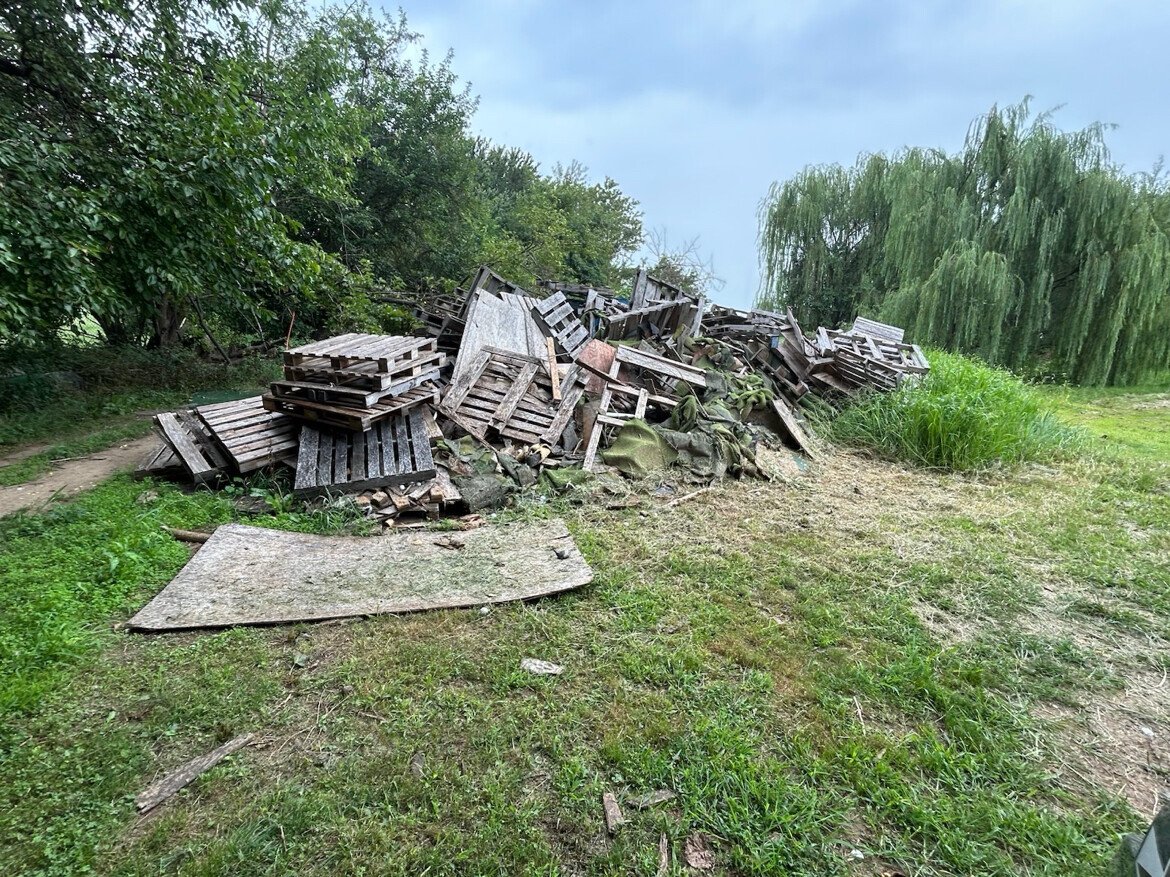
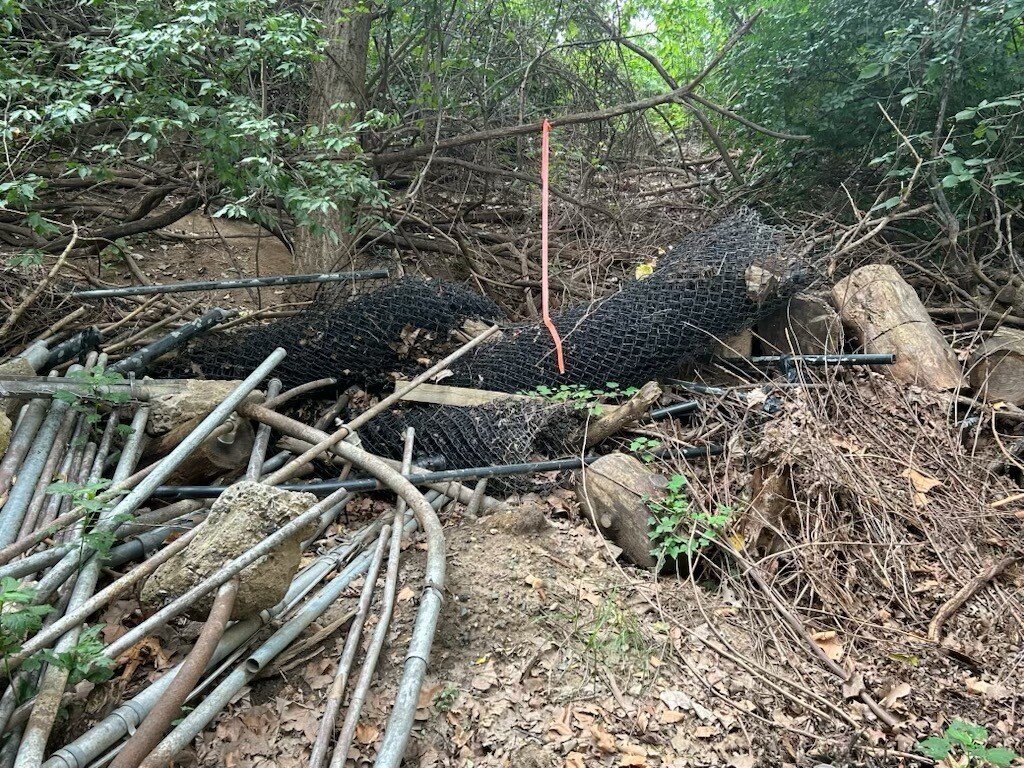
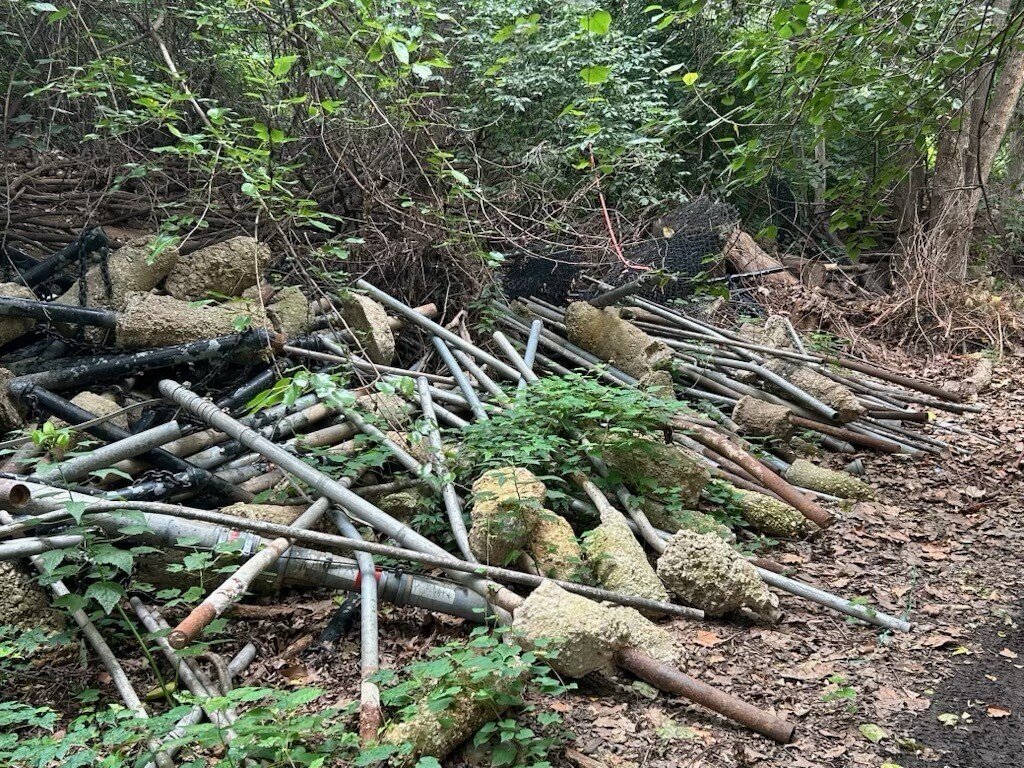
The contrast with how this fight began is below: the closure was first defended in court as a seawall emergency, and the Justice Department then admitted it came from the President’s own directive. Now the argument has moved out of the courtroom filings and into the open — the President himself telling the judge the project is one she "will be able to take great pride in seeing," alongside his wider case for the capital: the Interior Department’s work on 83 fountains, monuments and statues, the Reflecting Pool working again for the first time since 1922, and crime in Washington down 91%, a record, in his words.
The decision now sits with Judge Reyes: her ruling on Sunday’s shutdown comes first, and the Interior Department’s rebuild waits on it. When she rules, this story will be updated.
— What follows is the story as first written · the update is above —
A federal judge in Washington is deciding whether to block the shutdown of East Potomac Park on Sunday, after Justice Department lawyers acknowledged in her courtroom on Friday that the closure of the capital’s public golf course follows President Trump’s directive to rebuild it — not the sudden safety emergency the government had first described. Judge Ana Reyes ended Friday’s hearing without ruling, and the Park Service’s plan to close the park on November 15 hangs on her decision.
Why it matters: East Potomac Park is nearly 400 acres of public land in the middle of the capital — home to the affordable public golf links that ordinary Washingtonians play, the Hains Point loop runners and families use, and cherry trees planted more than a century ago. What is being fought over is bigger than one golf course: whether the government must give a court one straight story. The judge has already opened a formal inquiry into whether her court was misled, and Friday showed why.
The two sides’ own words frame the fight. Trump announced on Truth Social that the Interior Department has "an absolute right" to "take a terrible and very unsafe golf course, and make it into a great, safe, and prestigious golf course," first saying it would close for about 15 months, then that restoration would begin "immediately." Reyes answered from the bench in October, in words that now hang over the whole case: "Rarely, if ever, has the United States Department of Justice urged a federal court not to believe the sitting president." On Friday she opened with a warning — anyone who destroyed documents in this case would face sanctions or contempt proceedings, as she put it, within a "zeptosecond," the shortest unit of time ever measured.
Friday’s grilling centred on the seawall. The government’s lawyers, Associate Attorney General Stanley Woodward and Principal Deputy Assistant Attorney General Adam Gustafson, argued that an October 9 Park Service assessment of the deteriorating seawall around the island required closing the entire park. Reyes kept asking the same question: where in acting Park Service Director Jessica Bowron’s declaration does it say conditions endanger life and limb, or that the whole park must close? She noted the seawall has been known to be failing since 2011 — and that some 30,000 people were allowed onto the island for the Marine Corps Marathon shortly before officials called the site an emergency. When she asked, "You’re carrying out the president’s directive, right?", the Justice Department answered: "And that’s the way government works." The government maintains it is entitled to a presumption of regularity and that the closure order speaks for itself; the judge replied that what changed in two months to turn a long-known problem into a full shutdown of Hains Point is exactly what she has not heard.
The chronology is why candour, not just concrete, is on trial. On October 19, government lawyers told the court there was no plan to close the course — while Trump’s own posts of October 18 and 19 said he had directed it. On October 26 Reyes issued a preliminary injunction halting further tree cutting and damage at the course — hundreds of mature trees had already been felled — and ordered ten days’ notice before any irreversible change. On October 30 she opened a formal inquiry into whether Interior and Justice officials misled the court, and on November 7 said she would appoint former U.S. Attorney Jessie Liu as special master to run it; the Justice Department responded Friday that there is "no reasonable basis" for an ethics inquiry. The government has appealed the injunction, the judge refused to pause it on November 9, and on November 12 the Park Service published its formal Record of Determination for temporarily closing the part of the park south of Buckeye Drive. The National Links Trust, the nonprofit that runs the course, stops operating it after this weekend.
The situation now: everything waits on Reyes. If she issues the restraining order the plaintiffs — the DC Preservation League and two golfers — have asked for, the gates stay open and the rebuild waits. If she does not, East Potomac closes on Sunday for what the president has said will be roughly 15 months of work toward a championship course. Either way, the inquiry runs on: the government’s list of document custodians is due November 16, and the special master’s work will decide whether the shifting explanations were confusion — or something a court cannot let pass.
📰 ProfiloPolitics Member News — choose your news, share it, earn credit:
https://white-curlew-963569.hostingersite.com
Never miss a story — Join our Telegram channel
Breaking U.S. political news, live as it happens — plus the stories the big outlets sit on.
Join ProfiloPolitics on Telegram