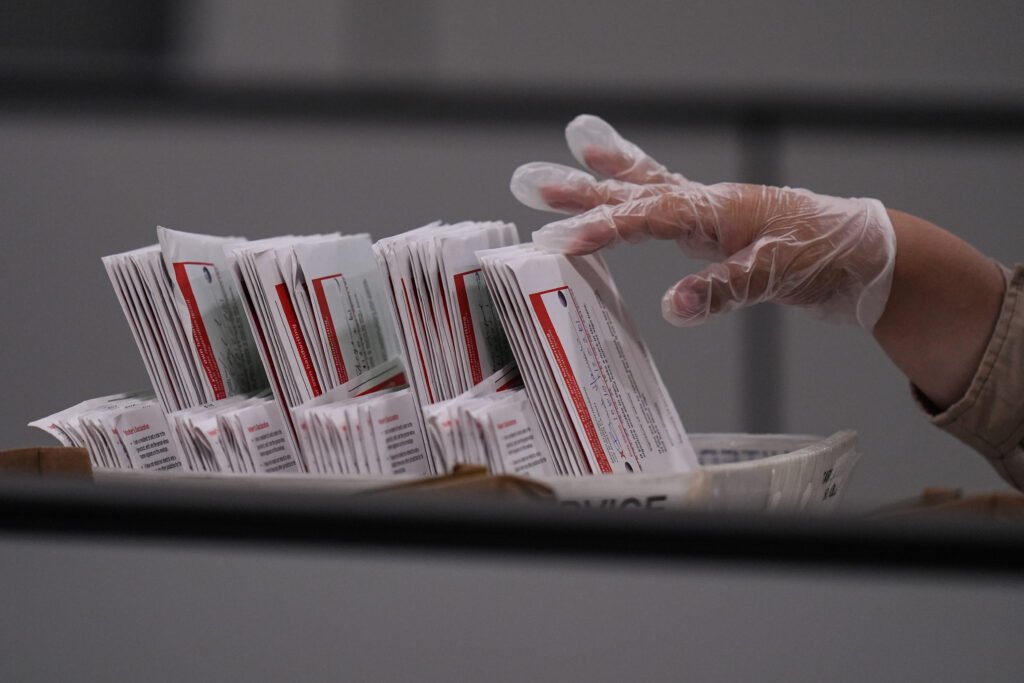
Because the ballots it wanted held back are already counted. They have been opened, taken out of their envelopes and mixed in with every other vote, and they can never be separated again. On Friday the Justice Department told the federal court in Los Angeles that the relief it sought "is no longer available," and dismissed its own case.
In people's minds, a lawsuit ends because a court decides it, or because one side loses the argument. The reality here is different: this case did not end on the argument — it ended because time ran out. A mail ballot is anonymous by design. Once officials check the signature on the envelope and separate the ballot inside, no one on earth can trace that ballot back to the person who cast it. So this fight was only ever winnable before the ballots were processed — and once Election Day passed, there was nothing left to win.
The department says the fight was about protecting American votes from being diluted by noncitizens, and it insists the wider effort continues. But a court fight over ballots has a clock on it that other lawsuits do not: you cannot unmix a count. In three weeks, four courtrooms said no — Judge Carter, the 9th Circuit, and the Supreme Court — and in the end the department still had to walk away by its own hand. And if the ballots can never be separated again, what was the lawsuit holding onto?
The details that matter: the department told California and Los Angeles County on October 13 to review its list of some 20,000 voters it calls likely noncitizens, and sued on October 15 to have their ballots set aside uncounted until citizenship was verified. Judge David O. Carter refused the emergency order on October 28. A divided 9th Circuit panel refused again on October 30. On November 2, the day before Election Day, the Supreme Court refused in a one-sentence unsigned order, with no justice noting a dissent. The dismissal filing runs two pages, written by Assistant U.S. Attorney Julie Hamill, and concedes the department "exhausted its appeals to obtain timely relief all the way to Supreme Court."
"California will have already commingled the challenged ballots with lawful ones. There is then no way to get the challenged ballots segregated." — Assistant U.S. Attorney Julie Hamill, in the dismissal filing
One new fact gives the whole thing its weight: because the department withdrew the case itself, before California ever had to answer, the fight ends with no ruling on the merits at all. The hearing Carter set for November 13 — where a court-appointed special master was to examine how the department built its list of 20,000 names, a list California says is riddled with errors and includes American citizens — will now never happen. The list was never tested. This lawsuit was one front in a nationwide campaign: the department has sued at least 30 states that refused to hand over voter data and has lost almost all of those cases, and on Thursday a federal judge in Washington state separately barred its officials from using coercive demands and threats of prosecution to pressure election officials into withholding ballots during a count.
The department closed its own case with the line it chose to end on: "The United States is evaluating how to best ensure that American votes are protected, including by preventing vote dilution by noncitizens."