Living Alone Is Now Canada's Most Common Household: 4.4 Million Canadians Live Solo, More Than Couples With Children, as Young Couples Nearly Halve Since 1981 and Marriage Keeps Slipping Later
ProfiloPolitics Editorial · November 29, 2026
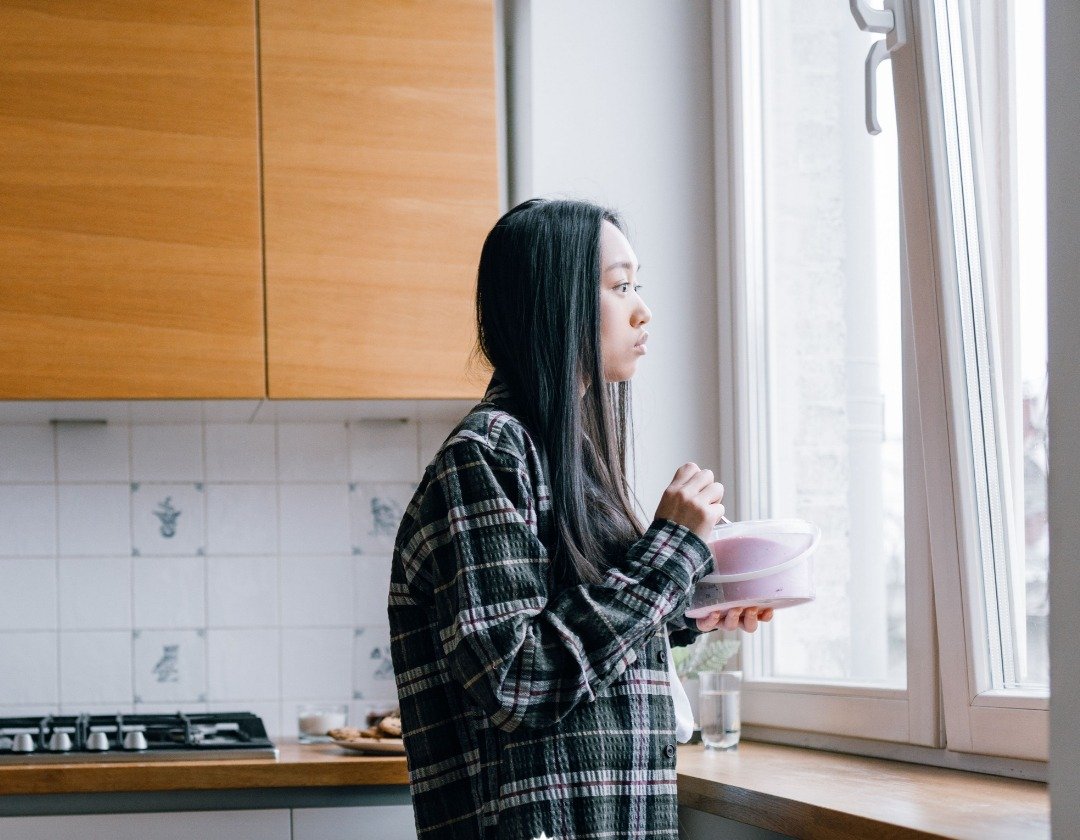
Canada has become a country of people living alone. In the 2021 census, 4.4 million Canadians lived alone — 15% of all adults, the highest share ever recorded — and one-person households, at 29.3% of all homes, are the most common household type in the country, ahead of couples without children (25.6%) and couples with children (25.3%).
Why it matters: the Canadian home was built around the couple and the family — the houses, the mortgages, the goods on the shelves. The largest single group of households is now one person on their own, and housing, work and old-age care all run into that fact.
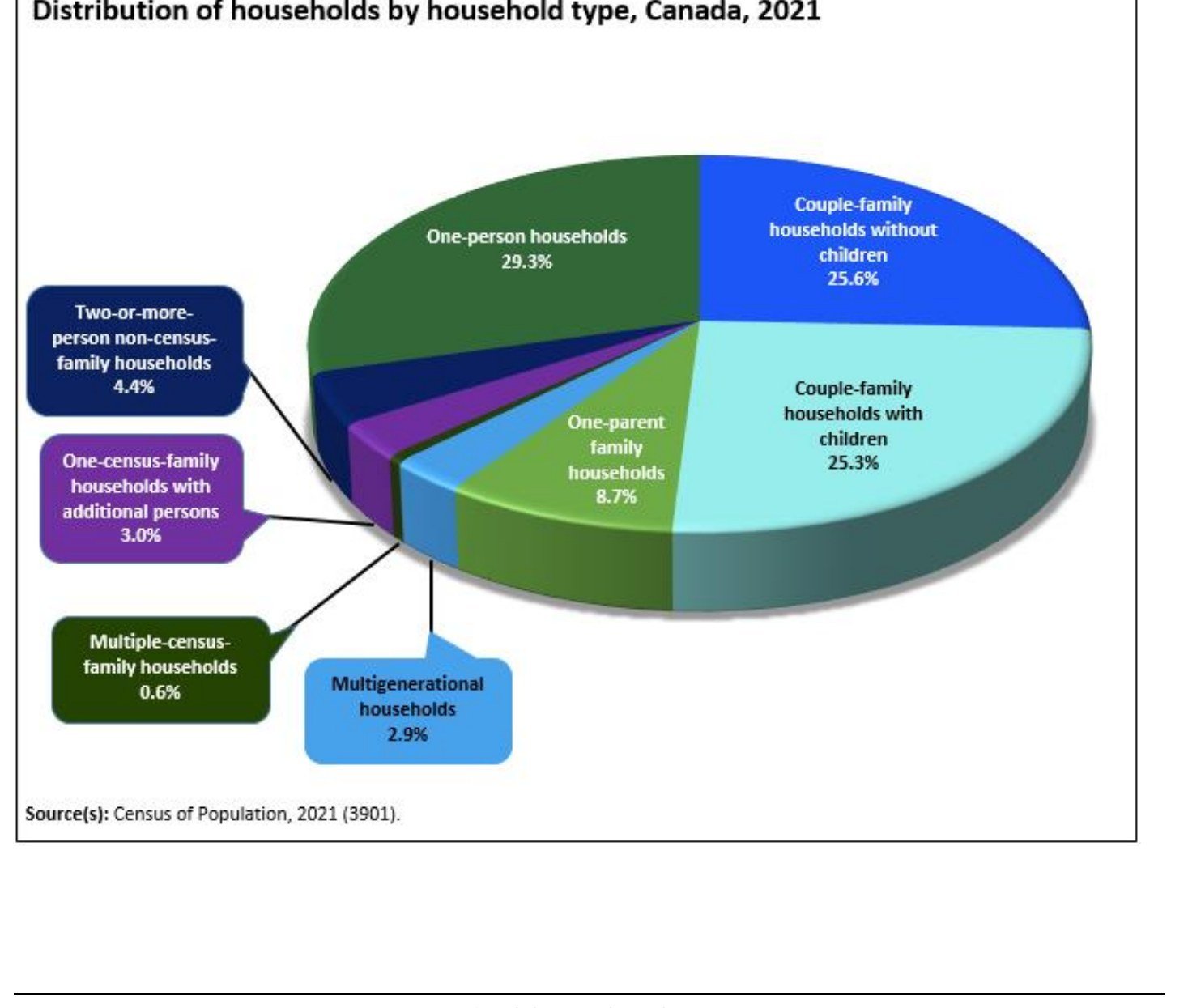
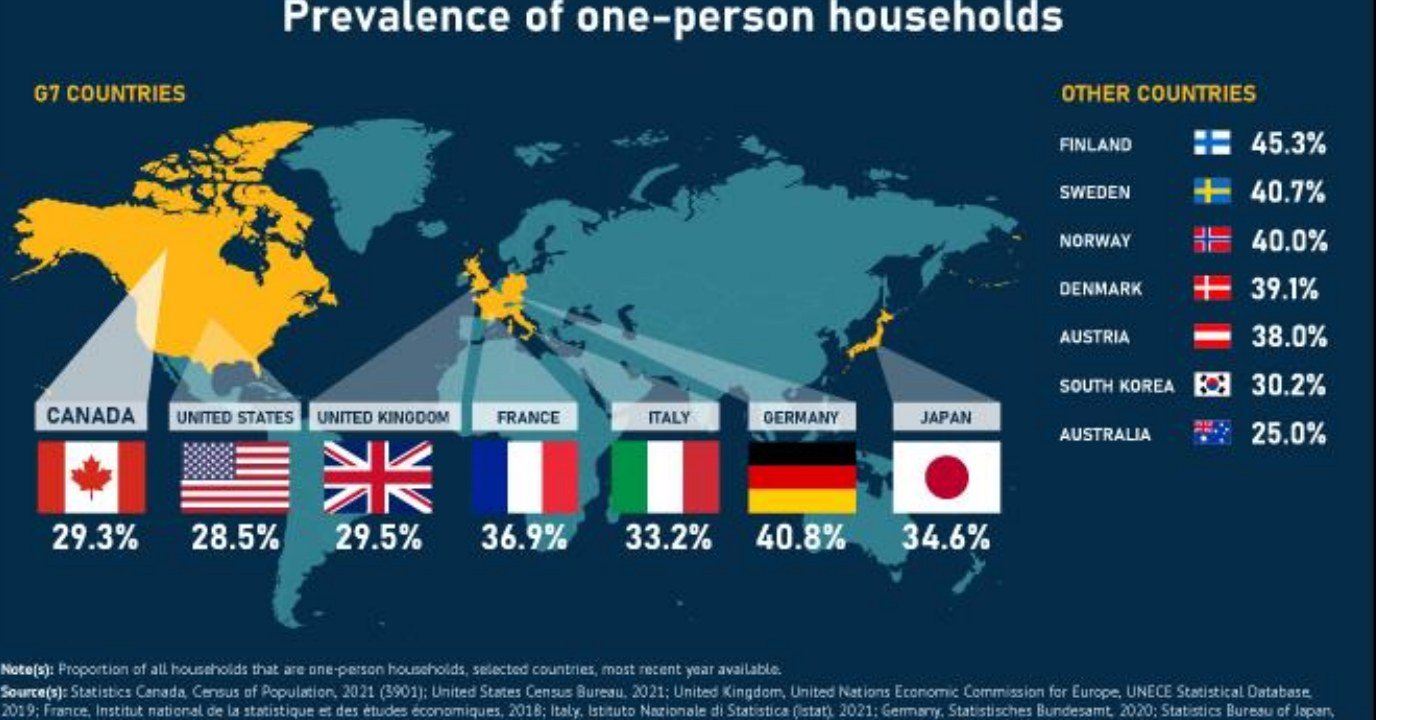
The climb is long and steady. One-person households were just 6% of homes in 1941, and 1.7 million people lived alone in 1981. In 2016 the solo household became the most common type for the first time in Canada's 150-year history, and it has held the top spot since. Statistics Canada says the rise is driven almost entirely by the aging of the population — 42% of Canadians aged 85 and over live alone — but it is climbing in mid-life too: the share of 35-to-44-year-olds living alone doubled between 1981 and 2021, as younger generations put off starting families until school is finished and a stable job is found. Among 25-to-29-year-olds, the share living in a couple has fallen from 68% in 1981 to 39%.
Quebec leads the country, with 19% of adults living alone — a position it has held since 1996, helped by lower shelter costs — while Ontario sits lowest among the provinces at 12%. Most solo households (56%) are in apartments. And the fastest-growing household type of all is the roommate household, up 54% since 2001: Canadians who cannot carry a home alone are doubling up instead.
Living alone is not the same as giving up on family life. Among solo dwellers aged 20 to 34, 72% said they were open to living with a partner in the future, and 60% intended to marry one day — they are starting later, not opting out.
Where it stands: Statistics Canada expects the solo share to keep growing as the population ages. The couple-with-children home that defined Canada for a century is now only the country's third most common household — and the one-person home is still pulling away.