First posted on Instagram · @profilopolitics
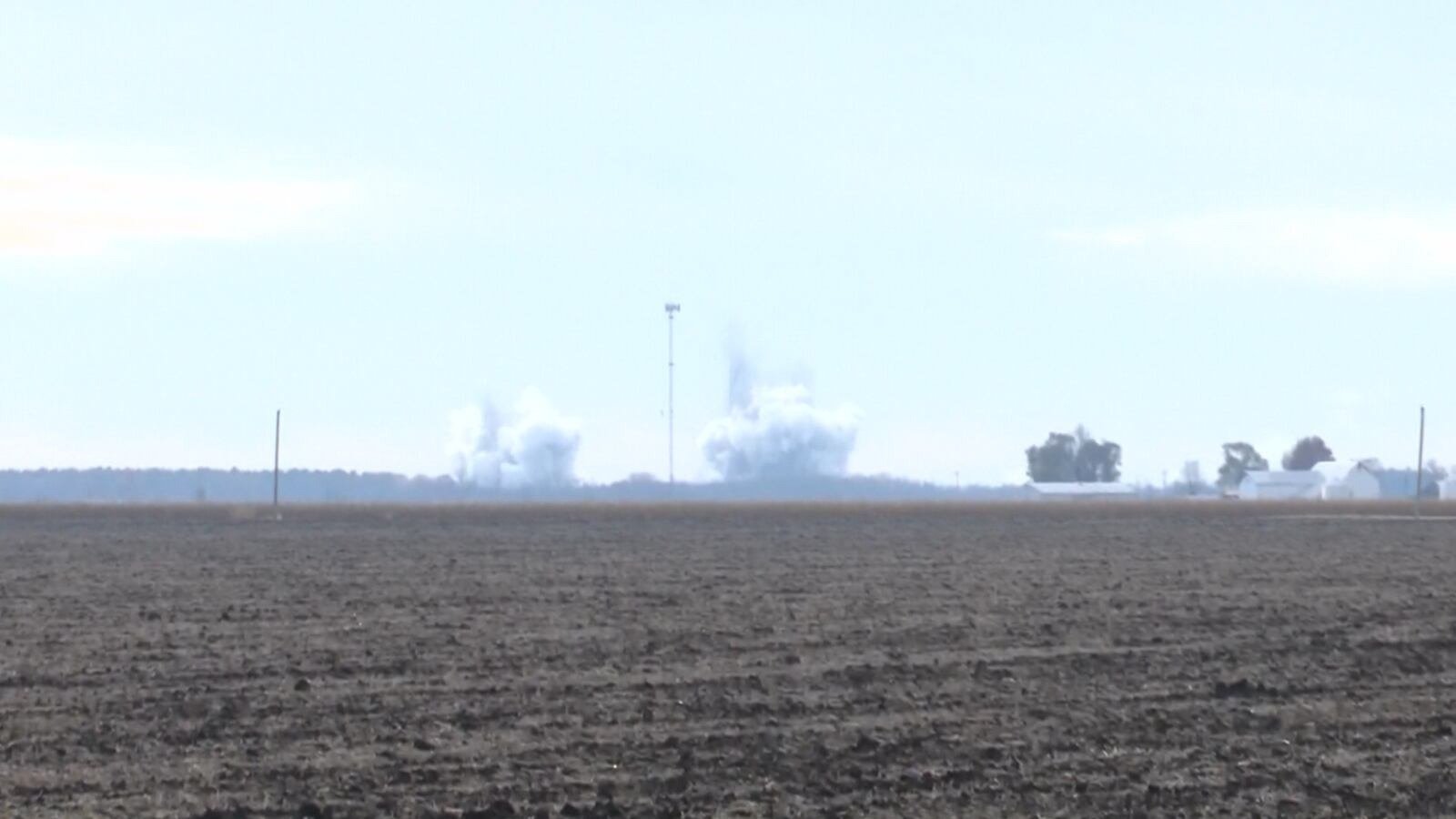
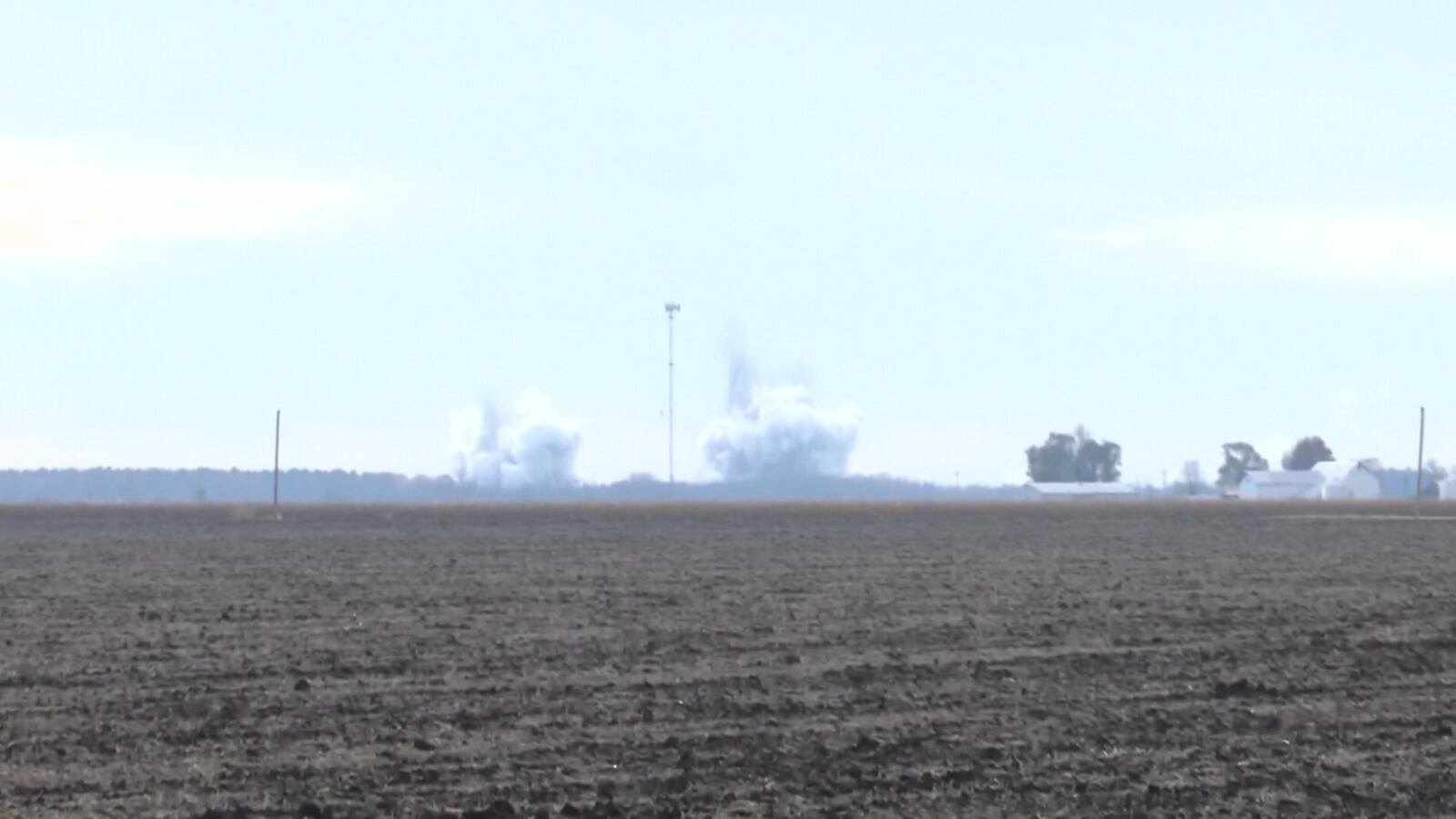
About 300 EPA workers and contractors spent Thanksgiving Day on the ground in Middletown, Iowa, sampling homes, schools and farms after the Army's controlled detonation Wednesday of five tons of degraded lead azide at the Iowa Army Ammunition Plant — and every real-time air monitor in the region is still reporting zero airborne lead, the Environmental Protection Agency said, with laboratory results on more than 1,000 post-blast samples still to come.
Why it matters: lead is a heavy metal especially dangerous to children and pregnant women, and Middletown families spent the holiday not knowing yet whether lead dust settled on their homes, playgrounds, drinking water and farmland. The air readings are the first answer; the lab tests on soil, dust and water are the answer that decides whether the area is truly clear.
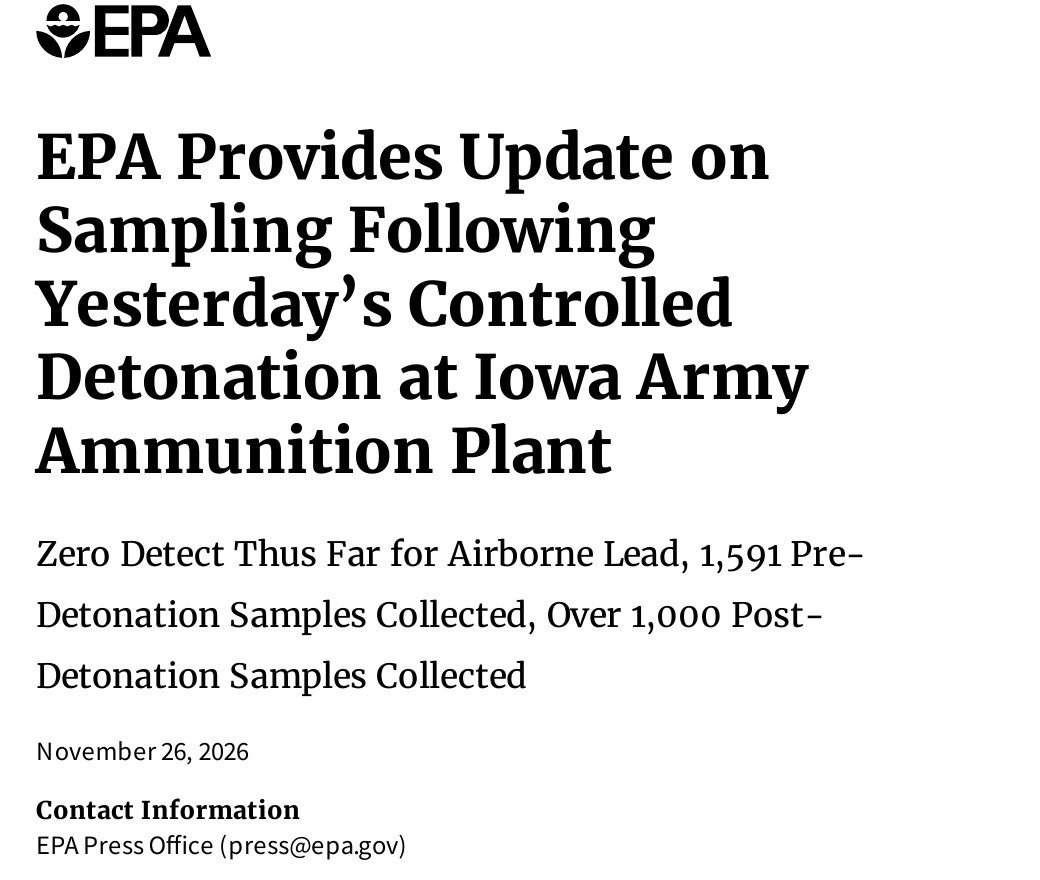
The EPA's own update put the scale in numbers: 1,591 air, water, soil and dust samples were collected before the detonation and more than 1,000 since, with crews re-sampling more than 130 structures and every drinking water intake in the plume area. "We are sampling at schools, homes, playgrounds, farms, churches, daycare facilities, drinking water systems, water bodies and more," the agency said Thursday. "The Trump EPA will continue its presence on the ground for as long as needed to ensure the proper environmental monitoring is taking place."
Residents are taking the good air readings with caution. Middletown's Tim Thomann, hosting 15 relatives for Thanksgiving, said he hoped testing continues "so we have that peace of mind," and neighbour Blaine Dial called the monitoring "absolutely key." Purdue environmental engineer Andrew Whelton called the air data promising but stressed lab samples must decide the risk. Maj. Gen. Eric Shirley, who led the Army operation, said the risk was "reduced as close to zero as it's absolutely humanly possible," and President Trump posted that the Army did a "great job."
The stockpile — 68 barrels of lead azide brought to Iowa in 2009 — had crystallized and grown too unstable to move. What happens next turns on the laboratories: the EPA expects the first post-detonation lab results as early as Friday and will publish results as they arrive.