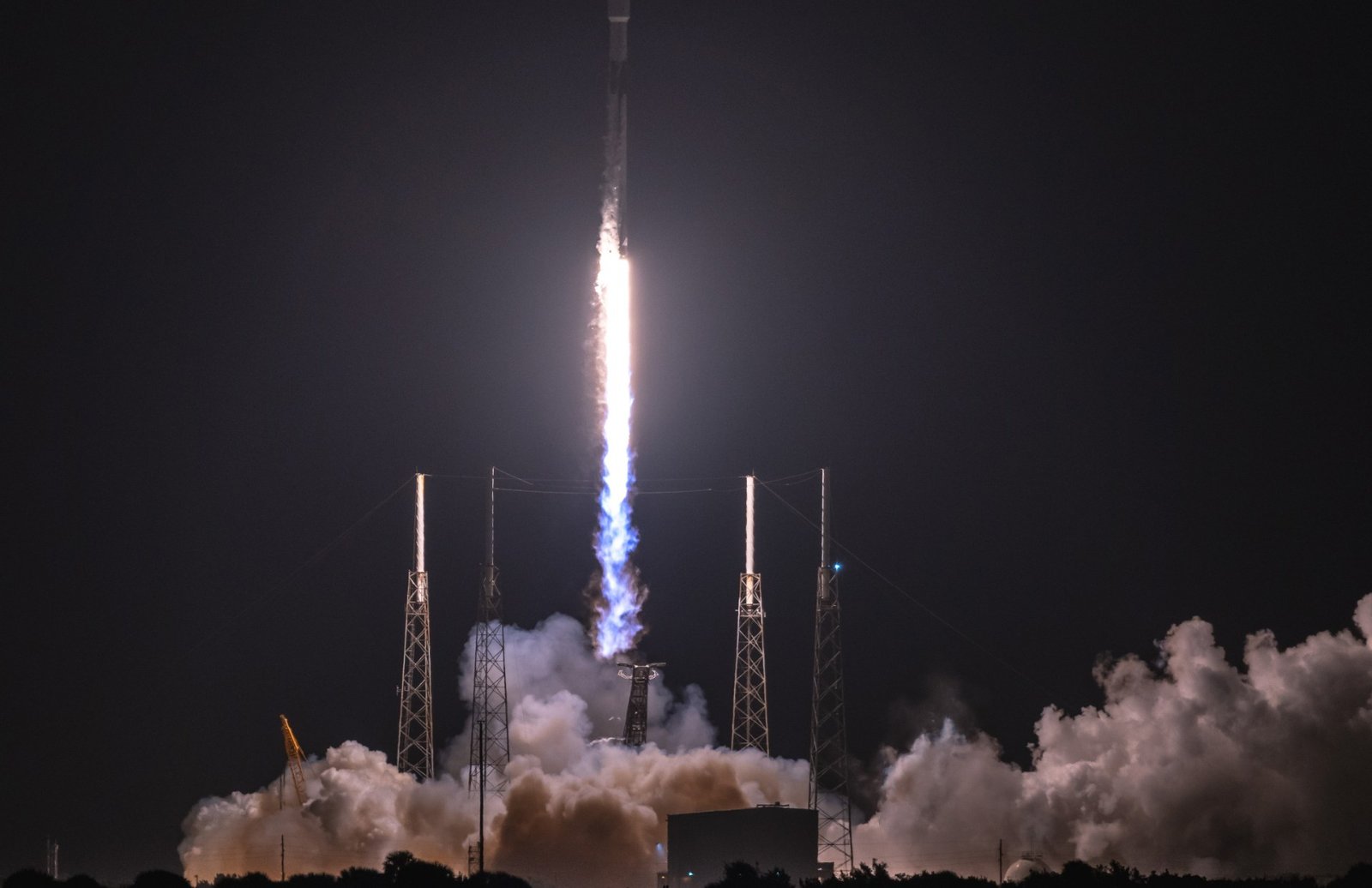
First posted on Instagram · @profilopolitics
SpaceX is demanding a retraction and an apology from The Washington Post, calling its report that Iran used Starlink to attack American forces “patently false.” In a statement on X on Sunday, Elon Musk’s company said it has no evidence, internally or from the Pentagon, that Iran ever used Starlink: “Because it never happened.”
Why it matters: the Post’s story tied an American company’s network to attacks on American troops in wartime. SpaceX and the Pentagon both say the paper was told before publication that the classified report at the centre of the story does not exist in the Pentagon’s records — and published anyway.
At the centre of the fight is what Iran is said to have done in the war’s first days. Four people familiar with the operations told the paper Iran used Starlink for command-and-control and one-way attack drone operations after U.S. and Israeli strikes in late February knocked out its conventional communications, and a classified Central Command update given to Secretary of War Pete Hegseth this summer was said to describe that use. The paper could not establish whether Starlink played any role in the March 1 drone strike on Port Shuaiba in Kuwait that killed six American service members.
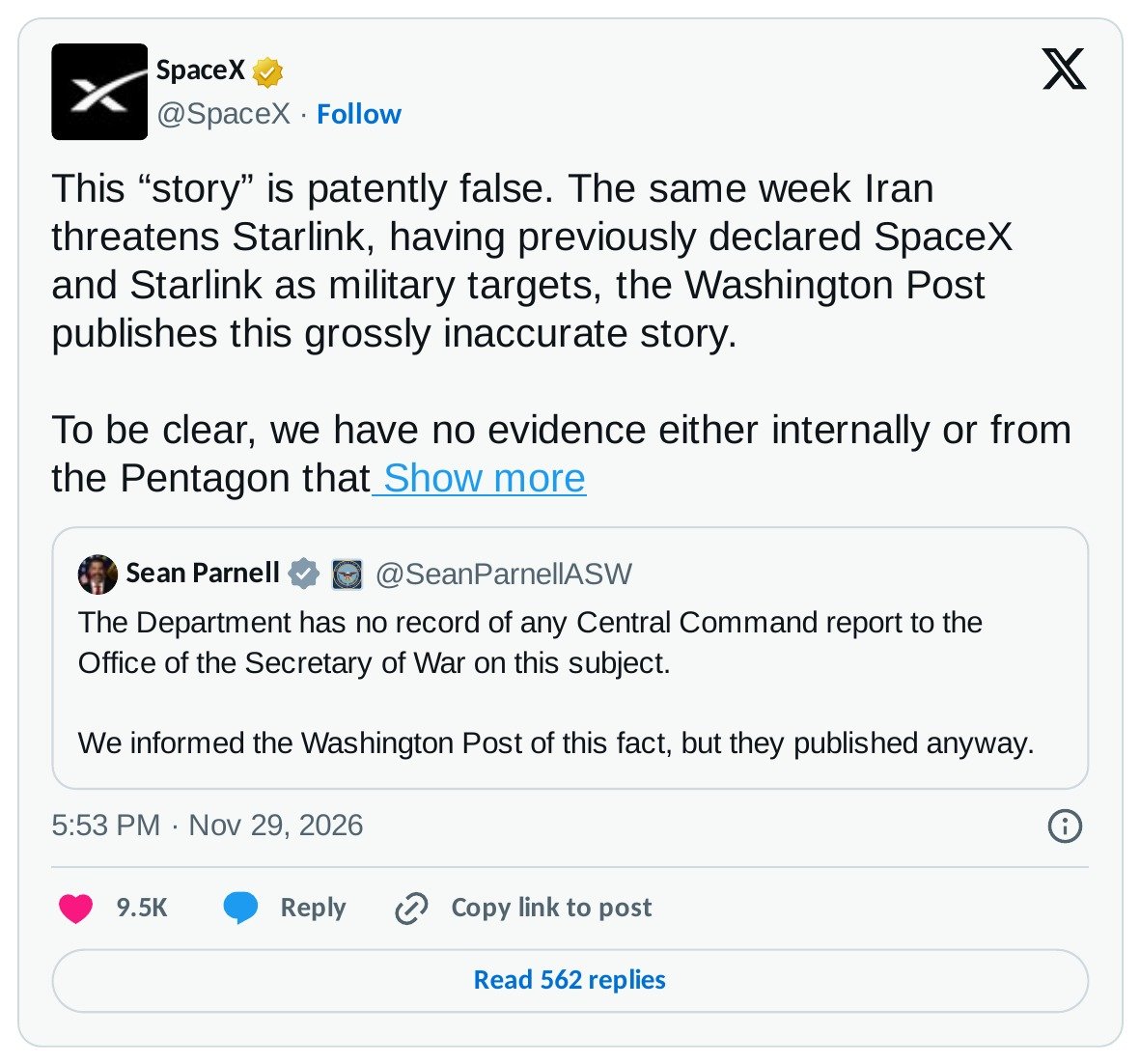
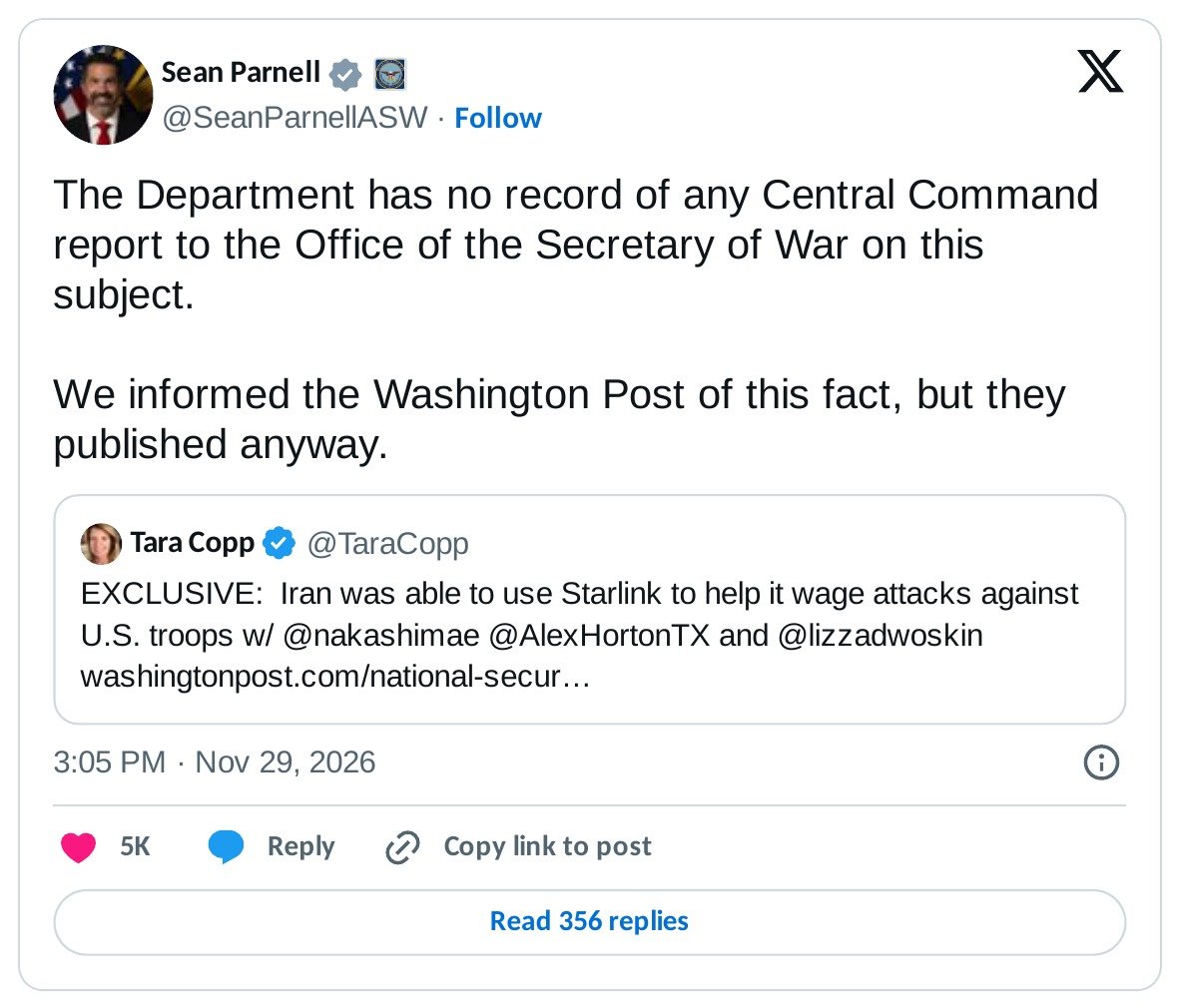
The Pentagon’s chief spokesman, Sean Parnell, answered on X: “The Department has no record of any Central Command report to the Office of the Secretary of War on this subject. We informed the Washington Post of this fact, but they published anyway.” Pentagon spokeswoman Kingsley Wilson had already told the paper the same before it published.
SpaceX said it had warned the paper directly as well: “We told the Washington Post weeks ago that their story was false. They recklessly published this hit piece anyway.” The company noted the timing — “The same week Iran threatens Starlink, having previously declared SpaceX and Starlink as military targets, the Washington Post publishes this grossly inaccurate story” — and said the paper’s reporters, editors and publishers “should be ashamed of themselves.”
The demand now sits with the Post: retract and apologise, or stand over a report built on anonymous sourcing whose central document both the company and the Pentagon say they cannot find.