Can Congress Still Investigate Trump After the White House Warned That Probes Could Be Criminal?
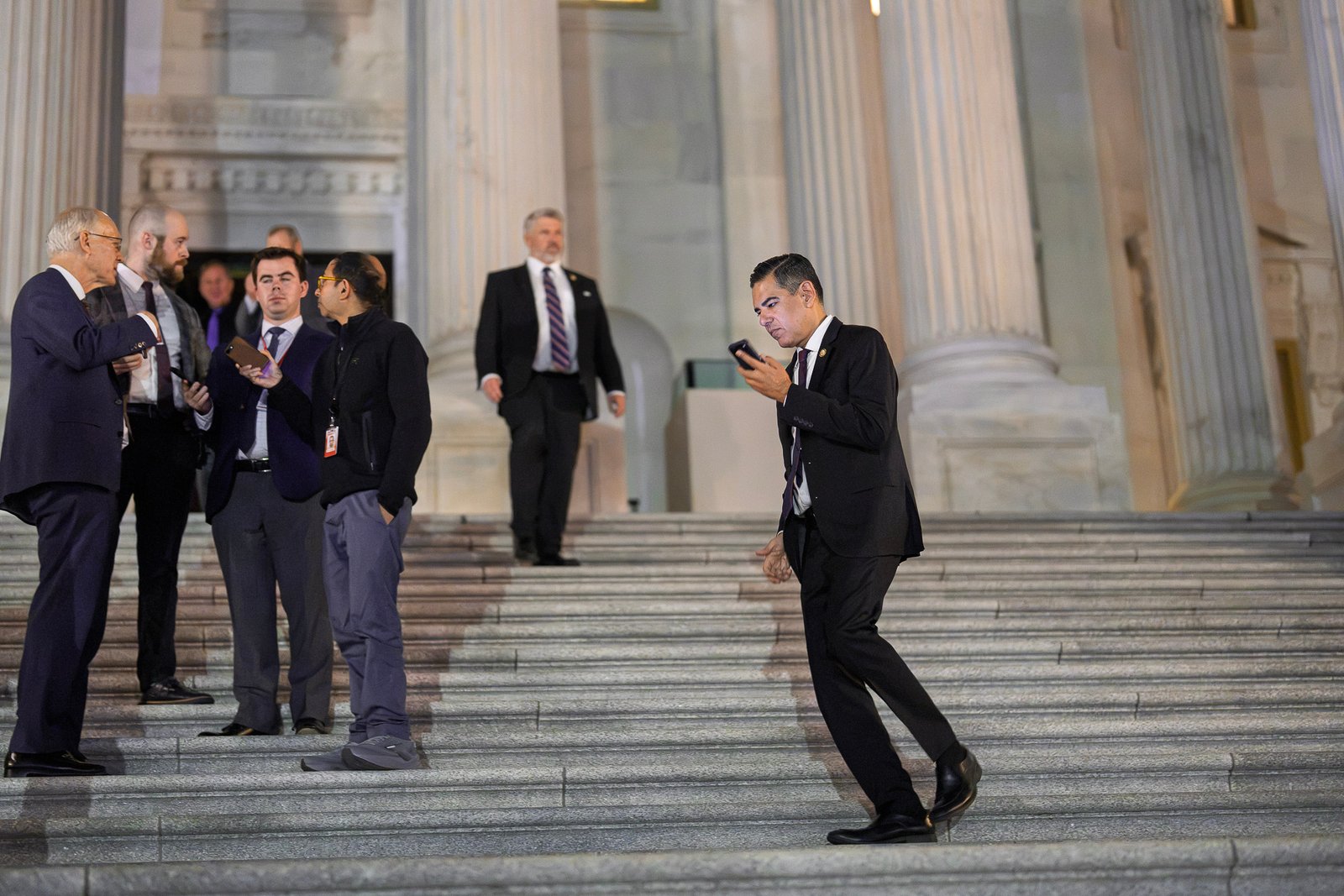
Yes. Congress can still investigate President Trump and his administration, and doing so is not a crime. Oversight is one of Congress's core constitutional jobs, the White House counsel's letter names no criminal statute and announces no prosecution, and this week Attorney General Todd Blanche himself said the quiet part plainly in Missouri: "Congress has oversight authority. It always has, it always will." What the White House can do is slow the investigations down in court. It cannot switch them off, and it cannot make looking into the president a criminal act.
The plain reality starts with what the Constitution and the courts actually say. Congress's power to investigate is not a favour granted by the White House; it is inherent in the power to legislate, which is why Garcia answered that Congress "has wide latitude to conduct investigations and oversight." The limits are real but narrow: a subpoena must serve a legitimate legislative purpose, the test the Supreme Court restated in Trump v. Mazars in 2020 after the first Trump administration fought House subpoenas for his financial records. If a court finds a subpoena fails that test, the remedy on the record is that the subpoena is quashed or not enforced — not that the lawmaker who issued it is charged. And over the whole field stands the Constitution's Speech or Debate Clause, which shields members of Congress from criminal or civil actions over their legislative work. No subpoena from the incoming majority even exists yet; Democrats do not take the gavels until January. So far this fight is letters, posts and television interviews.
What the White House claims goes much further than delay. In his letter dated Monday to Representative Robert Garcia, the incoming chairman of the House Oversight Committee, White House counsel Will Scharf accused Democrats of "abusive and capricious threats" and warned that oversight itself could turn criminal. President Trump went further on Truth Social, directing the Justice Department to look into the Democrats' oversight push.
"Threats to executive branch officials designed to deter them from public service, or process designed merely to abuse or instill fear in the recipient may cross the line into blatant criminality."
Common sense draws the line the letter blurs. A check that needs the permission of the branch being checked is not a check at all. If investigating the president were a crime, the president would be the one man in the country nobody is allowed to look into — and the Constitution was written by men who had just thrown off a king for claiming something close to exactly that. The letter's own authorities do not carry its conclusion: as Molly Nixon, a senior fellow in executive power at the Cato Institute, told CBS News, a subpoena without a legislative purpose may fail in court, but "the criminality question is not coterminous with the legislative purpose question," and she added, "I think it's incredibly unlikely that any court would find merit in any criminal charge against a member of Congress for their vote on issuing a subpoena."
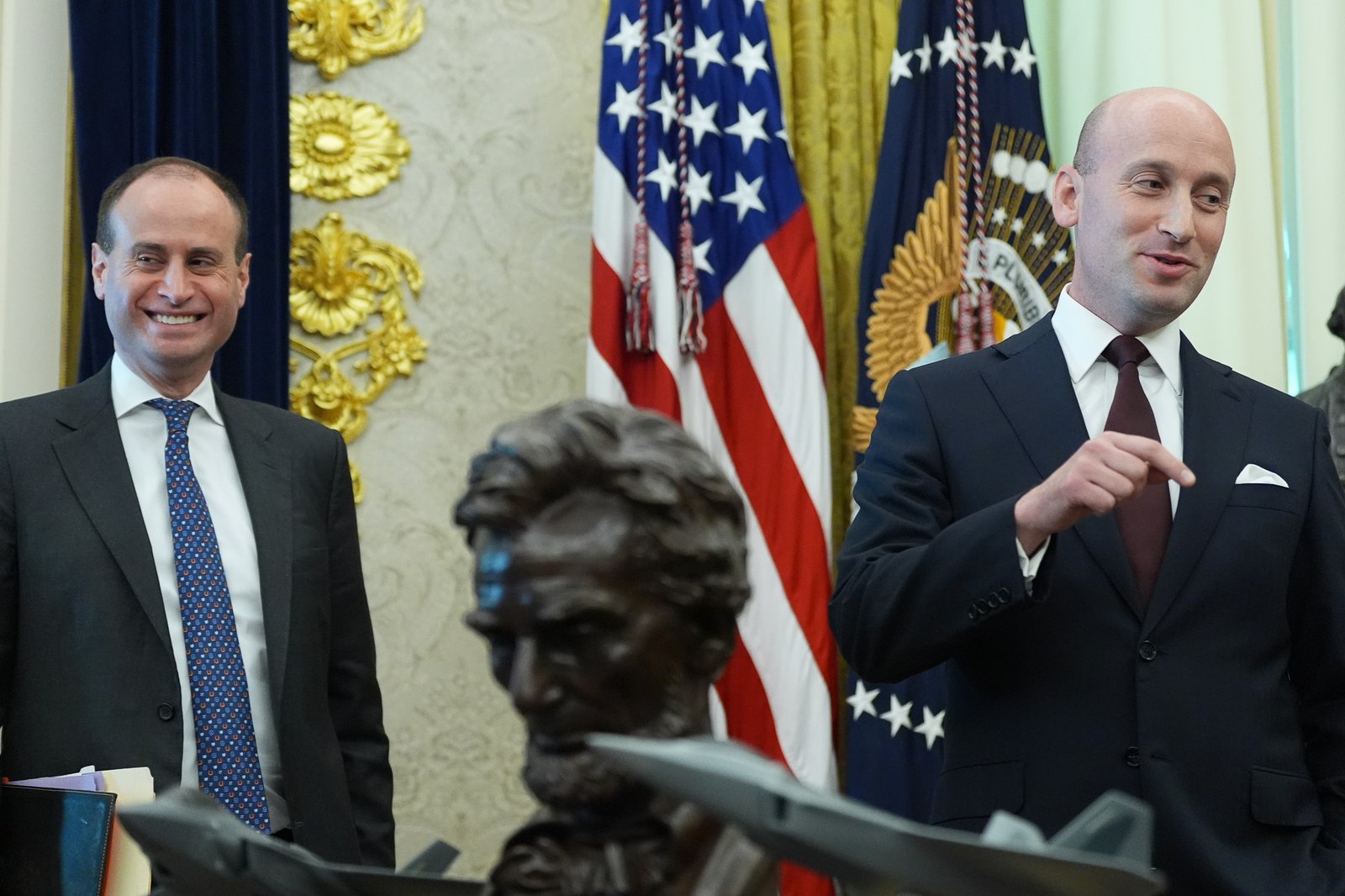
White House counsel Will Scharf, left, in the Oval Office. His letter to the incoming Oversight chairman opened the fight over the new Congress's investigations. (AP Photo)
The consequence is a slower war, not a stopped one. Ty Cobb, who served as a White House lawyer in Mr. Trump's first term, told NPR the letter is the administration "putting up speed bumps in front of the steamroller that they can see coming" — refusing information and forcing Democrats to court to enforce each demand. A second front opened Wednesday, when U.S. Attorney Aaron Reitz wrote to Senator Richard Blumenthal, who is poised to chair a Senate investigative committee, demanding he preserve records from his own inquiries; Blumenthal answered that he "will not be intimidated." Even the current Republican chairman of Oversight, James Comer, who investigated the Biden family, told the Associated Press the panel is "very independent" and that there will always be "a strong desire for the Oversight Committee to be a check and balance on the executive branch, regardless of the political scenario." If oversight becomes criminal whenever it is aimed at the powerful, the question that follows is simple: who is left to watch the people who hold the power?
The details show how much ground the Democrats will hold when the fight becomes real. CBS News reports they are poised to hold at least 254 seats in the House and 54 in the Senate, which means the committee chairs, and the subpoena power that comes with them, from January. Garcia told NPR on Thursday that investigating alleged corruption involving the president's family is a top priority, starting with the $2 billion Saudi investment in a firm led by Jared Kushner; the wider list, reported by the Associated Press, runs to the administration's handling of the Jeffrey Epstein investigation, immigration enforcement, donors to the White House ballroom, mineral deals and the Trump family's crypto ventures with special envoy Steve Witkoff. Our report on the Scharf letter and Garcia's first response is here. House Democratic leader Hakeem Jeffries, poised to become speaker, told reporters a Democratic Congress will be a check on the executive "and if they don't like it, consult the Constitution." Garcia, who received the letter, had the last word on where his authority comes from: "Let's be clear: Congress' authority comes from Article I of the Constitution, not from the permission of the White House."