Can Non-Citizens Vote in Texas?
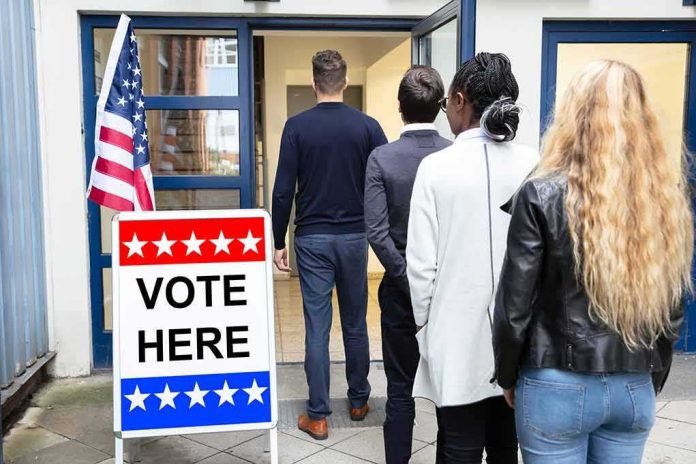
No. A non-citizen cannot legally vote in Texas — not in a federal election, not in a state election and not in a local one. Federal law makes it a crime for any non-citizen to vote in an election that includes a federal office, and Texas law limits every election in the state to United States citizens. Holding a green card changes nothing: a lawful permanent resident is not a citizen, and the Justice Department's own words in its latest Texas cases are that permanent residents are "not permitted to vote in American elections."
The plain reality starts with what the law says. The Texas Secretary of State's citizenship advisory states it without room for argument: only eligible U.S. citizens can register to vote in the state and cast ballots in Texas elections. Article VI of the Texas Constitution makes citizenship the first qualification of a voter, the Texas Election Code requires citizenship both to be a qualified voter and to register, and federal law — on the books since 1996 — makes voting by a non-citizen in a federal election a crime carrying up to a year in prison. That is the rule. What reality shows is a system that has to hunt for breaches after ballots are already cast, across a Texas roll of more than eighteen million registered voters, checked against a federal database that also gets citizens wrong: when Texas ran its roll against the federal SAVE citizenship database, it flagged 2,724 people as potential noncitizens, and in September the Secretary of State confirmed that 578 of them are in fact U.S. citizens and ordered them put back on the rolls, while referring 117 cases for investigation.
The officials enforcing the law claim the line is clear and they are holding it. U.S. Attorney Aaron Reitz, whose Southern District of Texas office brought the five newest cases, said his office is "always on the hunt for bad actors meddling in our elections." Homeland Security Investigations Special Agent in Charge John A. Pasciucco put the claim in one sentence: "Voting in U.S. elections is a right reserved for U.S. citizens, and Homeland Security Investigations will continue to work with our law enforcement partners to investigate allegations of unlawful voting." Homeland Security Secretary Markwayne Mullin is now moving full force behind the same push in Texas.
"Free, fair, and honest elections — unmarred by fraud, errors, or illegality — are fundamental to a healthy constitutional republic." — U.S. Attorney Aaron Reitz
Stated plainly, the principle is this: a vote is the one act in American life that belongs to citizens alone, and a ballot cast by someone with no right to cast it cannot be fished back out of the count afterwards. That is why the checking has to happen before the voting, not only in a courtroom after it.
The consequence of checking late is the picture Texas now has at both ends. Non-citizens who should never have been able to vote are accused of voting in election after election before anyone stopped them, while hundreds of citizens were flagged as suspects by the same database meant to catch them. Every failure in one direction becomes the other side's evidence: proof the rolls are dirty, or proof the purge is reckless — and trust in the count takes the damage either way.
So the question that follows is the one Texas has not yet answered: if the database can wrongly flag 578 citizens in a single check, what check will Texans trust to keep non-citizens off the rolls without taking citizens off with them?
The details of the newest cases show what the law means in practice. Prosecutors allege that Ali Khan, 33, an illegal alien and DACA recipient from Trinidad and Tobago living in La Porte, voted in the 2024 election; that Mohammed Omar Hassan, 61, a Nigerian citizen in Houston, voted in both 2022 and 2024; that Diego Benavides Rodriguez, 29, a Mexican citizen in Laredo, voted in 2024 and also falsely claimed U.S. citizenship; that Jose Vazquez-Mendoza, 51, a Mexican citizen in Port Isabel, voted in the 2022 special election for Texas's 34th Congressional District; and that Karen Hinojosa-Martinez, 37, a Mexican citizen in McAllen, lied on immigration documents after allegedly voting. All but Khan are or were lawful permanent residents. The penalties in the release are up to one year in prison and a $10,000 fine for the illegal voting itself, up to five years and a $250,000 fine for falsely claiming citizenship or lying on immigration documents, and federal law also leaves a non-citizen who votes open to being ruled inadmissible and deported. Texas adds its own weight: under state law, a non-citizen voting in Texas is a second-degree felony. An indictment is only an accusation and every defendant is presumed innocent, but the boundary itself is not in dispute in any of these cases, and Reitz stated it as plainly as it can be stated: "American elections are for Americans only."