Can the Supreme Court Overturn the Trump Immunity Ruling?
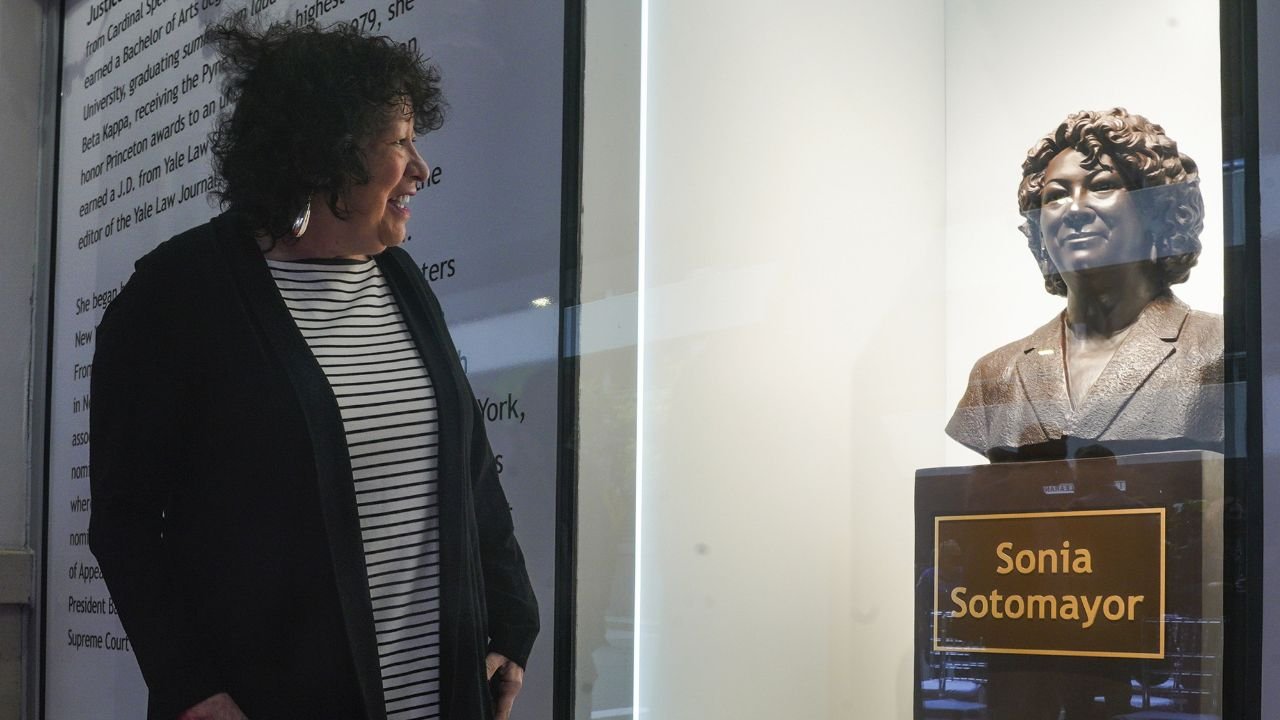
Yes. The Supreme Court can overturn the Trump immunity ruling — it has the power to overrule its own decisions, and it has used that power throughout its history. But it can only do it inside a new case, with at least five justices voting to reverse, and that is where Justice Sonia Sotomayor's hope runs into the plain arithmetic of the court she sits on.
The ruling itself is Trump v. United States, decided on July 1, 2024, by 6 votes to 3. Chief Justice John Roberts, writing for the majority, held that a former president is absolutely immune from prosecution for acts inside his core constitutional powers, at least presumptively immune for his other official acts, and not immune at all for unofficial acts. That is the law today, and it stays the law until the court itself takes it back.
On paper, precedent is supposed to stand. The whole idea of stare decisis — let the decision stand — is that the law does not change every time the membership of the court does, so people can order their lives around it. The reality Americans have watched is different: when a new majority believes an old ruling was wrong, the old ruling goes. Brown v. Board of Education threw out Plessy v. Ferguson. Dobbs threw out Roe v. Wade after 49 years. A constitutional ruling by this court is a ruling this court can reverse, and everyone in Washington knows it — which is exactly why a sitting justice saying out loud that she wants one reversed gets people's attention.
What Sotomayor claims is narrower and more personal than a plan. Speaking at a civics-education event at George Washington's Mount Vernon estate on Saturday, November 7, she said she hopes the court will reverse some of its past decisions and named this one first, as our report on her remarks detailed. She wrote the dissent in the immunity case, joined by Justices Elena Kagan and Ketanji Brown Jackson, so none of this is a new position — it is the dissent, said out loud, in public, days after the midterm elections.
"I dissent a lot. I'm hoping that the court will take back some of the crazy things that it's done. I'm only joking — maybe not."
The common-sense principle underneath the question is this: a speech cannot reopen a decided case. Courts do not vote on hopes. For the immunity ruling to fall, somebody would have to be prosecuted or sued in a way that raises presidential immunity again, lose below, and persuade at least four justices to take the case and five to overrule a precedent the sitting majority wrote only two years ago.
The consequence follows from that arithmetic. Democrats winning both chambers of Congress in the midterms changes who confirms future justices; it does not change the 6-3 majority sitting today, and no case now before the court asks it to revisit presidential immunity. So the ruling Sotomayor wants gone will govern any future prosecution of a former president for the foreseeable future — including, potentially, for years past the end of this administration. If the majority that wrote a ruling is the only body that can erase it, and that majority still sits, what exactly is the path by which it disappears?
The details worth holding onto are few and they are decisive. Overturning takes five votes; Sotomayor speaks for a bloc of three. It takes a live case; none exists. It takes time measured in years, because a challenge has to climb from a trial court to the justices' door. And Sotomayor, appointed by President Barack Obama in 2009, framed the timeline herself — not this term, not this Congress, but her lifetime. Her dissent warned that the majority's approach "makes a mockery of the principle, foundational to our Constitution and system of Government, that no man is above the law," and at Mount Vernon she put the same thought in the plainest terms she has ever used for it: "There's some opinions that I hope in my lifetime will get overturned. The immunity case is one of them."