Can You Sue ICE Agents?
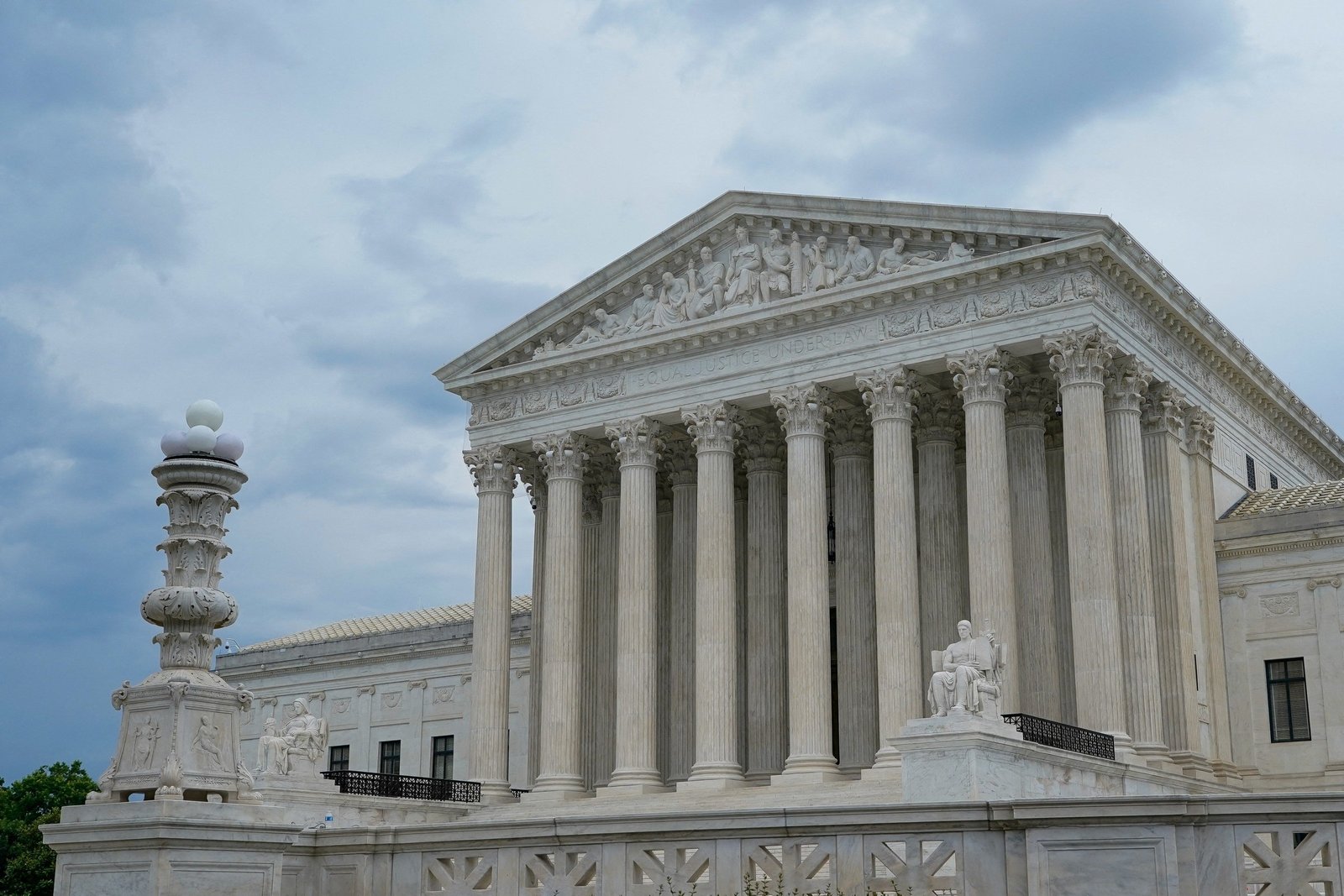
Yes — but only just, and only in the few situations the Supreme Court recognised more than 40 years ago. There is no federal law that lets a person sue an ICE agent, or any federal officer, for violating the Constitution and claim money damages. The only route is a claim under Bivens v. Six Unknown Named Agents, a 1971 Supreme Court decision in which the court itself created a damages remedy — and the court has not ruled in favour of a Bivens plaintiff since 1980, has refused to extend the remedy eleven times since, and treats almost any claim that differs from the three old cases as a "new context" that a judge may not recognise. On Monday, November 9, the court hears Nielsen v. Watanabe, a case that could close even the narrow door that is left — which is why USA Today reported on Sunday that the case "could end lawsuits against federal agents like ICE."
The plain reality is a right with one foot in the book and one in the air. The Constitution forbids unreasonable searches, excessive force and cruel and unusual punishment by federal officers just as it does by state officers — and for state and local officers, Congress wrote the remedy into law in 42 U.S.C. Section 1983, the statute Americans use to sue a police officer who violates their rights. For federal officers, Congress never wrote any such law. What exists instead is a remedy judges created in 1971 and judges have been taking apart ever since, one refusal at a time. That gap is why the question is being typed now, in forms like "can you sue ice agents for wrongful arrest" and "can you sue ice agents for wrongful death": after ICE agents shot and killed Renee Nicole Good and Alex Pretti in Minneapolis this year, families and lawyers looking for the federal courthouse door are discovering how narrow it already is.
What the two sides in Monday's case claim shows how completely the argument has flipped. Francis Nielsen, the federal prison nurse being sued, argues through his attorneys that the old cases are "relics of the bygone days when federal courts thought it appropriate to create causes of action Congress had not authorized," that "the Court has since rejected every stitch of Bivens's reasoning," and that Bivens should be overruled outright — creating a right to sue, they say, is Congress's job, not the judiciary's. The Justice Department backs dismissal and argues that the 1980 decision underneath the claim is now "obsolete," though Solicitor General D. John Sauer, supporting Nielsen, argues the claim should be thrown out without the court reconsidering Bivens itself in this case, as SCOTUSblog's Amy Howe reported. Kekai Watanabe's lawyers answer that his claim does not extend Bivens at all — it is, in his brief's words, "the same kind of violation of the same constitutional right by the same type of defendant in the same institutional setting" as the 1980 case — and that Congress effectively authorised such suits in 1996, when it limited those claims instead of ending them.
"If Bivens is eliminated, then there'll be literally no way to sue in federal court when a federal agent like ICE violates the Constitution."
Erwin Chemerinsky, dean of the law school at the University of California, Berkeley, said that to USA Today, and the common-sense principle underneath it is the one Justice John Marshall Harlan stated when Bivens was decided: for a person whose rights have already been violated, money damages are usually the only remedy that exists at all — an apology does not pay a hospital bill, and an internal investigation does not compensate a family. A constitutional right that the person who broke it can never be made to answer for, in any court, is a right the government can break at no cost to itself. That is the whole case, underneath the procedure.
The consequence, if the court overrules Bivens or the 1980 case beneath this claim, is that accountability for a federal agent's constitutional violation would rest on three things, none of them a lawsuit by the victim: a criminal prosecution the government brings against its own officer, discipline inside the agency, or a new law from Congress creating the remedy the court says only Congress can create. That third road is suddenly a live one — House Democrats are already planning to widen their probes of the fatal ICE shootings when they take control in January, and real bills attacking the shields around ICE agents are already filed, as our answer on the so-called Alex Pretti Act sets out. So the searches lead to a question the justices will not be the ones to finish: if the court hands this to Congress on Monday's logic, will the Congress that arrives in January actually write the remedy — or does the right stay on paper?
The details start with the three doors that are still open, because a claim has to fit through one of them. In Bivens itself, in 1971, federal narcotics agents had entered Webster Bivens's Brooklyn apartment without a warrant, searched it and arrested him, and the court allowed his Fourth Amendment damages claim. In Davis v. Passman, in 1979, it allowed a Fifth Amendment claim by a congressional aide fired because her boss wanted a man in the job. And in Carlson v. Green, in 1980, it allowed an Eighth Amendment claim against federal prison officials whose failure to treat a prisoner's asthma attack killed him. Since 1980 the court has recognised nothing new: in its most recent Bivens decision, Egbert v. Boule in 2022, it noted it had "declined 11 times to imply a similar cause of action," called recognising one "a disfavored judicial activity," and set the test that now governs — if a case is meaningfully different from the three old ones, and there is any reason to think Congress is better placed to decide, no claim may proceed. In Hernandez v. Mesa, that test left no remedy at all for a boy in Mexico killed by a shot fired across the border by a federal agent in Texas.
Monday's case tests whether even the third door still opens. Watanabe was a prisoner at the Federal Detention Center in Honolulu in July 2021 when he was attacked in a gang-related fight and injured. He says he asked for medical care, was given over-the-counter pain medication by staff nurse Francis Nielsen and told, as he alleges, to "stop being a cry baby," and was never sent to a hospital or a specialist; an X-ray taken months later showed a fractured coccyx, with bone chips migrated into the surrounding soft tissue, and he remains in tremendous pain, his lawyers say. His $3 million suit was dismissed by the district court, revived by the Ninth Circuit as identical to Carlson, and the Supreme Court agreed on June 22, 2026 to decide whether the Ninth Circuit erred in recognising the claim at all — a decision is expected by the middle of 2027. Suing the government itself is a different and narrower road: the Federal Tort Claims Act can make the United States liable for some wrongs by its employees, but it does not put the individual officer in the dock for a constitutional violation, which is the thing the Minneapolis families and their lawyers are actually asking for — and the thing that, as Justice Harlan wrote in 1971, for a person in Bivens's position, means "it is damages or nothing."