Did the Supreme Court Allow the Trump Administration to Resume Border Wall Construction in Big Bend?
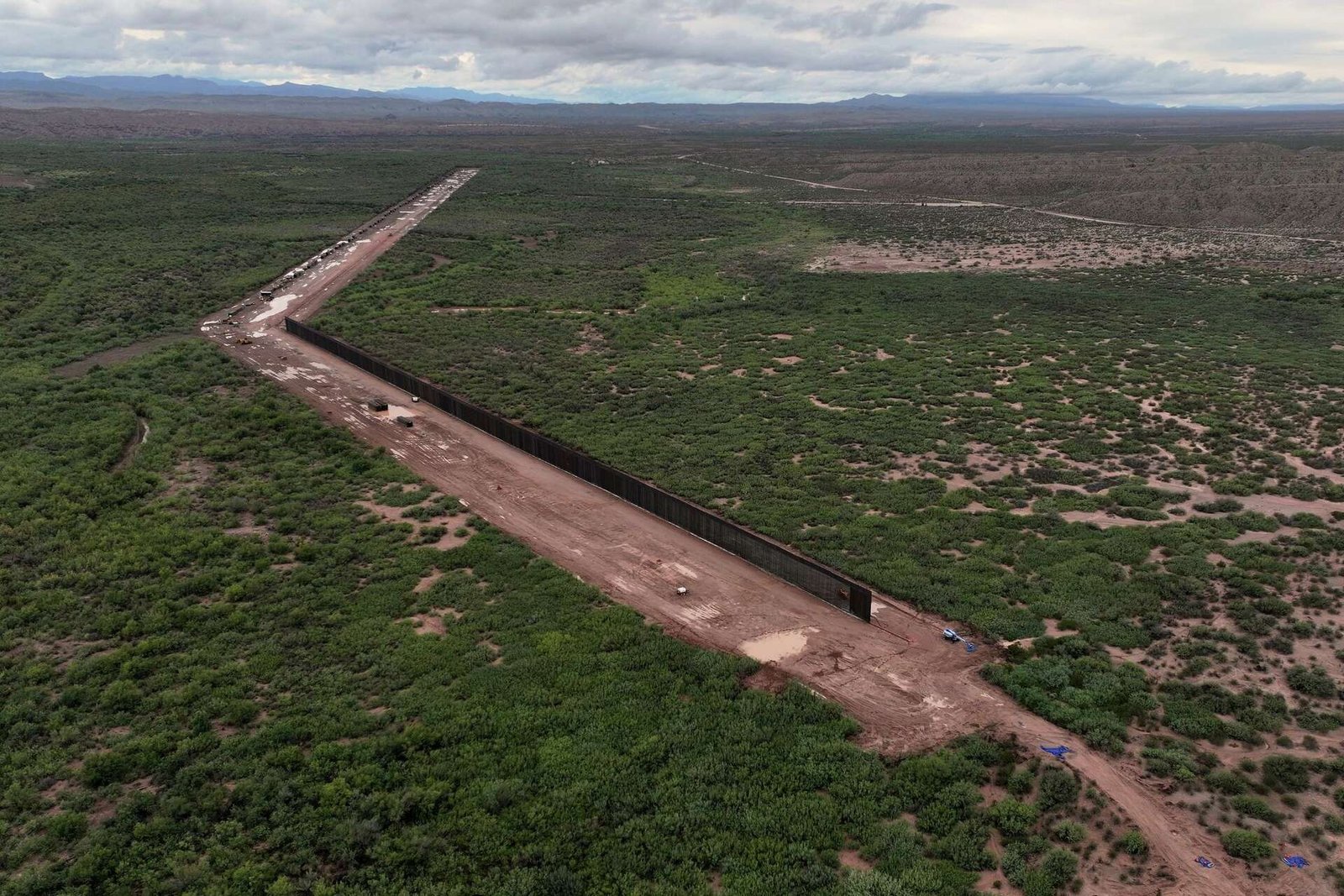
Yes. The Supreme Court on Monday granted the Trump administration's emergency request and lifted the court order that had halted border barrier and road construction across the Big Bend sector of Texas for the past month, so the work can resume now, while the lawsuit against the project continues. In an unsigned, five-page order in Mullin v. Friends of the Ruidosa Church, the justices said the 1996 immigration law at the heart of the case likely bars the kind of challenge the project's opponents brought, and that the government's interest in border security outweighs the harm the challengers allege. Justice Ketanji Brown Jackson was the only justice who said publicly that she would have denied the request. The order is not a final ruling that the administration's waivers of environmental law were legal — it decides who holds the ground while that question is fought out.
The plain reality underneath the ruling is a gap between the power Congress wrote and the place where it is being used. The Homeland Security secretary's waiver power, written into the Illegal Immigration Reform and Immigrant Responsibility Act of 1996, is aimed at barriers in areas of "high illegal entry." Big Bend is, by far, the quietest stretch of the southern border: the sector runs along more than 500 miles of the Rio Grande, more than a quarter of the border's whole length, yet it accounted for about 1.3 percent of border apprehensions in 2025, and the national park itself for 0.045 percent of the national total, according to the figures the challengers put before the courts. That gap is the whole case, and it is why a federal judge stopped the work in the first place. Ruling for the challengers on October 2, District Judge Kathleen Cardone in El Paso found that the waivers lacked the clear congressional authorization the Supreme Court's major questions doctrine requires.
"Therefore, if the Big Bend Sector is an area of high illegal entry, so is every other sector, and the waiver authority would apply to the entire US-Mexico border."
The administration says the record reads the other way. Solicitor General D. John Sauer told the justices that the secretary's waiver authority is "a crystal-clear, indisputably valid express delegation from Congress that the executive has used for decades to expedite border-wall construction," pointed to more than 89,000 apprehensions in the sector between 2021 and 2025, along with drug seizures and cartel activity south of the river, and warned that leaving Big Bend open would create "a massive vulnerability in border protection" and funnel crossings and trafficking into the one unwalled gap. Secretaries Kristi Noem and Markwayne Mullin, who issued the three waivers between February and July, formally found the region to be an area of high illegal entry, and the Supreme Court's order answered that Congress's law "reflects a clear preference for expeditious border construction over the very harms respondents assert."
The common-sense principle here is that a stay is not a verdict. Nobody has yet decided, finally, whether a secretary may waive the Endangered Species Act inside a national park on a finding of high illegal entry in the sector with the fewest entries on the border. What the justices decided on Monday is narrower and, for the land itself, more important: while the argument runs, the building runs too, because the statute Congress wrote leaves judges very little room to hold a waiver up in the meantime.
The consequence follows from the calendar. Bulldozers were already inside the park in August, tearing into the desert near the Santa Elena Canyon and ploughing routes toward vehicle barriers on both sides of Mariscal Mountain, before the outcry forced Customs and Border Protection to pause the park work — a pause that lapsed on September 30. With the injunction now lifted, contractors can restart months before any court finally rules on whether the waivers were lawful, and the challengers warned the justices in their filing that "once habitat is destroyed, vegetation cleared, historic resources damaged, livelihoods and private property destroyed, and wilderness landscapes fragmented by roads, barriers, and associated infrastructure, no final judgment can restore the status quo." If the waiver can hold, even for now, in the border's quietest sector and inside a national park, the question the case leaves behind is whether there is any stretch of the border where it could not be used.
The details that matter are these. The challengers are the Center for Biological Diversity, the Friends of the Ruidosa Church — a group preserving a fragile adobe church in Ruidosa, Texas, that it says the construction threatens — and Danny Miller, a Big Bend river guide and landowner. Their lawsuit attacks three waivers that swept aside dozens of laws, among them the Endangered Species Act, the National Environmental Policy Act, the National Historic Preservation Act, the National Wild and Scenic Rivers Act and the National Park Service Organic Act — the first time, the challengers say, that such laws have been waived inside a national park. What would actually be built inside the park is narrower than the headline suggests: CBP Commissioner Rodney Scott has said the 30-foot wall will not cut through Big Bend National Park; the park would get about 17 miles of noncontiguous vehicle barriers and more than 200 miles of patrol roads, with most of the programme — 341 miles by the government's count — on private land outside it, and a 47-mile stretch in Hudspeth County already begun in September. Congress funded the wider wall programme with $46 billion last summer, and CBP says it is erecting about 12 miles of barriers a week across the whole border. The opposition in Texas has been bipartisan: more than 140 outfitters, local businesses and recreation groups urged the state's leaders to protect access to the Rio Grande, and Republican Senator John Cornyn published an op-ed against wall construction through Big Bend in the San Antonio Express-News on Monday. The administration's emergency request, and the injunction the Court has now lifted, were covered here when the case reached the justices. The stay granted on Monday lasts while the government seeks the Court's full review: it ends if the justices turn the case away, and it holds until judgment if they take it. For the Center for Biological Diversity, which brought the challenge, Laiken Jordahl, its national public lands advocate, said: "This horrific decision clears the way for contractors to bulldoze pristine desert and dynamite canyon walls before the courts have even decided whether this destruction is legal. They're signing off on the permanent destruction of the wildest place in Texas, and the theft of a great American river from all of us."