Does Iran Have Nuclear Weapons?
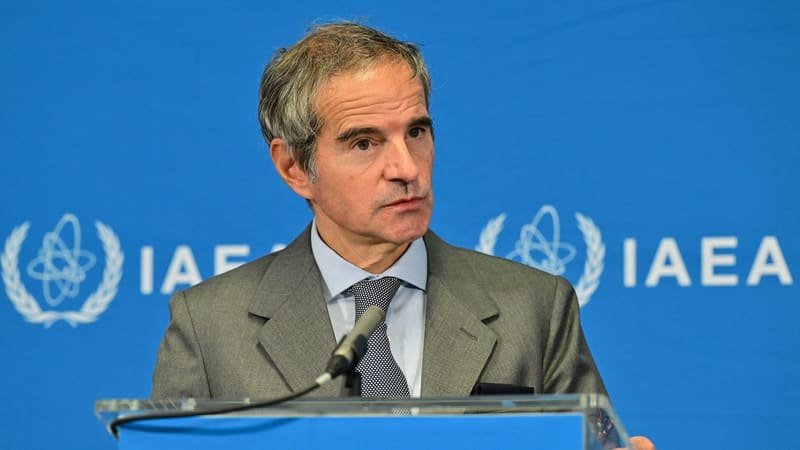
No. As of November 13, 2026, Iran has no known nuclear weapon, and it has never tested one. What Iran does have is the fuel that a weapon is made from: 440.9 kilograms of uranium enriched to 60 percent at the last verified count — and as of today, the world's nuclear watchdog says it can no longer verify where that material is, or that none of it has been diverted.
The plain reality is the difference between fuel and a weapon. A nuclear weapon is a finished, deliverable device. The record shows fuel, damaged factories, and no device: the International Atomic Energy Agency concluded in its final 2015 assessment that Iran's coordinated weapons-related work stopped at the end of 2003, with no credible sign of it after 2009. United States intelligence has said the same in this administration — Director of National Intelligence Tulsi Gabbard told Congress in March 2025 that the intelligence community assessed Iran was not building a nuclear weapon and that the Supreme Leader had not authorized the weapons program suspended in 2003.
The claims around the question point the other way. President Trump said on March 4, 2026: "If we didn't hit within two weeks, they would've had a nuclear weapon," and the White House says the June 2025 strikes obliterated Iran's nuclear facilities. Iran, for its part, says it does not want a bomb at all — Foreign Ministry spokesman Esmaeil Baghaei said in March 2026 that Iran "has never sought, and does not seek, nuclear weapons."
"The Agency does not know IFEP's exact location, status for safeguards purposes or whether it contains nuclear material."
The common-sense principle is this: holding the fuel for a bomb is not the same as holding a bomb — but fuel that no inspector is allowed to see is exactly why the question will not go away. A promise can be checked only where someone is allowed to look.
The consequence arrived today. In its confidential quarterly report circulated on Friday, November 13, the IAEA told member states it is "not able to conclude that there has been no diversion of declared nuclear material" in Iran, and that it does not even know the exact location of the Isfahan Fuel Enrichment Plant, a site Iran declared in June 2025 that no inspector has ever entered. The day before, on November 12, the Assembly of Experts — the body that chooses Iran's Supreme Leader — called a review of Iran's membership of the Non-Proliferation Treaty "an unavoidable necessity." The decision on any weapon now rests with Mojtaba Khamenei, named Supreme Leader on March 8, 2026, after his father Ali Khamenei was killed in a strike on February 28. If the inspectors cannot see the fuel, who is left who can prove a weapon is not being built?
The details that give the answer its weight are these. The 440.9 kilograms were last verified on June 13, 2025, the day Israel's first strikes began; by the IAEA's yardstick, about 42 kilograms of 60 percent uranium, enriched further to about 90 percent, is enough for one weapon — so the stockpile is enough for about ten. United States officials said in May 2026 that intelligence still placed Iran nine to twelve months from being able to build a weapon, against three to six months before the June 2025 strikes, because Iran's known enrichment plants at Natanz and Fordow were destroyed or badly damaged while the stockpile itself is believed to have survived, most of it in tunnels at Isfahan, where Director General Rafael Grossi said in March 2026 that a bit more than 200 kilograms was stored. Iran ratified the Non-Proliferation Treaty on February 2, 1970, and its Article II bars it from making or acquiring nuclear weapons; it can leave the treaty on 90 days' notice and has not given it. Its longest-range missiles reach about 2,000 kilometres, but there is no public evidence it has designed a warhead small enough to sit on one. We covered today's IAEA report on the blog in the watchdog's admission that it has lost track of Iran's most sensitive uranium.
The man in Tehran who speaks for the stockpile, Mohsen Rezaei, secretary of Iran's Supreme National Security Council, put his country's position in one line this week: "Not a single particle of enriched nuclear material will leave Iran."