How Did Russia's Ambassador to the United States Alexander Darchiev Die?
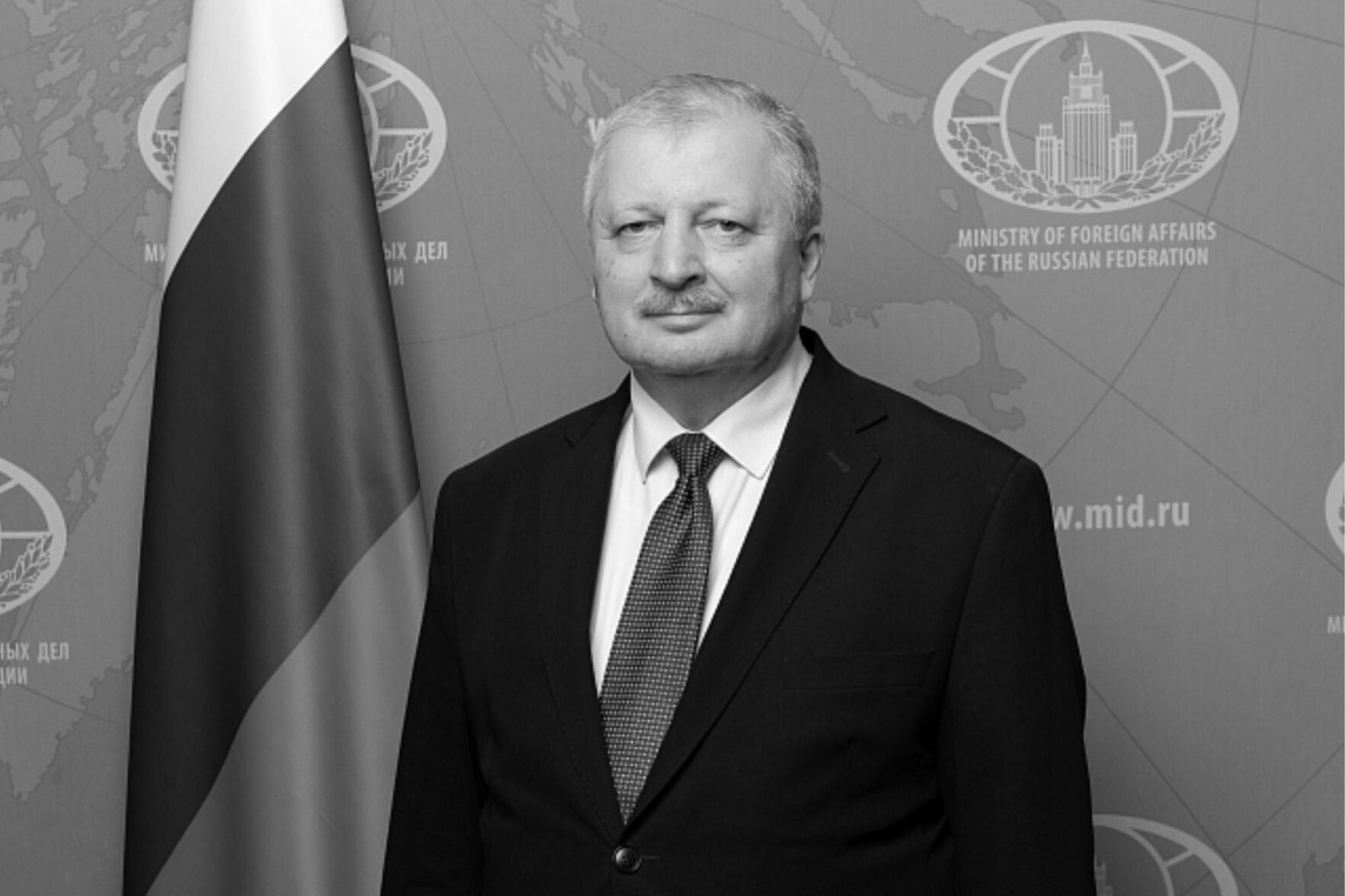
Alexander Darchiev, Russia's ambassador to the United States, died in Moscow from a chronic illness, Russian Foreign Ministry spokeswoman Maria Zakharova said in a statement on Wednesday, November 11. The illness was not identified. He was 66. The ministry's first announcement, posted on X, said only that Darchiev had "passed away suddenly" on November 11 — it gave no cause and no place. Zakharova's later statement supplied both: Moscow, and a chronic illness. CNN reported that Darchiev had left the Washington embassy and returned to Moscow, where he was receiving treatment for a long-term illness. Our blog reported the death as Moscow first announced it, when no cause had been given.
The plain reality is that the official record still names a category, not a cause. "Chronic illness" covers a great deal, and Moscow has said nothing more specific — no illness named, no hospital, no timeline of when he left Washington or how long he had been treated. That thin record is exactly why the question is being asked: a serving ambassador to the United States, appointed to rebuild the channel between the two countries, died at 66, and the first word the world got was "suddenly."
What Moscow claims is a natural death, plainly mourned. The ministry called Darchiev an outstanding diplomat, an experienced leader and a consummate professional who worked on one of the most responsible tracks of Russian foreign policy. Zakharova went further and criticised what she described as indecent conspiracy theories about his death from journalists in the United States, saying the date and place of the funeral would be announced later.
"The Russian Foreign Ministry announces with profound sorrow that Alexander Darchiev, Ambassador of Russia to the USA, passed away suddenly on November 11, aged 66."
The common-sense principle is simple: when a government announces the sudden death of its top envoy abroad and gives no cause, the questions that follow are not a conspiracy — they are the predictable result of the silence. One fuller sentence on the first day would have answered most of them. Instead, the cause arrived hours later, in a second statement, still without the illness named.
The consequence is practical as well as political. Russia's embassy in Washington now has no ambassador and Moscow has named no successor and no one to run it in the meantime — on the very day Russia and Ukraine agreed a large exchange of prisoners of war at the U.S.-mediated talks in Abu Dhabi, and a day before U.S. envoys Steve Witkoff and Jared Kushner are set to travel to Moscow to meet President Vladimir Putin, according to The Associated Press. If the illness was long-term and he was being treated in Moscow, why did the first announcement say only "suddenly" and give nothing at all?
The details that matter to the question are these. Putin appointed Darchiev on March 6, 2025, succeeding Anatoly Antonov, and Reuters reported he was picked to lead a rapprochement with the Trump administration. In June 2025, after presenting his credentials, he told President Donald Trump that he would work to restore relations, Reuters reported at the time. Darchiev was born on May 14, 1960, in Budapest to a family of diplomats, joined the Foreign Ministry in 1992, served as minister-counselor in Washington from 2005 to 2010, was ambassador to Canada from 2014 to 2021, and then headed the ministry's North America department. The ministry's tribute closed with the words it chose for him: "We have lost an outstanding diplomat, an experienced leader, a kind comrade and mentor."