How Many Ballistic Missiles Does Iran Have Left?
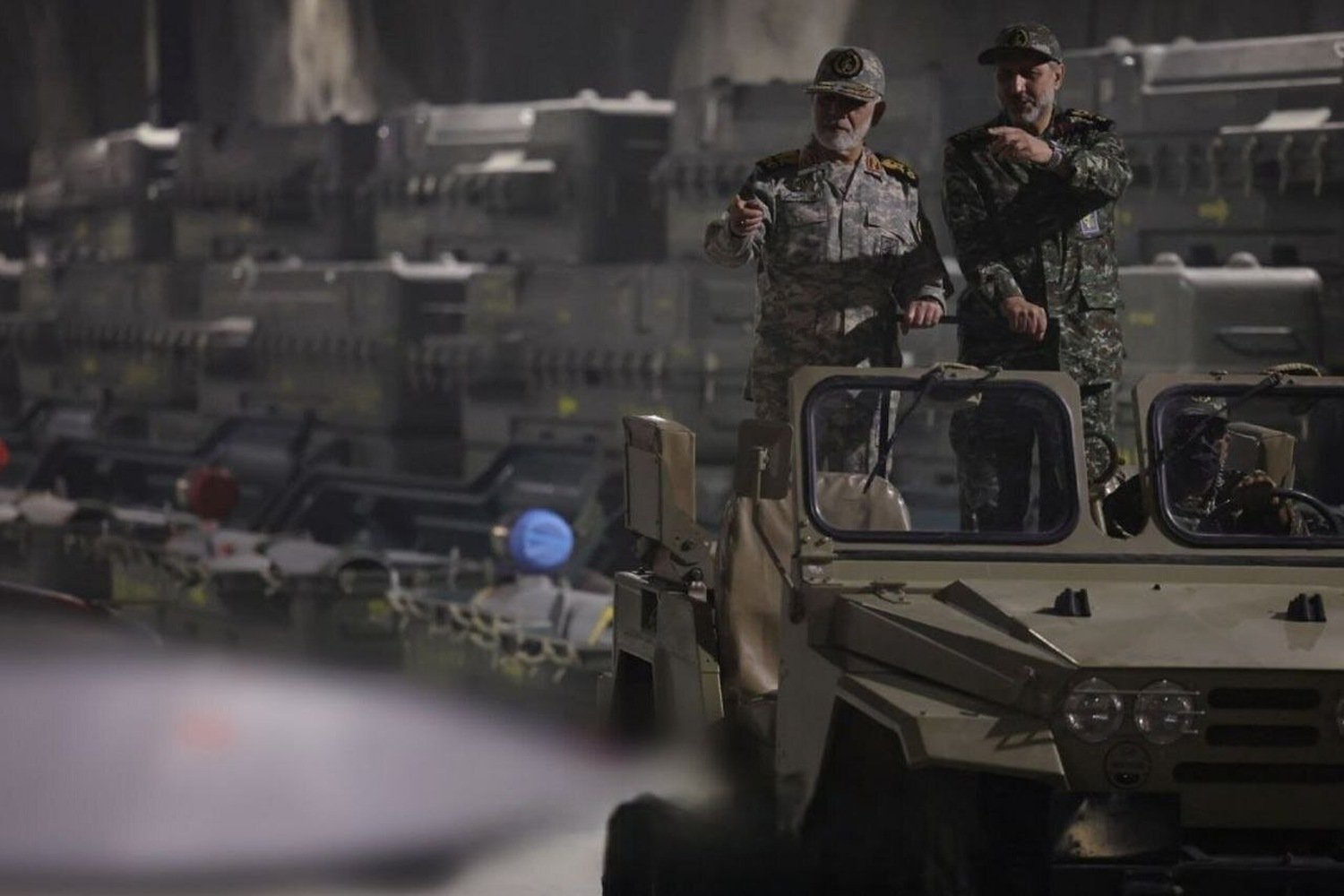
At least 1,700. That is the estimate Western intelligence officials gave Bloomberg this week, reported on Tuesday: after months of American and Israeli air strikes, Iran still holds at least 1,700 ballistic missiles, and its factories are still turning out about 50 more every month — roughly half the rate it managed before the war. On top of the missiles, former CIA analyst Jim Lamson estimates Tehran probably still has thousands of Shahed-type attack drones.
The plain reality is how little the arithmetic of destruction has settled the question people are asking. Israel estimated Iran had about 2,500 ballistic missiles when the fighting began on February 28. Since then, by Bloomberg Economics' count, Iran has fired at least 2,200 of them, along with more than 4,900 Shahed-type weapons — and still has at least 1,700 left. That is only possible because production never stopped: the Revolutionary Guards moved assembly underground into what they call missile cities, and, as Lamson puts it, a reserve of stockpiled components has allowed Iran to keep putting weapons together even where the big production lines were crippled.
What Washington claims is a wrecked programme. Defence Secretary Pete Hegseth, defending his conduct of the war on Tuesday, said more than 80 percent of Iran's nuclear industrial base had been destroyed, and President Trump said this week that further attacks do not appear necessary for now. What Tehran claims is the opposite. On Tuesday the Revolutionary Guards released video of a new underground missile city, and Iran's security chief has warned that any new American attack will be answered with strikes on distant U.S. bases — a warning backed, Al Jazeera reported the same day, by the Guards lifting their own self-imposed limit of 2,000 kilometres on missile range.
"Iran still has at least 1,700 ballistic missiles and continues limited production." — the Western intelligence assessment reported by Bloomberg
The common-sense principle is that an arsenal is measured by what can be launched tomorrow, not by what was destroyed yesterday. A country that starts a war with missiles buried in tunnels, fires more than two thousand of them, and is still building fifty a month has not been disarmed in any sense that matters to the bases, ships and cities inside its range — it has been slowed, at about half speed.
The consequence runs in both directions. Iran keeps a real means of retaliation if fighting resumes, which is exactly the leverage it carries into every negotiation while the American maritime blockade stays in force. And the defence against those missiles is being spent faster than it is made: Bloomberg Economics estimates at least 1,000 Patriot PAC-3 interceptors, at about $4 million each, have been used, against an annual production of roughly 650. If Iran adds fifty missiles a month while the interceptors that stop them are replaced more slowly, the question that follows is how long the stockpile Washington says it broke takes to grow back to where it started.
The details come with an honest warning attached. Nobody outside Tehran knows the exact number. The prewar stockpile was never publicly confirmed, the count of missiles destroyed on the ground is not public, and the Carnegie Endowment's Ankit Panda notes that public estimates of what remains vary widely. What is consistent across the estimates is the direction: the Defence Intelligence Agency's director, Lt. Gen. James Adams, told Congress back in April that thousands of Iranian missiles and one-way attack drones remained, and Western officials say Russia has also been supplying Iran with strike weapons, in types and quantities unknown. The 1,700 figure is a floor given by a Western official familiar with the intelligence assessments — "at least" is part of the answer, not a hedge around it.
Iran's armed forces chief of staff, Gen. Ali Abdollahi, touring the new missile city on Tuesday, told his personnel that the surprises Iran holds for a future war would be "revealed one after another."