Is the Strait of Hormuz Closed?
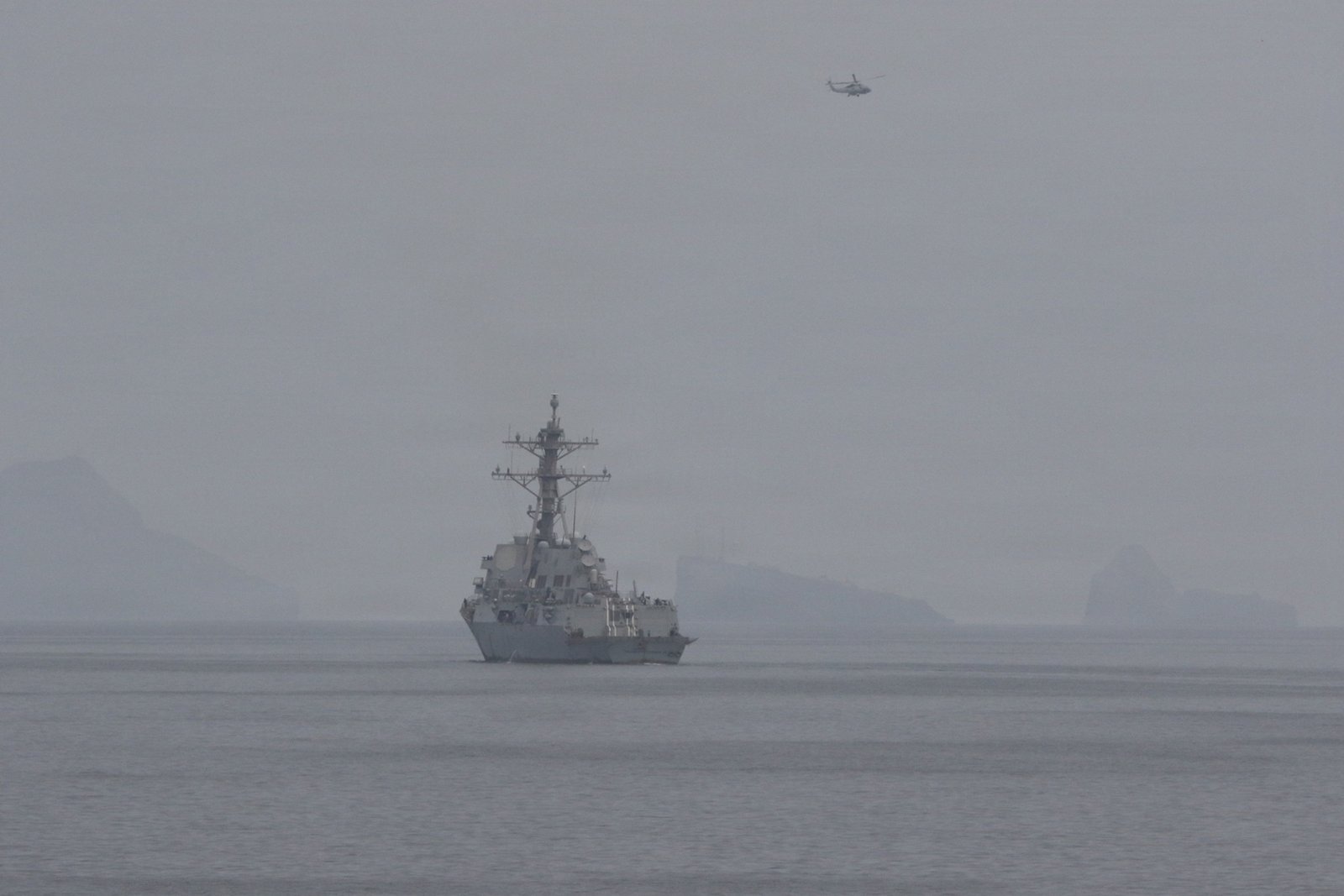
Effectively, yes. For normal commercial shipping the Strait of Hormuz is closed in practice: Iran declared it shut, the United States blockades Iranian ports in return, and only a trickle of ships gets through — about four to seven crossings a day against roughly 85 a day before the war, on the live ship-tracking counts. The few ships that cross do so under U.S. naval coordination or with Iran's permission, at an official threat level of severe, and tankers were hit again on Tuesday.
The plain reality is that two closures face each other across the same narrow water. Iran shut the strait to what it called hostile shipping when the war began on February 28, and its Revolutionary Guards confirmed the closure on March 2. Washington answered with a naval blockade of Iran's own ports, in force again since July 14. A ship in the middle is caught between an Iranian force that says it may not pass without Tehran's authorisation and an American force that stops and turns back ships trading with Iran — Central Command says it has turned back 147 ships and disabled five since July.
Iran claims the strait is under its full control. Since November 5 its Guards' navy has called the strait "unsafe and closed" to any ship that does not coordinate with Tehran, says safe passage exists only on its designated northern routes, and on Tuesday announced that two tankers which took an unauthorised route had been stopped by explosions and left burning — one a supertanker it says struck a naval mine, the second a tanker it says was moving under American military escort. A third tanker was claimed later the same day. None of the ships was named, and no maritime authority has confirmed those claims. The United States claims the opposite picture at sea: Admiral Brad Cooper of Central Command has said the main transit routes remain free and clear of Iranian mines, and President Trump, after meeting Qatar's prime minister on Monday, said Iran "militarily is effectively over" — while insisting the American blockade, which he called the largest naval blockade in history, stays in place.
"Two violating oil tankers, travelling along an unauthorised route in the Strait of Hormuz, have been brought to a halt following massive explosions and are left burning." — the Islamic Revolutionary Guard Corps Navy, Tuesday
The common-sense test of an open waterway is simple: ordinary ships sail through it freely, on their own schedule, without asking anyone's permission and without being shot at. By that test the strait is not open. A passage that needs a warship's coordination on one side and a permit from the other, where the trackers count four crossings on Tuesday and none of them a tanker, is a blockade line, not an open sea lane.
The consequence is written in the traffic figures and in the attacks that keep coming. Ship-tracking data gathered by IMF PortWatch counted 27 crossings in the week to November 8 — three on November 8 itself — against about 78 a day before the war. The Joint Maritime Information Center kept its threat level at severe in its November 8 advisory, warned that further deliberate attacks were highly likely, and counted about 162 ships sitting at anchor near Fujairah and Khor Fakkan, waiting. October was the worst month of the war for shipping, with more than 30 vessels hit, and a seafarer was killed aboard the tanker Velos Sapphire on November 6. On Tuesday the danger was live again: ADNOC, the UAE's state oil company, confirmed one of its vessels was damaged in an attack inside UAE territorial waters, and the British maritime agency UKMTO reported a tanker struck by an unidentified projectile off Lima, Oman, its crew safe — while on Saturday a tanker had already caught fire off Khasab and its crew was evacuated, in footage verified by Reuters as the Singapore-flagged Navig8 Messi burning off the Omani coast. If neither side lifts its half of the closure first, why would any shipowner believe the next crossing is safer than the last one?
The details that decide the question are these. The strait is the only sea route out of the Gulf for the oil and gas of Saudi Arabia, Iraq, Kuwait, Qatar, the Emirates and Iran itself, and about a fifth of the world's oil — some 20.9 million barrels a day in the first half of 2025 — normally passes through it. Iran says it can reopen the strait within two days if Washington lifts the blockade and the sanctions, releases frozen Iranian funds and ends the war on all fronts; President Trump rejected the earlier seven-day version of that offer, and the Qatar-Pakistan plan reported this week, which would also reopen Hormuz, has been confirmed by neither capital. On Tuesday Iran's foreign minister, Abbas Araghchi, called reports of a planned meeting between Vice President Vance and Iran's security chief "absolutely groundless," so no negotiation that could lift either closure is even scheduled. Until one exists, the Guards' own Tuesday words remain the plainest description of the strait: "Two violating oil tankers, travelling along an unauthorised route in the Strait of Hormuz, have been brought to a halt following massive explosions and are left burning."