What Is a Jones Act Waiver?
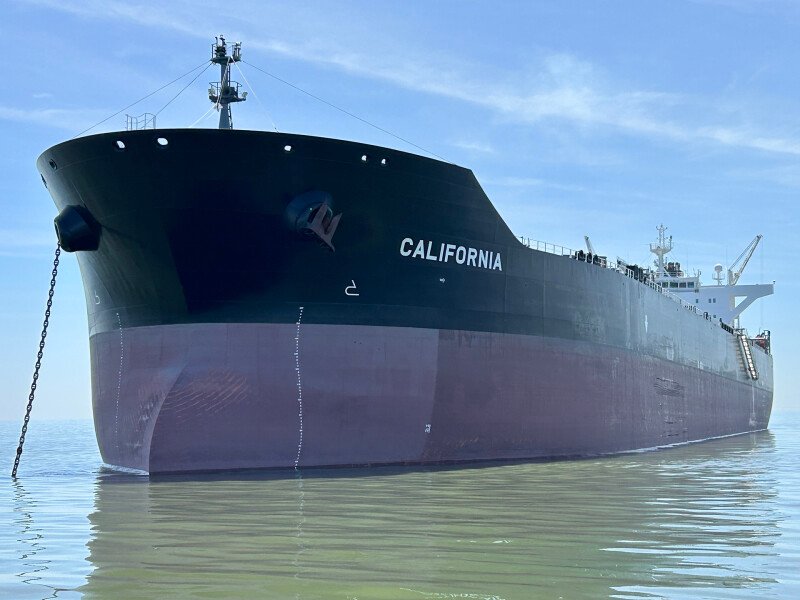
A Jones Act waiver is a temporary permission from the federal government that lets foreign ships carry cargo between American ports — work the law normally reserves for American ships alone. The Jones Act is the shipping part of the Merchant Marine Act of 1920, and it requires cargo moving between U.S. ports to travel on ships that are built in the United States, owned by U.S. companies, flagged in the U.S. and crewed by American mariners. A waiver suspends that rule for a set time and a set list of goods. President Trump extended the current waiver on Friday, November 13, for another 90 days — the longest waiver in the law's history.
The plain reality is why the law and the waiver pull in opposite directions. The law exists so America keeps its own shipyards, its own fleet and its own trained mariners — capacity a country needs in a war. The reality of this war is that when the Iran conflict pushed fuel prices up, there were not enough American ships in the right places to move oil and fuel fast enough, and every bottleneck showed up at the pump. The administration issued the first waiver in March, a month after the U.S. launched the war on Iran, in an effort to lower oil and fuel prices, Reuters reported.
What the White House claims is that the waiver is working in plain numbers. Since March, an additional 90 million barrels of petroleum, mostly refined products, have been shipped between U.S. ports under it, the White House said — including 27 million barrels of gasoline, 26 million barrels of crude oil and 6 million barrels of renewable fuels. What the law's defenders claim is the opposite cost. The American Maritime Partnership called for the waiver to end, and warned in its statement, reported by WorkBoat, that waivers must meet the statutory standard of military necessity and must not be used "to displace American vessels and American workers for routine commercial moves."
Cargo between U.S. ports must move on U.S.-built, U.S.-flagged and U.S.-owned vessels crewed by American mariners — that is the rule a waiver pauses.
The common-sense principle is that a waiver is a pause, not a repeal. The Jones Act itself has not changed by one word. When the waiver lapses, the American-ship rule returns in full, and even while the waiver runs, it is not a free-for-all: since August, every voyage is reviewed case by case, and the Maritime Administration must be consulted on whether an American vessel can do the job before a foreign ship is approved, WorkBoat reported. Government data analysed by the Cato Institute and cited by Bloomberg show foreign vessels completed 338 voyages under the waivers since March — about 300 approvals under the early blanket phase, against 48 under the case-by-case process that replaced it.
The consequence runs in both directions at once. Foreign ships keep hauling gasoline, jet fuel, crude oil, naphtha, liquefied natural gas, soy oil and fertilizers between U.S. ports, holding down the transport costs inside fuel and food prices — AAA figures cited by WorkBoat put gasoline at $3.91 a gallon on November 12, against $2.98 before the war, and diesel at $6.10 against $3.76. And every extension is work American ships and American yards do not get, which is why the fight over a "temporary" waiver that is now heading into its ninth month keeps growing.
The details that matter are these. U.S. Customs and Border Protection guidance issued November 13 says the Department of Homeland Security approved this third 90-day extension at the Department of War's request. It takes effect at 12:00 a.m. Eastern on Monday, November 16, with no gap, and covered cargo must be loaded before 11:59 p.m. Eastern on February 14, 2027. The first waiver, issued March 17, ran 60 days and was extended in May and again in August, when the case-by-case review was added. Our blog's own report of Friday's decision is here: Trump extends the Jones Act waiver for 90 more days. A waiver also does not cancel any other law — as the American Maritime Partnership itself put it: "a Jones Act waiver does not relieve users of the responsibility to comply with applicable U.S. laws, including tax, immigration and employment standards."