What Is California Proposition 40?
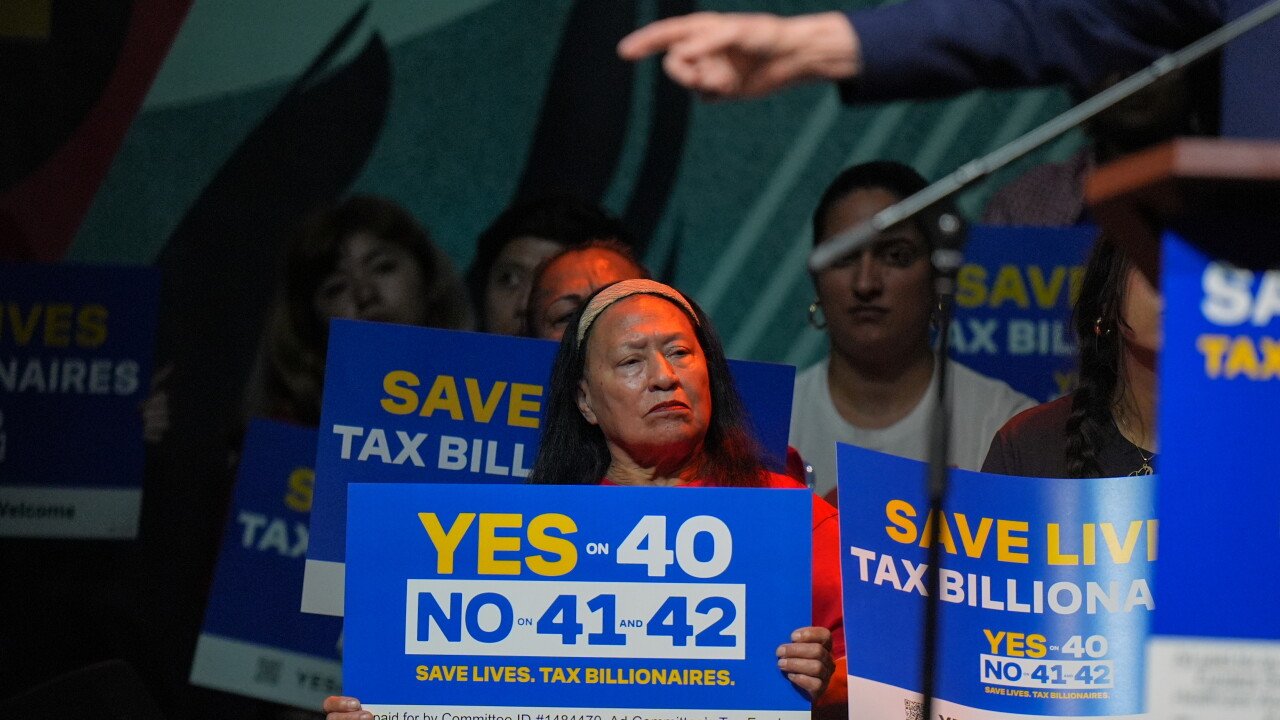
Proposition 40 was California's Billionaire Tax Act — a ballot measure that would have imposed a one-time 5 percent tax on the net worth of Californians worth more than $1 billion, the first wealth tax of its kind in the United States. It is now dead: the Associated Press called its defeat on Monday, nearly a week after the November 3 vote, with 52.8 percent of voters against it and 47.2 percent in favour.
The plain reality is that America taxes what people earn, not what they own. No state had ever taxed net worth itself, and Proposition 40 would have made California the first — reaching past income to the stocks, holdings and business interests where great fortunes actually sit, valued on December 31, 2026, and pinned to whoever lived in the state on January 1, 2026, so that moving away afterwards would not have erased the bill. The healthcare workers' union behind it, SEIU-United Healthcare Workers West, claimed the tax would raise about $100 billion over five years to replace the federal healthcare money California is losing, with 90 percent going to healthcare and the rest to education and food assistance. The common-sense problem sat inside the design: a one-time tax does not pay an ongoing bill. Healthcare costs come back every year; a windfall comes once. And the consequence followed the money — opponents raised $378.4 million against the measure, more than eleven times the Yes campaign's $33.5 million, billionaires including Google co-founder Sergey Brin left the state ahead of the vote, and voters who rejected the tax are also on course to pass Proposition 42, a ban on new wealth taxes that would block the door behind it. If even California cannot pass a billionaire tax after a campaign like this, will any state ever pass one — or does the money always move first?
The details show how narrow — and how heavy — the tax would have been. The full 5 percent rate applied at a net worth of $1.1 billion or more, with a reduced, phased-in rate for people between $1 billion and $1.1 billion, according to the measure's text as summarised by Holland & Knight. It would have reached roughly 200 billionaires. Real estate, pensions and retirement accounts were generally excluded. The bill would have come due in 2027, with an option to spread it over five annual payments at an added 7.5 percent charge. The union's $100 billion estimate was the high end: the nonpartisan Legislative Analyst's Office projected tens of billions over several years and warned the state could lose up to $1 billion a year in ordinary income tax if billionaires left, and a Stanford study cited by CBS News put the likely take closer to $30 billion.
The measure split the Democratic Party down the middle. The California Democratic Party and the state labour federation backed it, and Senator Bernie Sanders and Representative Ro Khanna campaigned for it across California. Governor Gavin Newsom opposed it from the start, argued that a one-time levy would not fix the state's budget and would push wealthy residents out, and endorsed the rival Proposition 42 instead — joined by Governor-elect Xavier Becerra, former Representative Katie Porter, Planned Parenthood of California and the state's big teachers and doctors associations. At the count the AP called on Monday evening, about 83 percent of the expected vote was in: 5,909,778 Californians had voted no and 5,288,379 yes, according to KQED's tally, while San Francisco went the other way, backing the tax by roughly 56 percent to 44 percent. The Secretary of State certifies the final result on December 11. Our newsroom's report on the call is here: California Voters Reject Proposition 40, as the Associated Press Calls the Race 52.8% to 47.2%.
"Are we destined to live in an oligarchic society begging for crumbs while our economic and political lives are controlled by a handful of the wealthiest people on Earth? Brothers and sisters, that is the question on the ballot." — Senator Bernie Sanders, campaigning for Proposition 40 in California
The union that wrote the measure says the fight is not over. SEIU-UHW has vowed to put a similar tax to voters again in 2028 if California's Legislature fails to find another way to fund healthcare — although if Proposition 42's lead holds when the results are certified, that promise would run straight into a constitutional ban its opponents built for exactly that purpose. Asked whether the 2028 return is really the plan, SEIU-UHW president Dave Regan said: "That's not a hypothetical. That's our plan."