Who Is Alice Huang, the Megaspeed Executive U.S. Intelligence Suspects Is a Chinese Spy?
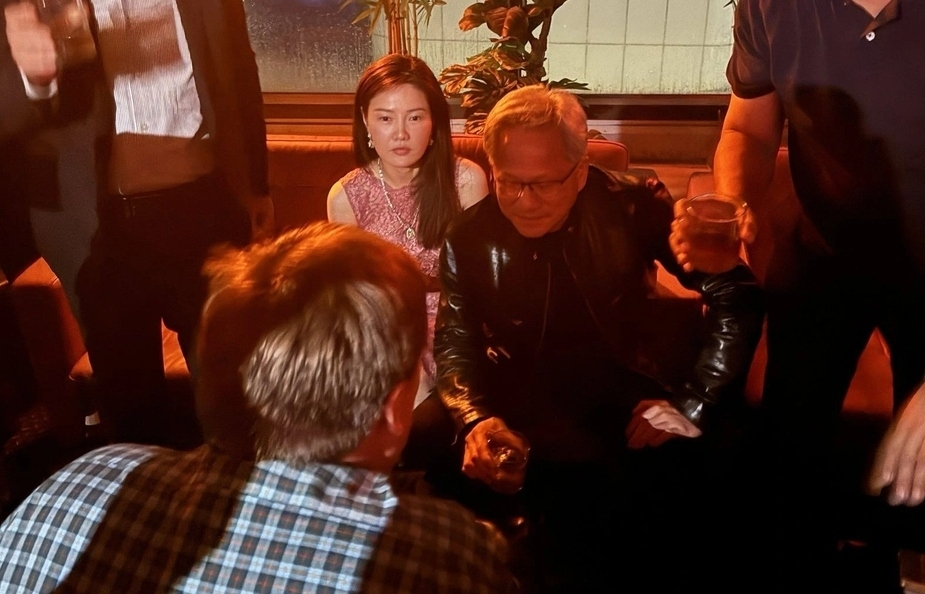
Alice Huang, also known by her Chinese name Huang Le, is a Chinese businesswoman who was a senior executive at Megaspeed, a Singapore-based data centre company and a customer of Nvidia. United States intelligence agencies believe she was recruited by China's Ministry of State Security — the country's main civilian spy agency — to gather information about Nvidia's chief executive, Jensen Huang, according to an American government memo reported by The New York Times and the Financial Times. Jensen Huang admitted to Nvidia staff on Sunday that he had an affair with her. She has not been charged with anything, she could not be reached for comment, and China has rejected the reports as slander. The two are not related, despite the shared surname.
The plain reality is that what is publicly established is much narrower than the allegation. The two were photographed together at a bar in Taipei in June 2024 — the picture at the top of this page, posted by the company Net Thunder, which identified her as a Megaspeed chairwoman — and they were seen leaving a business dinner together in May 2025. Megaspeed built data centres across Southeast Asia with Nvidia chips and leased computing power to Chinese companies, including Alibaba. In late 2024, American officials found Nvidia chips still in their original packaging, never installed, at a data centre in Malaysia, and opened an investigation into whether they were being smuggled into China. It was in the course of that inquiry, the reports say, that her closeness to Jensen Huang came to light. The recruitment itself rests on intelligence assessments inside a memo that has not been released, and no report says Jensen Huang knew of it.
What the intelligence side claims goes further than meetings. TechCrunch, reporting the Financial Times' account, says officials believe she was recruited to gather information about the chief executive and to influence Nvidia's efforts to loosen the export restrictions that keep its most powerful chips out of China. Nvidia's answer is that there is nothing to find: its board said on Sunday it has "no reason to believe that either national security or NVIDIA secrets were compromised," and the company says a chief executive meeting customers is routine — "What we provide to customers is general business information, not sensitive trade secrets or information related to national security."
Access is the operation. A person close to the man who makes the world's most wanted chips does not need to steal a design — shaping what he asks Washington to sell, and to whom, is itself the prize.
The common-sense principle is why this is a Washington story and not a gossip story. Both governments treat advanced AI chips as strategic weapons, and export controls are the fence around them. Jensen Huang has spent years lobbying to lower that fence — he has called the controls a "failure," met President Trump repeatedly, and Nvidia took in $7.9 billion from customers headquartered in China in a single recent quarter. If the allegation is true, the fence had a person standing inside it, next to the man arguing it should come down. If it is false, an intelligence judgement that was never tested in public has still done the damage.
The consequence is already running. Nvidia's independent directors, working with outside legal counsel, opened an investigation on Sunday, and its shares fell 5% on Monday morning. Congress is demanding answers: the chairmen of the House Foreign Affairs, Intelligence and China committees have asked Jensen Huang to sit for a closed-door briefing on November 18. And the warnings had reached the top long before the public heard any of it — Secretary of State Marco Rubio warned officials close to Trump about the relationship earlier this year, and Trump himself was briefed roughly a year ago and chose not to act, a record our coverage of the investigation lays out. Which raises the question the briefing will have to answer: if the investigation clears him, will Washington ever read Nvidia's China business as ordinary business again?
The details that matter are these. Singapore corporate records list her as Huang Le and show her becoming a director and managing director of Megaspeed International in 2023, according to Digital Today. A Malaysian company associated with Megaspeed bought at least $4.8 billion worth of equipment incorporating Nvidia technology between June 2024 and February 2026, The New York Times reported. The American memo asserting the relationship was drafted earlier this year and shared with only a small group of senior officials shortly before Trump travelled to Beijing in May for his summit with Xi Jinping; Jensen Huang was never given a defensive briefing of the kind counterintelligence agencies offer Americans targeted by foreign services. Megaspeed says it has launched an internal investigation and will cooperate with the American government, and Nvidia says claims that Megaspeed diverted chips to China were investigated and debunked last year. China's Foreign Ministry has called the reports "groundless speculation and nothing but slander and smears against China." Sen. Chris Coons has said Congress will investigate the reports, and the House Select Committee on China has called her an "openly reported Chinese intelligence asset." Jensen Huang's own memo to his staff on Sunday said: "I was unfaithful to my wife. My actions hurt her and our children. There is no excuse for what I did. I am deeply sorry." The president who was warned about her a year ago gave his verdict on the man on Sunday: "I haven't heard he's done anything wrong. He's a fine person in my opinion."