Who Is Calley Means?
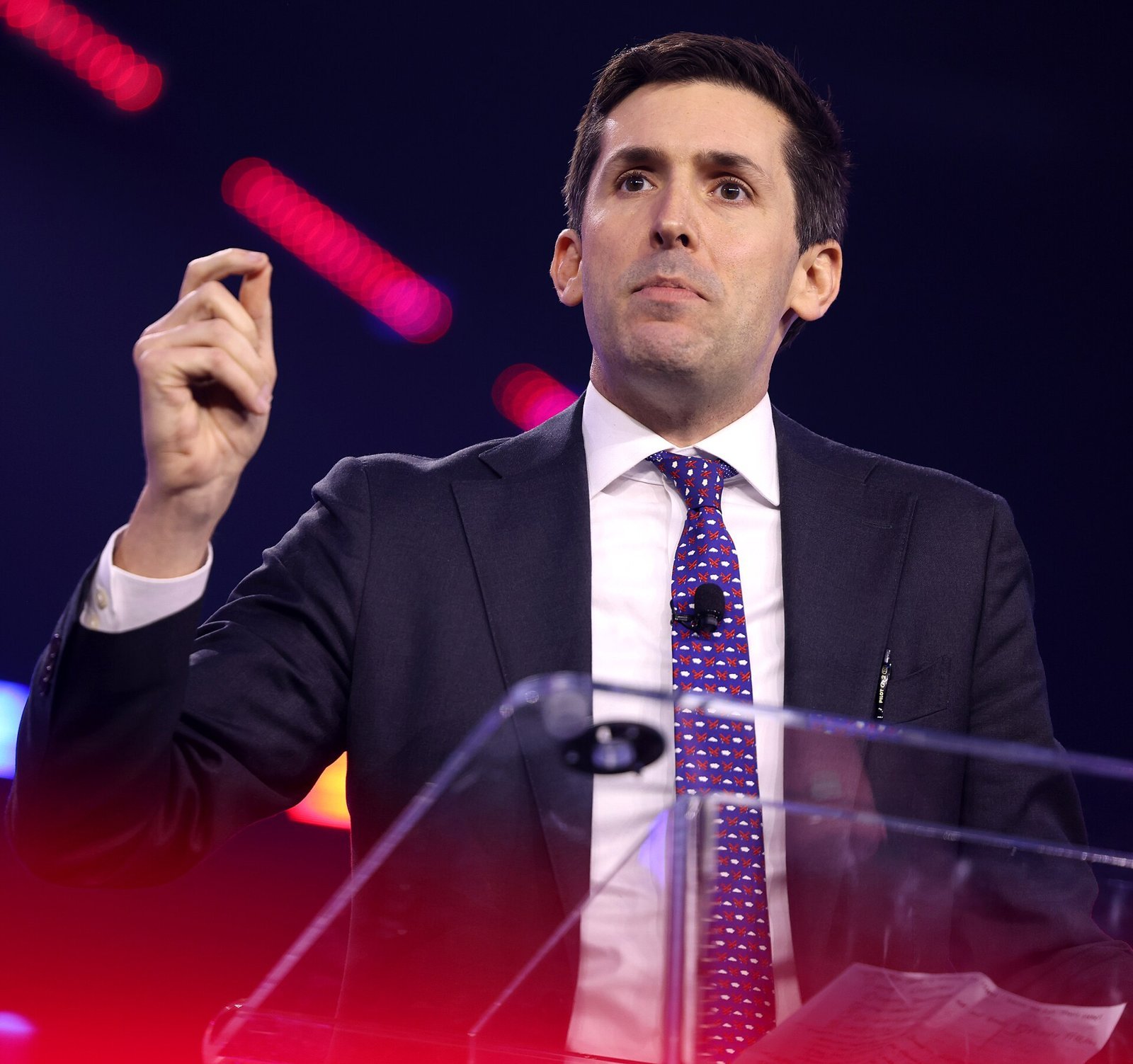
Calley Means is the healthcare entrepreneur who helped build the alliance between Donald Trump and Robert F. Kennedy Jr., served as Kennedy's top aide at the Department of Health and Human Services, resigned on October 22 — and has spent the days since the midterm elections accusing former White House chief of staff Susie Wiles and her circle of trading away the health agenda he came to Washington to deliver. He is 40 or 41, a Stanford and Harvard Business School graduate with no medical training who co-founded the wellness payments company Truemed in 2022 and co-wrote the bestselling book Good Energy with his sister, Dr. Casey Means. When people search his name this week, that fight — two podcast and television interviews, a senator repeating his charges on Fox News, and a public records fight that escalated again on Monday morning — is what they are trying to understand.
The plain reality underneath it is easy to check. The "Make America Healthy Again" movement helped elect this administration on a promise to take on the food, drug and pesticide industries. On the record, the signature items Means championed are still unfinished: the federal definition of ultra-processed food that health officials sent to the White House budget office on August 10 still had not been released as of October 13; the school meals rule that Kennedy said would cut added sugar never appeared in the Federal Register; and on October 14 the Drug Enforcement Administration withdrew its plan to put the kratom compound 7-OH in Schedule I and replaced it with a looser standard. Food stocks rallied on the day Means left the government, CBS News reported. That gap — between what MAHA voters were promised and what the record shows — is why a former adviser's name is suddenly a search question at all.
Means says the gap has a cause, and a name. On The Joe Rogan Experience, in an interview taped on Thursday and released on Friday, he called Wiles "the most powerful chief of staff in modern American history," said she held a stranglehold on every policy decision, and said she told him many times, "We need money for the midterms, Calley." When he pushed a policy on how much sugar children eat, he says she answered, "I need the sugar industry money." He says companies that hired Wiles' daughter, a lobbyist at Continental Strategy, received high priority, and that the route to the chief of staff ran through her old firm: "If you hire Ballard, you get a meeting with Susie and you can get things done." On CBS's Face the Nation on Sunday, he widened the charge beyond one person:
"Underneath Trump's nose, in many cases, you had a group of former lobbyists, catering to the vaping industry, catering to the ultra-processed food industry, catering to the pharmaceutical industry, catering to the pesticide industry and doing their bidding with an excuse that we need their money for the midterms." — Calley Means, Face the Nation, November 8
Senator Ron Johnson of Wisconsin, a Trump ally, carried the charge onto Fox News on Saturday, saying Means had laid out corruption "in gory detail," including "within the Trump administration," and that Republican voters "were expecting us to drain the swamp, but it seems like the swamp won." Stated plainly, the principle Means is appealing to is one most voters already hold: a promise that can be quietly set aside whenever an industry objects was never really a policy — it was a slogan with a price tag. If access decides, the voters' instruction does not.
The consequence is that the argument has left the podcast studio and become a documented public fight, with lawyers at its edges. On Saturday, Means publicly asked Wiles and her former deputy James Blair to stop contacting him, and offered to correct and apologise for anything they could show him in writing was inaccurate; the Wall Street Journal reported Blair had already warned him in a text, "If you are gonna try to knife me, I'm happy to return the favor." On Sunday, Means publicly requested that Wiles, Ballard Partners, Continental Strategy and others preserve every relevant record and message, including Signal and disappearing messages, after suggestions that Wiles and Blair might sue. The answers came the same day. A spokesperson for Wiles told Axios his accusations were "outrageous, defamatory, and provably false." Blair told the Journal the implication of corruption was "scurrilous, false, and defamatory," called Means "a failed political operative and wedding dress salesman," and is considering suing; to CBS he said he never promoted flavoured vaping and that Means was misrepresenting his role. Ballard Partners said in writing that no one at the firm lobbied or communicated with Wiles or anyone in the West Wing about the glyphosate executive order, and that the May meeting at the centre of the vaping story was with the president himself, not with Wiles or her staff. Attorney General Todd Blanche, asked on CNN whether the Justice Department would investigate, dismissed claims made on a podcast. And former FDA Commissioner Marty Makary told CBS the pressure Means describes was real in his own tenure: "Big tobacco exploited their connections to administration and HHS officials to put repeated pressure on me to approve fruit-flavored vapes that appeal to children — I wouldn't do it." So if the only two accounts on offer are a whistleblower's word and a wall of denials, what would the records themselves show?
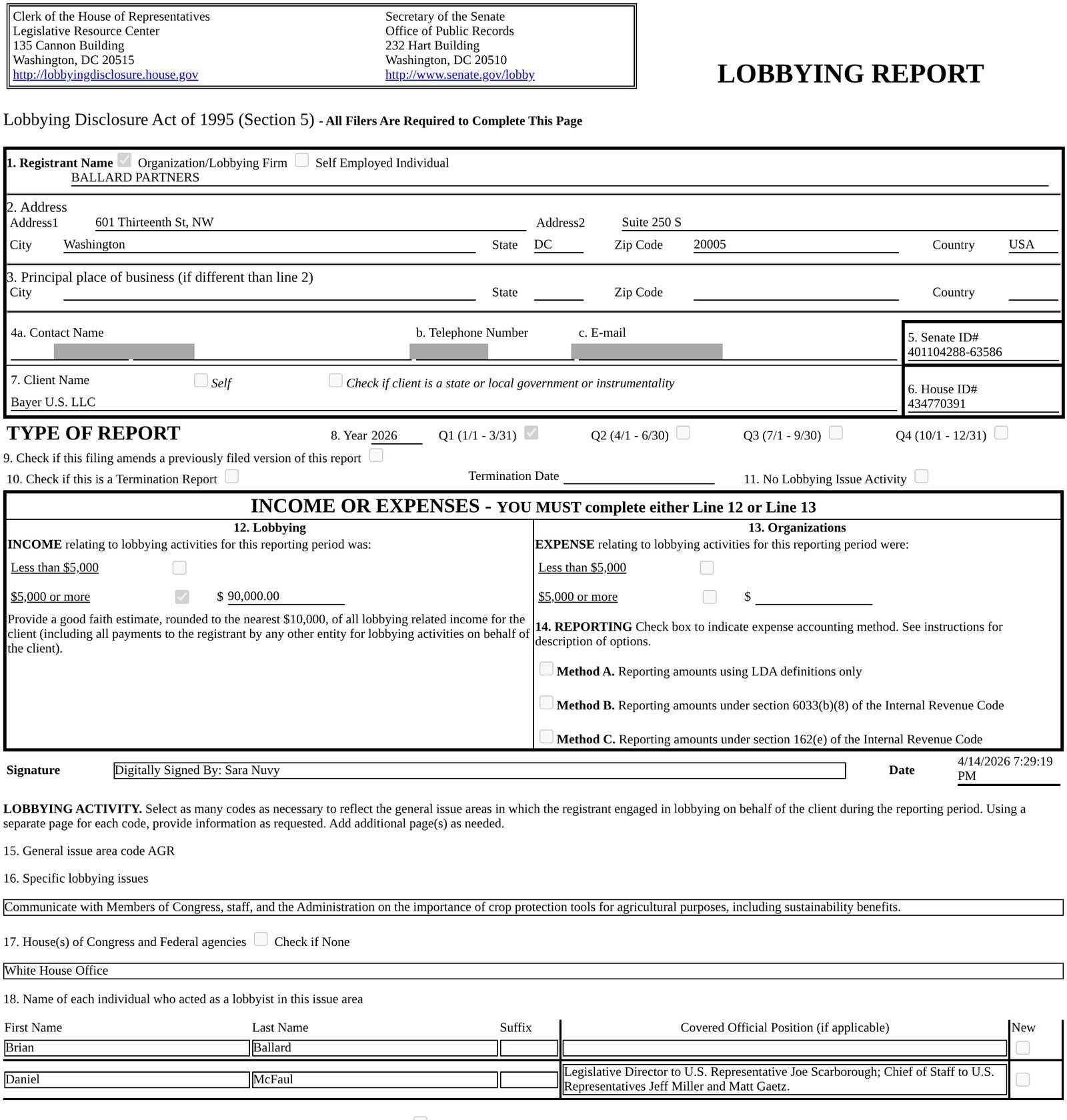
Monday morning supplied the first document either side has pointed to. At 10:09 a.m., Means posted that Ballard's own disclosure undercuts the firm's denial: its report for the first quarter of 2026 — the quarter in which President Trump signed the February 18 executive order boosting glyphosate production — lists the White House Office as the only government entity the firm lobbied for Bayer U.S. LLC, with Brian Ballard named as one of the lobbyists and $90,000 in income reported. The filing is real, and its limits are just as real: it covers crop-protection lobbying in general terms, it does not mention glyphosate, the order, or Wiles, and it does not say which lobbyist contacted which office. It proves contact with the White House in that quarter. It does not prove what was said, or to whom.
The rest of who Means is matters to how his word is weighed, and it cuts in more than one direction. He knows the world he is describing from inside: before Truemed, he worked as a consultant for the food and pharmaceutical industries he now attacks, and he traces his turn to his mother's death from pancreatic cancer in 2021, after which he and his sister wrote Good Energy and built the following that brought them to Kennedy. He arranged the July 2024 call that joined Kennedy's campaign to Trump's, was hired as a White House adviser in March 2025, and served as a special government employee — a status that, the Associated Press reported, spared him the public financial disclosure ordinary senior officials must file, even as his own company sells the wellness products his agenda favours and the IRS was warning about companies that dress wellness spending up as medical care. Truemed's chief executive says the company is in full alignment with IRS guidelines, and Means said his government work never dealt with matters affecting Truemed. Yale health researcher Dr. Reshma Ramachandran was blunter about the arrangement: "It reeks of hypocrisy." Democrats have likewise flagged the Truemed stake Means once held, reported at $25 million to $50 million. His resignation itself, on October 22, was polite — he left, as we reported at the time, "with tremendous respect for President Trump and Bobby Kennedy" — and the explosion came only after the elections, on the same Friday that Trump moved Wiles out of the chief of staff's office, a departure we examined here.
Asked by Margaret Brennan whether it had been his intention to get Wiles removed, Means did not soften a word of it: "Yes. I think President Trump has been subverted by people that are beholden to special interests and not what President Trump ran on, and what voters voted for."