Who Is Scott Colom?
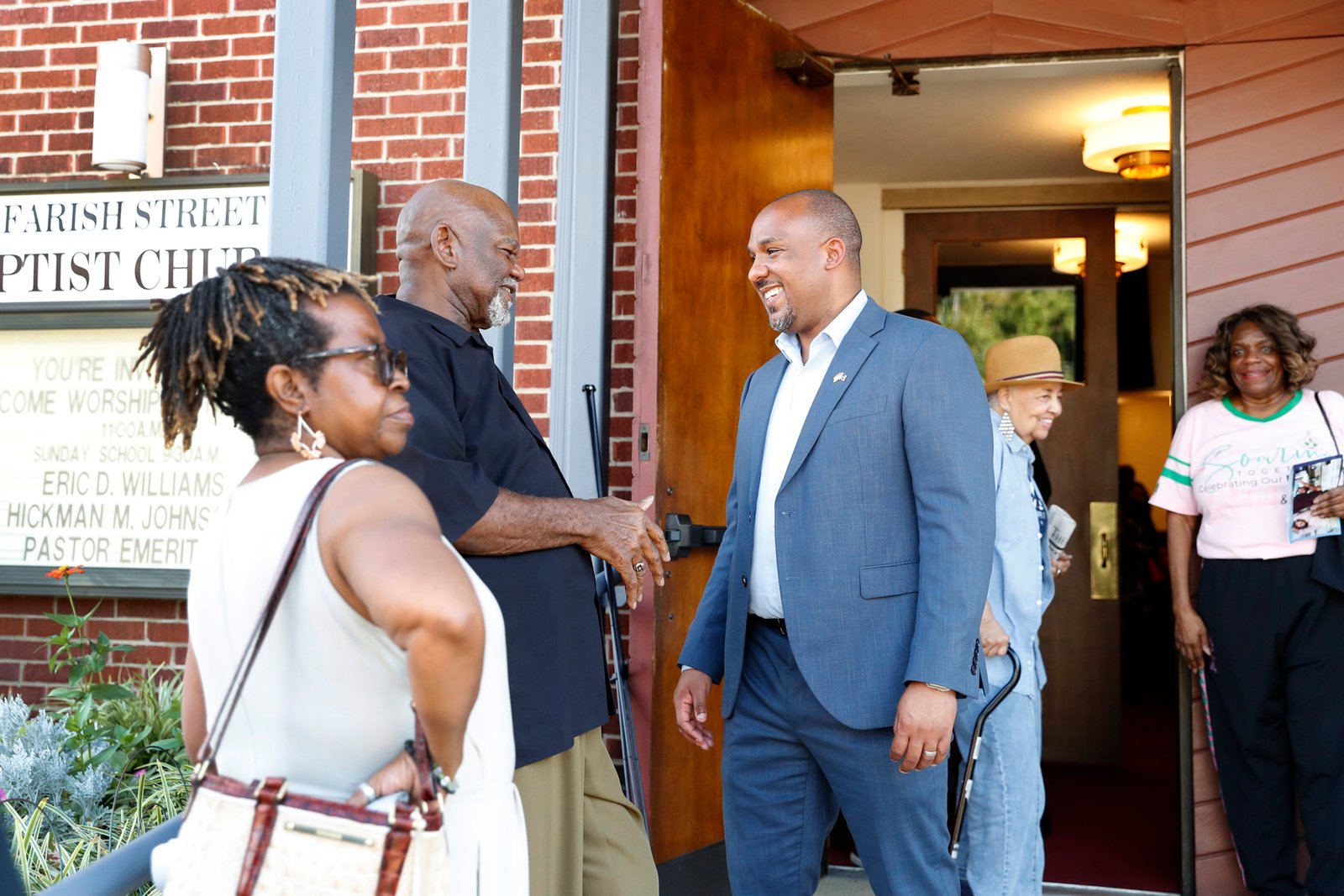
Scott Colom is the 43-year-old Democratic district attorney for Mississippi's 16th Judicial District, based in Columbus, and he is currently leading Republican Senator Cindy Hyde-Smith by 2,574 votes in the Mississippi Senate race that the Associated Press still calls too early to call. If that lead holds, Colom would become the first Black senator from Mississippi since Reconstruction — and the first Black United States senator the state has ever elected by popular vote.
The plain reality is why so many people are suddenly asking who he is. Mississippi is nearly 40 percent Black, yet its top representation in Washington has been white for generations, and no Democrat has won a Senate election in the state since John Stennis was re-elected in 1982. Colom was treated as a long shot for most of the year — Senate Democrats' own campaign arm only began spending real money on him in late October — and now a local prosecutor from Columbus stands 2,574 votes ahead of a sitting senator, with the last affidavit and absentee ballots still being examined county by county.
Colom himself campaigns on the claim that he can represent all Mississippians, and he framed his closing argument around President Donald Trump's policies — the war with Iran and the tariffs — cutting across every demographic line. On Friday, walking the Farish Street district in Jackson where civil rights leaders once organised, he promised patience with the count: "We're going to make sure everything is followed according to the law, and I have confidence in those local officials. They're doing their jobs. Got to be patient with them." Hyde-Smith, who has not appeared publicly since election night, posted the opposite message the same day: "We are not backing down. This election is not over."
"They now know that their vote matters." — Maryland Senator Angela Alsobrooks, the first Democratic senator to campaign with Colom this year, on what his candidacy has changed for Black Mississippi voters
The common-sense point underneath the surprise is simple: a state does not stay unwinnable forever — it stays unwinnable only for as long as one side believes it is, and stops turning up. For years, Mississippi Democrats carried what Alsobrooks called a "belief problem" after decades of defeats. A candidate who shows up in all 82 counties and runs as if the race can be won is what breaks that, and when the belief breaks, the turnout follows — which is how a prosecutor almost nobody outside Mississippi could name in October is leading in November. If Colom finishes this, the question for every future cycle is the one his race has already forced: if Mississippi can come down to 2,574 votes, which state gets to call itself safely unwinnable now?
The details of his record explain why he, of all people, was positioned to do it. Colom is a seventh-generation Mississippian, born in Columbus on December 24, 1982, to a family that crossed the state's political lines — his father Wilbur, a lawyer, was the Republican nominee for state treasurer in 1987 and worked for Ronald Reagan, while his mother Dorothy was the first Black person elected to a Chancery Court judgeship in their district. He took a double major in English and history at Millsaps College, taught for a year in Guyana, and earned his law degree cum laude from the University of Wisconsin in 2009, with internships that included the chief prosecutor of the International Criminal Tribunal for Rwanda. His career has been a sequence of firsts: at 28 he became the youngest and first Black justice court judge in Lowndes County history, then Columbus's first Black city prosecutor, and in 2015 he beat a district attorney who had held the 16th District job for nearly 30 years, becoming the first Black district attorney ever elected in a majority-white voting district in Mississippi. Voters returned him in 2019 and again in 2023 with more than 56 percent.
Two episodes in that record tell voters the most about him. As district attorney, his office's work helped exonerate Eddie Lee Howard, who had spent 23 years on death row on bite-mark evidence that collapsed — the act of a prosecutor willing to undo his own side's conviction. And in 2022, President Joe Biden nominated Colom to the federal bench in northern Mississippi, with Republican Senator Roger Wicker's support — only for Senator Cindy Hyde-Smith to block the nomination by withholding her blue slip. The woman who stopped Scott Colom from becoming a federal judge is the senator he is now 2,574 votes from removing from office. The count resumes with absentee ballots receivable through Tuesday and counties certifying by Friday; Mississippi has no recount law, a process we set out in when the Mississippi Senate race will be called. Whatever the final number, Colom ended his campaign where this story began — with a closing advertisement filmed at the Jackson home of Medgar Evers, the civil rights leader murdered in his own driveway in 1963: "It's a powerful reminder of the sacrifice to gain the ballot, and nobody sacrificed more than Medgar Evers and his family."