Will Justices Thomas and Alito Retire After the Democrats' Senate Win?
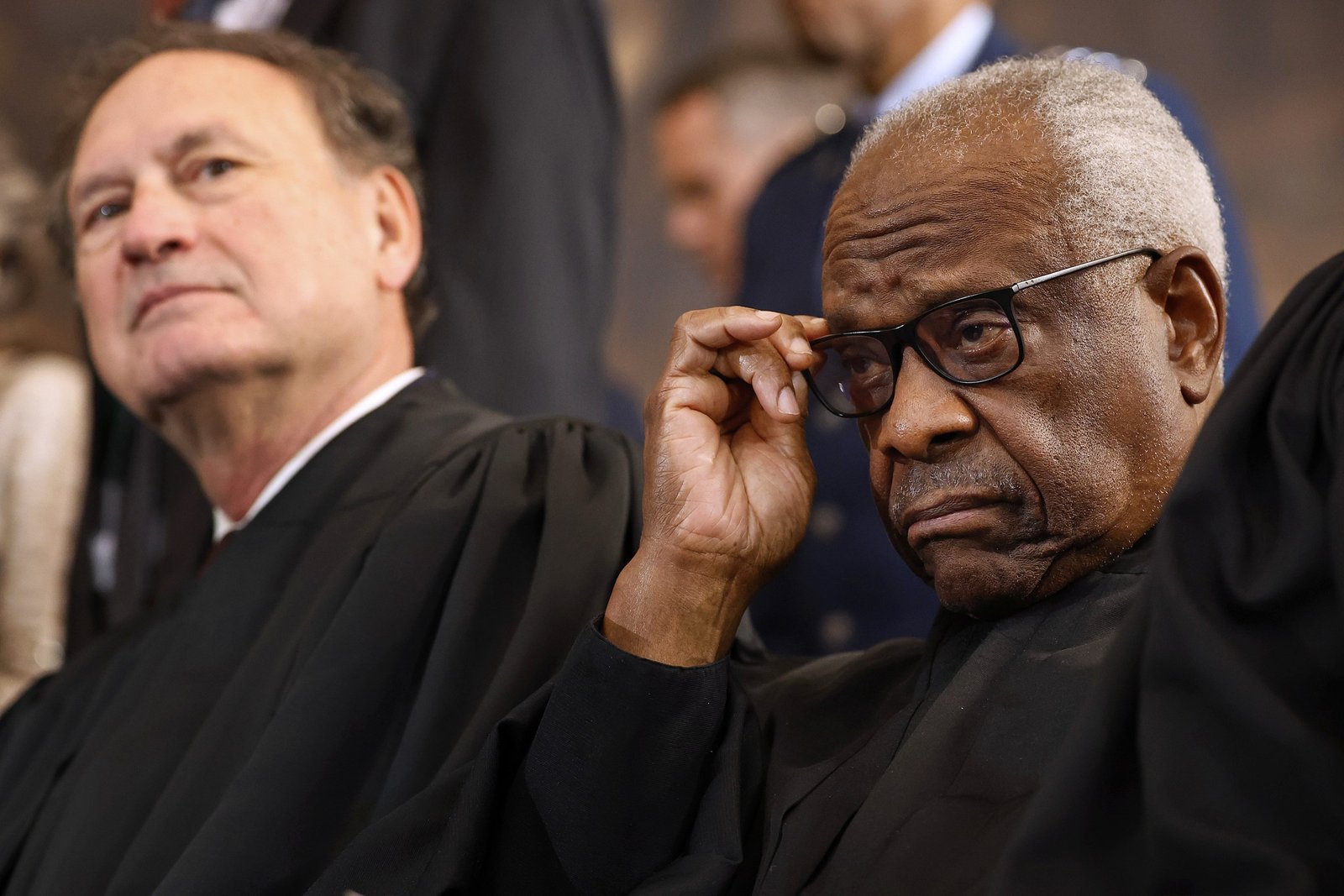
There is no sign that either justice is retiring. Samuel Alito has said he will remain on the Supreme Court for the duration of the current term, and The New York Times reported this week that he has told people close to him he does not intend to retire immediately despite the Democrats' commanding Senate win. Clarence Thomas has given no public indication of wanting to step down at all, Reuters reported, and CBS News reported that neither justice currently plans to retire.
The plain reality is what changed around them on Tuesday. The Constitution gives the Senate the power to confirm a president's judicial nominations, and the midterm landslide gives Democrats control of Congress starting in January — we answered on the blog whether Chuck Schumer will lead that new Senate majority. Until January 3, the current Republican majority still sits, in what is called a lame-duck session. So the record says this: the only window in which President Trump could confirm a like-minded successor to Thomas, 78, or Alito, 76 — the court's two oldest justices and the anchors of its 6-3 conservative majority — is the window that is open right now, and both men are publicly declining to use it.
What the conservative side claims is alarm, not a plan. Florida Governor Ron DeSantis wrote on social media: "Chance of confirming a worthy successor to Justice Thomas and/or Alito during President Trump's term: Zero." Legal analyst Ed Whelan of the Ethics and Public Policy Center said a Republican president may not be able to appoint any justices until Republicans regain the Senate, and "given the deep hole, that might not happen until 2033." Manhattan Institute fellow Ilya Shapiro put the health worry in one line: "The Senate is lost until 2032, so I hope Thomas and Alito got on their treadmills this morning."
"Absent an acute health crisis, a decision to retire in the next several months would appear, and would in fact be, so nakedly political that I doubt Justice Alito or Thomas would take it."
That assessment, from Cornell Law School professor Michael Dorf speaking to Reuters, states the common-sense principle plainly. Supreme Court justices hold their seats for life precisely so their leaving is not supposed to be a party's scheduling decision — and a retirement announced the moment an election changes the Senate would be read, by everyone, as exactly that. The consequence of staying is the other side of the same coin. If neither man leaves while confirmation is still possible, the conservative majority is riding on their health for years: Thomas would be 84 and Alito 82 in 2033, past the average retirement age of around 80 for justices since 2000. Which raises the question the whole retirement debate is really asking: how long can a 6-3 majority count on two men in their late seventies outlasting a Senate their party no longer controls?
The details that matter are these. Alito, who joined the court in 2006, made his position plain in book interviews last month, before the election: he had considered stepping down, decided he could still make a valuable contribution, and would stay even if Democrats captured the Senate. Thomas, on the court since 1991, declared early in his tenure that he wanted to remain until 2034, and if he stays through May 2028 he becomes the longest-serving justice in the court's history. Neither has any serious publicly known health concern, though Alito was treated for dehydration in March and Thomas was hospitalised with flu-like symptoms in 2022. The Senate margin also tightens before January: the split shifts to 52-48 on December 15, when Senator-elect Sherrod Brown of Ohio is seated. And the speculation itself has burned people before — NPR published an account this summer saying Alito was planning to step down, and later retracted it.
Alito's own words, given before the current term began in October, are where the matter rests: "I intend to stick around through this term. I made that decision many months ago."