Will the House Vote on the Epstein Files Transparency Act II?
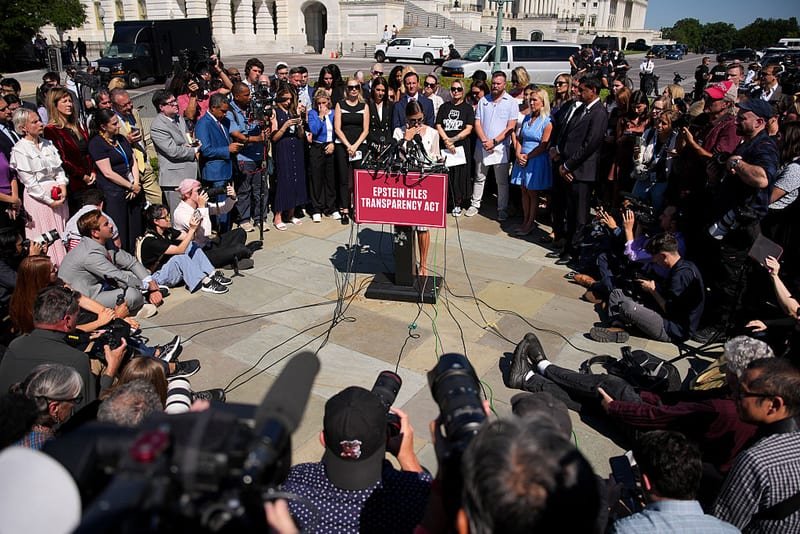
Yes. The House will vote on the Epstein Files Transparency Act II. Rep. Thomas Massie's discharge petition reached the 218 signatures it needed on Wednesday, November 11, and 218 is a majority of the House — the number that takes the bill out of the leadership's hands and forces it toward the floor. Rep. John Garamendi of California supplied the 218th signature, according to the House Clerk's records, a day after Rep. Adam Smith of Washington signed as the 217th.
The vote will not happen this week, and that is fixed by the rules, not by anyone's choice. Under House Rule XV, the motion must sit on the Discharge Calendar for seven legislative days before a signer can call it up, and the Speaker then has two legislative days to act on it. With the Thanksgiving recess in between, ABC News and the coverage of the petition put the earliest floor action at December 2 or 3. The House will then vote in stages — on discharging the Rules Committee, on the rule for the bill, and only then on the bill itself.
The plain reality underneath the question is this. A law ordering the Epstein files released already exists, and it has existed for a year. The first Epstein Files Transparency Act was itself forced to a vote by a Massie discharge petition, passed the House 427 to 1 on November 18, 2025, and was signed on November 19, 2025, with the Justice Department's records due by December 19, 2025. People are asking whether the House will vote again because the first vote, for all its force on paper, is still being argued about a year later — over how much was released, how much was held back, and how heavily what came out was blacked out.
Massie says the department has defied that law. He said in July that the Justice Department "continues to unlawfully withhold over 3 million Epstein files" and is "unlawfully maintaining heavy redactions on the files it is releasing," and he describes the department as having ignored the first law "flagrantly and consistently." The Justice Department's side is the opposite: Acting Attorney General Todd Blanche has said the department complied with the statute, and the department points to more than three million pages it says it has released.
A law that orders records open, and gives nobody a way to make the order stick, is a request wearing a law's clothes.
That is the common-sense principle this second bill is built on. The Epstein Files Transparency Act II, H.R. 9694, does not mainly order the files out again — it hands people a way to enforce the first order. Survivors, state attorneys general and district attorneys, and members of Congress could sue the attorney general over records unlawfully withheld, redacted, delayed or concealed. Survivors could obtain their own records unredacted, including their FBI interview reports, and state and local prosecutors would get the unredacted records they need, including secure access to classified material, so crimes in Epstein's network can be prosecuted where they happened.
The consequence is already visible in the signatures themselves. All 214 House Democrats signed, and only four Republicans joined them: Massie, Rep. Nancy Mace of South Carolina, Rep. Ralph Norman of South Carolina, and Rep. Brian Fitzpatrick of Pennsylvania. The petition, filed by Massie on August 31 as Discharge Petition No. 27 on the Clerk's record, sat at 216 signatures from mid-September because members can only sign while the House is in session, and it moved the moment the House came back. It is the eighth discharge petition to reach 218 in this Congress — a tool that used to be rare is now how the House acts when its own majority is split against its leadership. Massie had promised this count before it happened, in our earlier report on his pledge to reach 218.

So the vote is coming, in the lame-duck session, before the new Democratic-majority House is sworn in on January 3. What the vote cannot promise is the ending. Passing the House would still leave the Senate, which stays in Republican hands until January, and then the president's signature — in a session already crowded against a December 11 deadline to fund the government. The question that follows from all of it is the one the files themselves keep asking: if a 427-to-1 law could not open them, will a second vote do it — or will it take a judge, which is exactly what this bill is asking for?
Massie, making the case for the bill he forced to the floor, put its whole purpose in one sentence: "Survivors will be able to get their own records, State Attorneys General can prosecute crimes, and we can take the DOJ to court for keeping critical files hidden."