Will Ukraine Cede Donbas for NATO Membership?
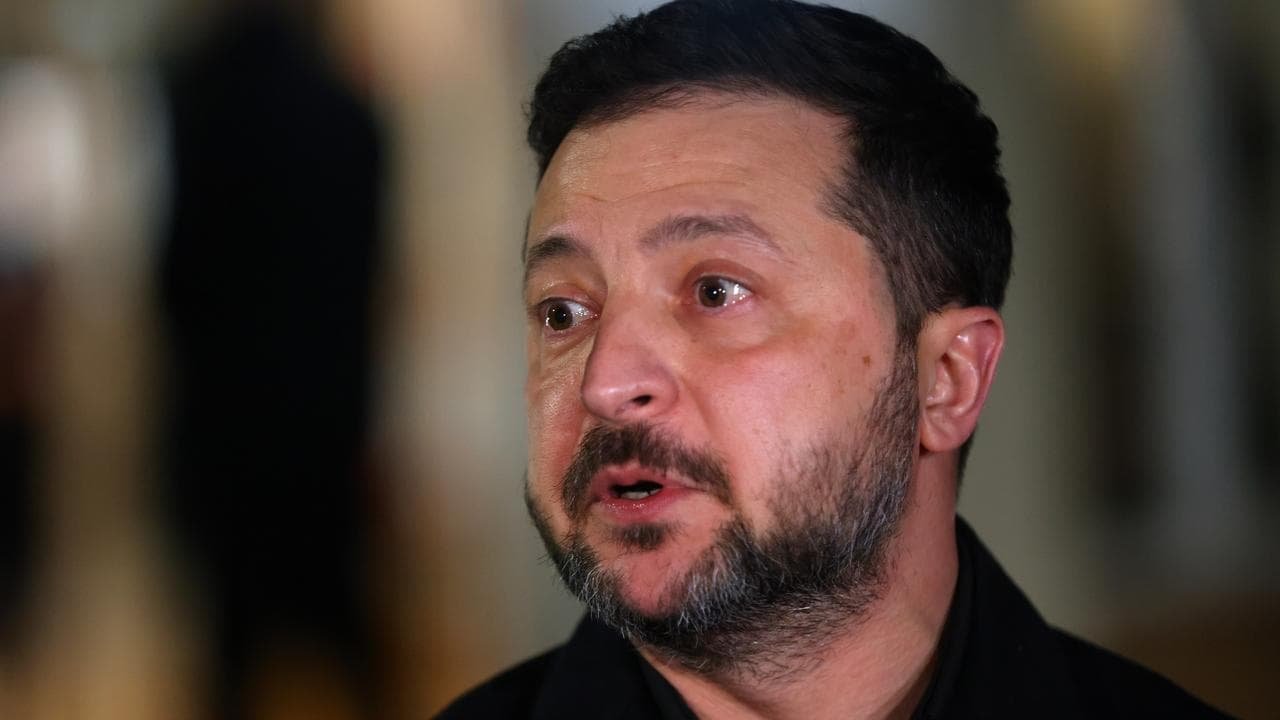
No — not on any deal that exists today. Nothing has been agreed. American negotiators have floated the idea for the first time: Ukraine would withdraw from the Donbas, the eastern region Russia has been fighting to take, and in return Ukraine would join NATO, the Western military alliance. President Volodymyr Zelensky, who revealed the float himself, was plain about where it stands: the proposals presented to Kyiv are not final, they are still being discussed, and, in his words, "there will be no trade-offs of our territories, this is a fact."
The plain reality shows why people are asking. Every American peace plan until now asked Kyiv to pay twice — give up land, and give up NATO. This time Washington swapped one half of that sentence: the land is still asked for, but the alliance is suddenly offered. The land in question is not empty map. Russia already controls most of Luhansk and about 70 percent of Donetsk, the two regions that make up the Donbas, and Moscow is demanding all of it, including the parts it does not yet control. Zelensky's answer to that is also on the record: Ukrainian forces still hold ground there, "and these are not small territories."
What the actors claim pulls in different directions. Zelensky claims the float proves "NATO is back on the agenda," and says Ukraine is ready to look at the options and is not ruling out a compromise the Americans help build. Secretary of State Marco Rubio says the United States is not imposing a deal on Ukraine and will be transparent with Kyiv, and President Trump says he wants to end the war and believes a deal is possible. Europe's leaders — Britain's Keir Starmer, France's Emmanuel Macron, Germany's Friedrich Merz and the European Commission's Ursula von der Leyen — have called the Kremlin's demands unacceptable. And Zelensky's reading of Moscow is that Russia is not ready to end the war at all, and is using the talks to buy time.
Land is given up once, and it cannot be taken back. A membership promise can be voted down in any one of 32 parliaments. That is not a trade yet — it is a question.
The common-sense principle is in the treaty's own text. A new NATO member is invited by the unanimous agreement of all 32 allies, and every one of them must ratify it at home. Washington can float the card, but Washington cannot sign it alone — Sweden, a rich and peaceful country nobody was shooting at, still waited almost two years between applying and joining. So the consequence follows plainly: if Ukraine paid first and a single parliament said no later, Kyiv would hold neither the land nor the guarantee. And if the Ukrainian people say no in the vote Zelensky insists on, what is left of the plan at all?
The details that matter are these. The idea was raised after two days of American-brokered talks in Abu Dhabi this week; envoys Steve Witkoff and Jared Kushner then carried it in person to Vladimir Putin in the Kremlin and to Zelensky in Dublin, where Zelensky was meeting European leaders — the same Dublin meeting our blog covered here: Zelenskyy says Ukraine and Russia are preparing the largest prisoner exchange of the war after Dublin meeting with Witkoff and Kushner. At Abu Dhabi, Russia rejected a ceasefire on energy targets, Zelensky said. His price for even putting a package to the people is a full one: confirmed security guarantees from NATO and the European Union, a strong and well-funded Ukrainian army with no limits placed on it, and money to rebuild — the kind of guarantee structure Washington was already testing at Abu Dhabi, which our blog reported here: U.S. will formally ask Russia to accept Article 4 and Article 5-like security guarantees for Ukraine. Kushner said Russia has agreed to include European countries in the next talks. Zelensky's own line on who decides has not moved: "I have no right to make that decision on my own." On Donetsk, he closed the question the way he opened it: "It is not just words, it is not a phrase, it is our home, it is our land."