How Does Ranked-Choice Voting Work in Alaska?
In Alaska, voters do not pick just one candidate — they rank them, first choice, second choice, third and fourth. Election officials count everyone's first choices first, and a candidate who takes more than 50 percent of those votes wins outright. If nobody passes 50 percent, the candidate in last place is eliminated, and every ballot that had that candidate first is moved to the next-ranked candidate on it who is still in the race. The rounds continue until one candidate holds a majority of the ballots still active. That is the system that will decide Alaska's Senate race on November 18, because Democrat Mary Peltola, at about 48 percent, and Republican Senator Dan Sullivan, at about 48 percent, are both below the line — Peltola leads by just 637 first-choice votes.
The plain reality is that in Alaska, leading the count is not the same as winning it. The record so far shows only first choices: 102,962 for Peltola and 102,325 for Sullivan, with roughly a quarter of the expected vote — absentee ballots, remote-community ballots and overseas ballots — still to be added. Under the old rules used in most states, whoever finishes first in that count takes the seat. Under Alaska's rules, the first count is only the opening round, and the preferences written underneath each voter's first choice become votes in their own right.
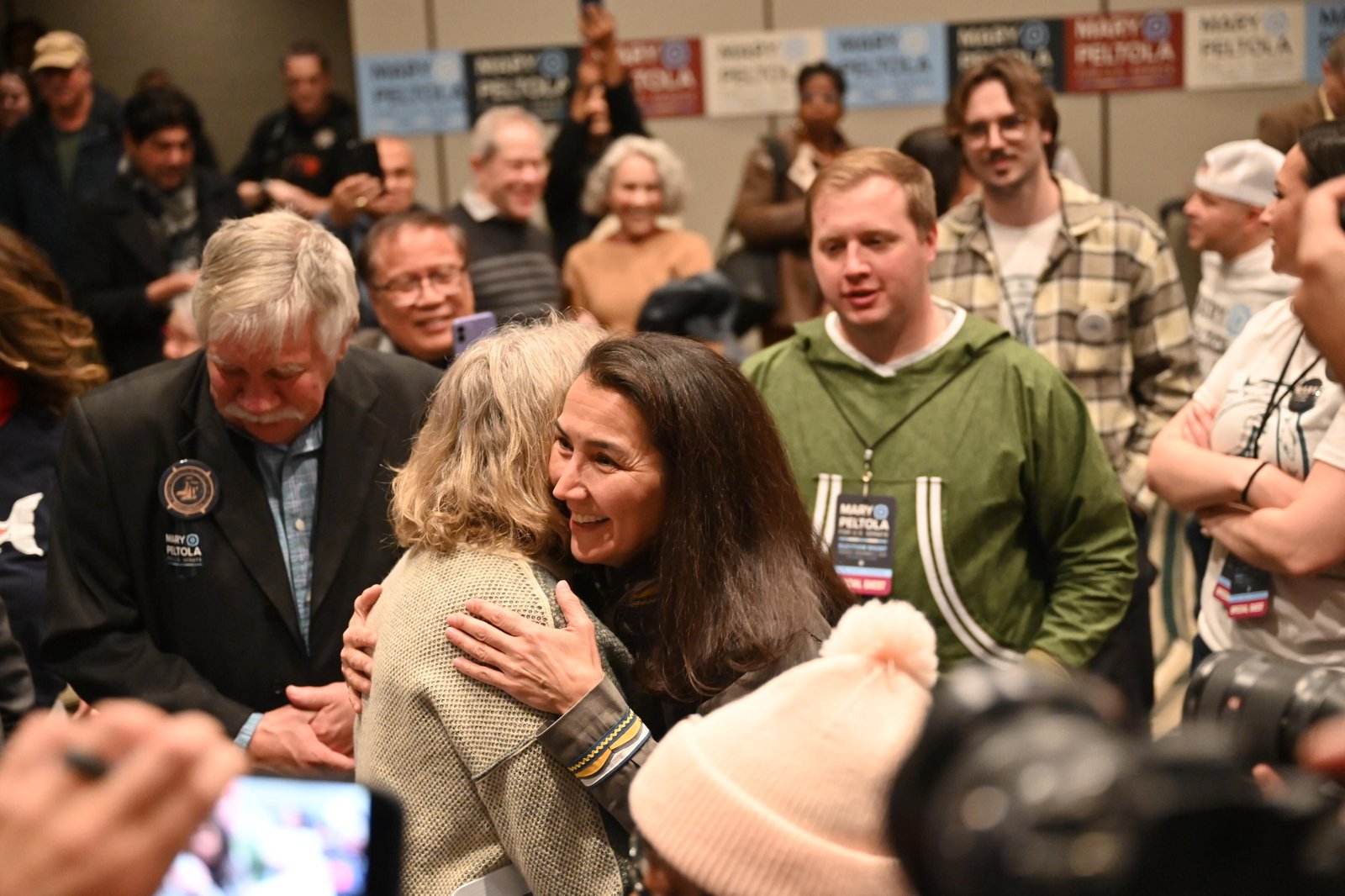
Peltola's campaign has asked supporters to accept exactly that wait. As she put it: "It won't be hours, it won't be days, it will be weeks." The state will add further counts on November 10 and November 13 as late ballots arrive, but the Alaska Division of Elections will not run the ranked-choice tabulation until November 18, once every eligible ballot has been reviewed and counted, with certification targeted for November 25 — the timeline we set out in when the Alaska Senate race will be called.
"It won't be hours, it won't be days, it will be weeks." — Mary Peltola, on Alaska's count
The common-sense principle behind the system is that a winner should be the choice of a majority, not merely the largest minority. When four candidates split the vote, the person in front with 48 percent has been rejected, in effect, by the other 52 — ranked-choice voting simply asks those voters the follow-up question a runoff election would ask, on the same ballot: if your candidate cannot win, who is your next choice? The consequence in this race is concrete. Republican Gerald Heikes holds about 2.3 percent and Daniel J. Sullivan Jr — the second Sullivan on the ballot — holds about 1.7 percent, some 3,600 votes, more than five times the margin between the leaders. When those candidates are eliminated, their ballots will move to whatever name each voter ranked next, and ballots that rank nobody else still in the race drop out as exhausted. So the question the count now turns on is not only who is ahead, but this: when the second choices of the smallest candidates are counted, will Alaska's winner be the candidate who led all along — or the one the majority preferred once every preference was heard?
The details that matter for understanding November 18 are few and specific. Ranking is optional: a voter may rank all four candidates, or only one, and a ballot that names only an eliminated candidate simply leaves the later rounds. The system came in through a ballot initiative Alaska voters approved in 2020, which also replaced party primaries with a single top-four primary — all candidates run together, and the top four advance to November regardless of party. Alaska and Maine are the only states using ranked-choice voting in statewide federal races. More first-choice votes will land before any transfer happens: domestic mail ballots postmarked by Election Day can arrive through November 13, and overseas ballots through November 18, which is one reason the tabulation waits until then rather than being run on partial numbers. None of that makes the current lead meaningless — Peltola's 637 votes are real votes — but it does mean the result Alaskans get on November 18 will be the first count in this race that the state's own rules recognise as final.