Did the Krakow Gunman Die in Hospital?
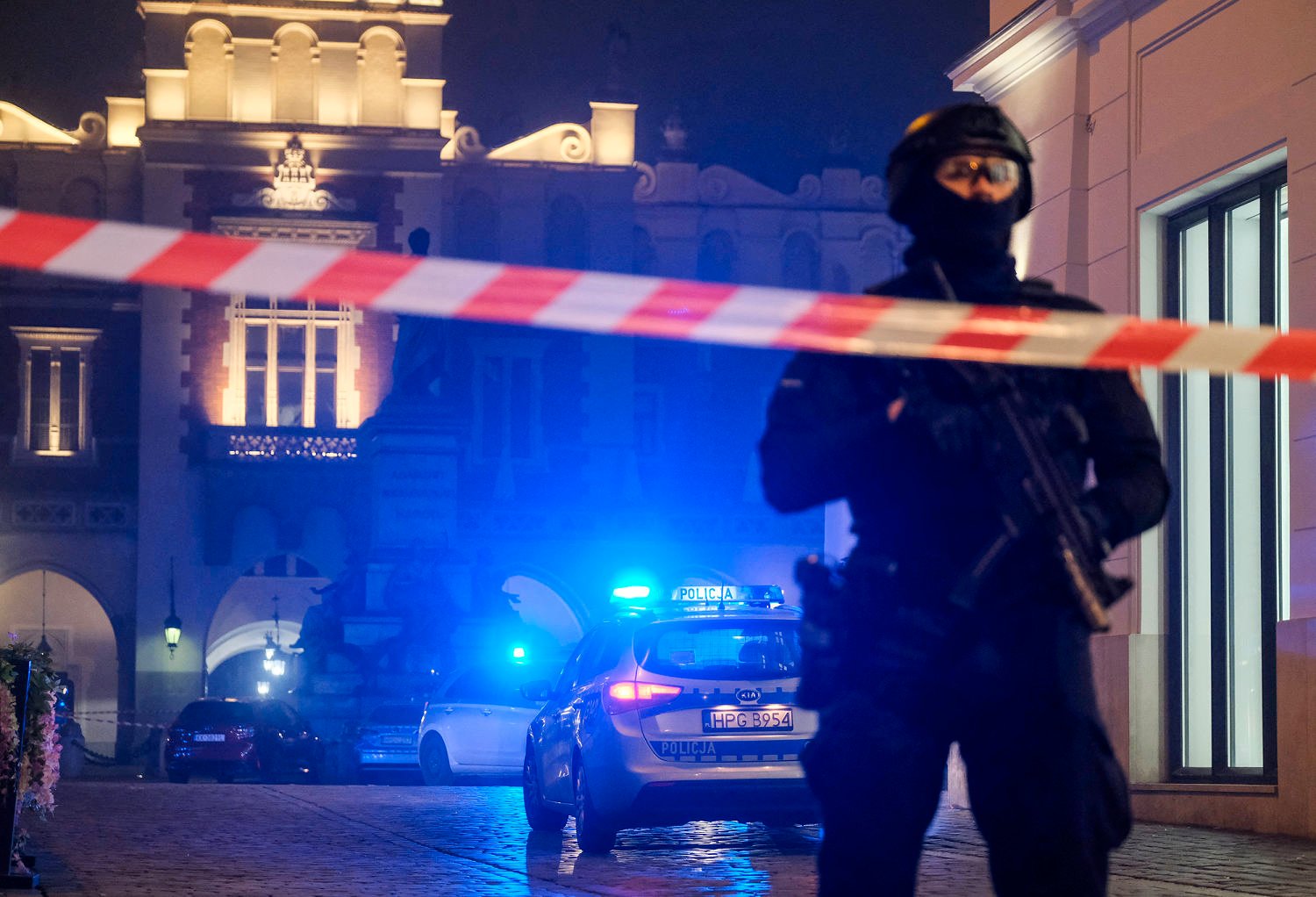
Yes. The Krakow gunman died in hospital early on Monday, November 9, two days after police shot him to stop his attack on the city's Main Market Square. The Małopolska Police announced it on X on Monday morning: "We would like to inform you that the perpetrator of the tragic events died in hospital early this morning." Regional governor Krzysztof Jan Klęczar said the 24-year-old died at about 4:30 a.m., after at least three operations, having been in a critical condition since officers shot him on Saturday.
The plain reality is the Poland this man came from. This is a country with some of Europe's tightest gun restrictions, where — as we set out in what happened in Krakow — a mass shooting was the thing that was not supposed to happen, and AFP calls Saturday's attack Poland's deadliest shooting since the fall of communism. Against that record stands who the gunman actually was: not a man who slipped past the system, but a man inside it — a member of a sport shooting club, with no criminal record, holding a firearms licence, who probably used one of his own legally owned weapons, officials say. He is identified in Polish media only as Michał O., in line with the country's privacy laws, a 24-year-old Polish national from Ostrowiec Świętokrzyski, a town of just under 60,000 in the southeast. Investigators believe he first shot his father, 53, his mother, 52, and his sister, 21, at the family flat there, then drove to Krakow.
What Poland's leaders claim about him is that this was terrorism with an ideology behind it. Interior Minister Marcin Kierwiński said everything indicates the gunman was drawn to radical, ultranationalist ideologies, and Prime Minister Donald Tusk described the attack as an act of terrorism. The National Prosecutor's Office is investigating murder and attempted murder as a terrorist offence, saying the assault was intended to seriously intimidate large numbers of people. Interior ministry spokeswoman Karolina Galecka told radio TOK FM on Monday that the emblems on the dead man's clothing are still being read:
"There were many different emblems on the perpetrator's clothing that have been partially examined and interpreted. These patches were associated with various motifs that are currently being analyzed by specialists."
The common-sense principle is the one his death settles: a punishment that can never be carried out settles nothing. Poland can investigate this man, but it can never try him — there will be no defendant in the dock, no verdict, and no sentence for the nine people he is suspected of killing: his parents and sister at home, and in the square four women and two men, including a British man, as Britain's foreign secretary mourned on Sunday, and an Austrian woman, the governor said. Sixteen people were wounded, among them two police officers and visitors from the UK, Austria, Germany, Portugal and Russia.
The consequence is that every answer Poland gets now has to come from an investigation instead of a courtroom. Prosecutors say the inquiry will not stop with his death and will examine his motives; autopsies on all nine victims were to begin on Monday and could take about two days, prosecutor Eryk Stasielak said. The timing of the attack is now fixed in the record: the first shots came at 2:59 p.m. on Saturday, November 7, when his black Subaru drove onto the square from Sławkowska Street, and the chase lasted two minutes and three seconds before officers stopped him, RMF FM reported. Police recovered 11 guns in all, seven of them from the family home, CBS reported, citing Polish officials. One of the officers who stopped him, Senior Constable Jakub Kulik, is fighting for his life, and police have launched a blood appeal for him. President Karol Nawrocki declared two days of national mourning for November 8 and 9, Krakow's mayor Łukasz Gibała extended the city's mourning to November 11, and a silent march was planned in the city for Monday evening. If the one man who knows why this happened can never be questioned or tried, what will the investigation have to prove — and to whom — for Poland to call this case closed? Tusk, standing in a country that has never seen an attack like it, had already named it: "Until now in Poland we haven't had such drastic cases of terrorism; that's what we have to call this cruel attack on people's lives here in Krakow."